On Friday, Kalshi published an extensive rebuttal of recent claims made by the Roosevelt Institute, which claimed that “ordinary users” on the platform have lost more than $500,000,000 in trades since the exchange’s inception.
“Roosevelt Institute’s recent work on prediction markets has significant flaws that invalidate the findings,” according to Kalshi News. “The study counts high-frequency trades from institutional market makers as activity from ‘ordinary users,’ and ordinary trades from casual users on the app under ‘professional users.’”
The original Roosevelt Institute report, which was likewise uploaded on Friday, cites in-house analysis supporting its argument that “Kalshi and Polymarket are even worse than regular casinos.” Its foundational analytical framework is built on the premise that casual retail traders are “taking hits” at the expense of sophisticated, institutional market makers who incorporate extensive research and proprietary data into their pricing models.
The conflicting views are eerily reminiscent of how the skill-based activity of competitive online poker has arguably been taken over by players who purchase third-party data related to opponent tendencies, which includes statistics on hands that the “pros” were not personally involved in. By entering these statistics into analytical software, poker “sharks” are able to extract a greater, controversial edge over “fish” that remain unaware of how their hand history data is being mined.
Kalshi News lays out eight critical “flaws” that, in the prediction market platform’s view, delegitimize the Roosevelt Institute’s claim that casual traders have lost in excess of $500,000,000 since the platform went live in 2021.
According to the exchange, the RI report confuses the definitions associated with retail and institutional traders, miscategorizes the demographics of skill-based traders, fails to account for interest-based incentives that Kalshi users can earn, and relies heavily on casino “talking points” to relay its arguments.
“Whether directly or indirectly, the casino industry has influenced the work of the Roosevelt Institute, calling into question the integrity of this report and all future reports in the four-part series they plan on releasing,” states the Kalshi News post published Friday.
“At casinos, ~0% of users are profitable, because anyone that proves they can win is banned from the platform — despite the casinos being allowed to advertise their products as if you can win.”
In a May 2026 report released by the Wall Street Journal, Kalshi admitted that losing traders outnumber their “winning” counterparts by an approximate margin of 3-to-1 on the platform. Despite the legally disputed categorization of event contracts as “trades,” Kalshi’s data supports the notion that prediction market activity is a skill-based endeavor that enables roughly one quarter of its total user base to make a long-term profit.
And while the “peer-to-peer” essence of prediction market trades may be questioned by detractors, Kalshi’s business model is clearly distinct from the traditional “against the house” wagers that sports bettors participate in.
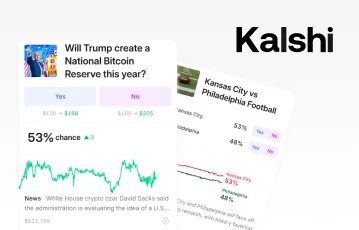
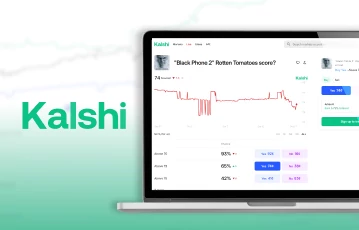
As of July 2026, Kalshi is a CFTC-regulated exchange that allows account holders who are at least 18 years of age to trade “yes/no” positions on events related to politics, sports, global affairs, and entertainment award outcomes.
Loading …