On May 18th, 2026, the National Council on Problem Gambling (NCPG) announced a two-year, $2 million partnership with Kalshi that welcomed the exchange as a Platinum-level member of the council’s newly formed Financial Services & Trading subcategory. The agreement instantly catapulted the CFTC-regulated prediction market into the “Chairman Level” of NCPG’s Leadership Circle, on par with state-licensed commercial sportsbook operators FanDuel and Caesars Entertainment.
For some industry observers, the deal was a head-turner. The raging legal battle against the proliferation of prediction platforms, led by state gaming officials, tribes, and an increasing number of state attorneys general, is a secret to no one who follows courthouse news related to prediction market sports-contract trading.
According to insight provided by Straight To The Point Substack author Steve Ruddock, the recent resignation of NCPG Executive Director Heather Maurer and the departure of staff member Jaime Costello come in the midst of a years-long realignment as both the council and member states reevaluate the RG landscape.
But perhaps the most notable “latest news” items are related to two state gaming agencies, the Ohio Casino Control Commission and the Michigan Gaming Control Board, cutting ties with the NCPG. Moreover, the NCPG has lost two state affiliates (the Nevada Council on Problem Gambling and the Evergreen Council on Problem Gambling).
The former has subsequently received expanded support from ex-NCPG member Aristocrat, which recently stepped back from the national council. All this while the NCPG attempts to recover from a “downward spiral” and encourage further incorporation of its proprietary responsible gaming tools.
“Kalshi simply appears to be the proverbial straw that broke the camel’s back,” writes Ruddock.
Precariously, affiliate marketers who promote state-licensed online sportsbooks and casinos in the United States face a contractual paradox: one in which compliance with state-sponsored regulations may require the inclusion of NCPG resources within marketing materials. Simultaneously, an affiliate marketer may be required not to include those same resources and assets, depending solely on the state jurisdiction that’s being covered in a review or promotion.
More acutely, public industry outreach as a whole relies upon a network of local, state, and nationwide outreach programs tied to Responsible Gaming. These initiatives, whether implemented by advocacy-group proxy or official government sponsorship (or both), fulfill a necessary social construct that matches problem gamblers with qualified professionals. The research, experience, and resources that RG programs bring to the industry have been decades in the making and they are unrivaled when combined with good-faith collaboration.
Without proprietary RG tools in place, a licensed platform (be it a sportsbook, casino, poker site, or prediction market) is unable to accurately identify customer behavior that may need to be addressed. Without official, government-sponsored self-exclusion and “time out” programs, problem gamblers have one less option to formally “break” from vicious cycles.
Without local outreach, “personalized” approaches for individuals suffering from addiction become extinct. And without national helplines such as NCPG’s 1-800-MY-RESET and real-time chat modules, individuals in immediate need will be forced to seek out (a decreasing number of) free, live-counseling services that may not specialize in gambling addiction.
In a September 28th, 2026, communication, NCPG Board of Directors President Derek Longmeier told Deadspin the following:
“NCPG has long held that anyone who profits from gambling has an economic and ethical obligation to help mitigate the harm it can cause. We remain committed to engaging with a broad range of stakeholders to advance meaningful safeguards.”
The April 2026 update to NCPG’s Internet Responsible Gambling Standards (IRGS) provides an in-depth look into the council’s recommendations for RG governance, training, and protocols. A separate public comment submitted to the CFTC earlier this year lays out the NCPG’s stance and suggestions for federally regulated prediction markets.
“In our comments to the CFTC earlier this year, NCPG called for strong, consistent consumer protections for prediction markets, including responsible participation tools, time-outs and self-exclusion, age verification, clear risk disclosures and connections to help resources,” stated Longmeier on Monday. “We will continue working to advance these protections wherever there is an opportunity to reduce gambling-related harm.”
Undoubtedly, the NCPG’s official stance that prediction market trading is “functionally gambling” is an eye-popping contradiction to Kalshi’s (and the CFTC’s) legal arguments that prediction-market event contracts are financial derivatives that should enjoy immunity from state gambling laws. On that front, according to the council’s April 2026 public comment to the CFTC, the NCPG says:
“[The NCPG] takes no stand and makes no argument as to whether trading event contract derivatives does or does not legally constitute gambling.”
Yet Kalshi entered into a partnership with the NCPG, anyway, despite the obvious contradictions; despite the now-legally documented Ten Times Kalshi Said People Could Bet On Things. Whether Kalshi’s partnership with the NCPG can be attributed to a genuine desire to assist problem gamblers or a shrewd RG-industry maneuver (or some combination of the two) is up for interpretation. But as The Closing Line Substack author Dustin Gouker editorialized in his September 26th newsletter, “trying to do something as the NCPG [is better than] doing nothing.”
For Responsible Gaming advocates looking for a reprieve from recent happenings and an outlet to regain focus, fortune shines upon thee. The upcoming promulgation of CFTC rules concerning sports contracts promises to provide more clarity (or more nonsense) depending on which side of the prediction market legal battle stakeholders and their collaborators identify with.
And major media outlets, expert industry observers, high-profile politicians, and institutional investors are all here for it. The current circuit split on the categorization of sports contracts all but guarantees a Supreme Court showdown at some point in the future. In the meantime, the need for professional Responsible Gaming outreach on all levels endures.
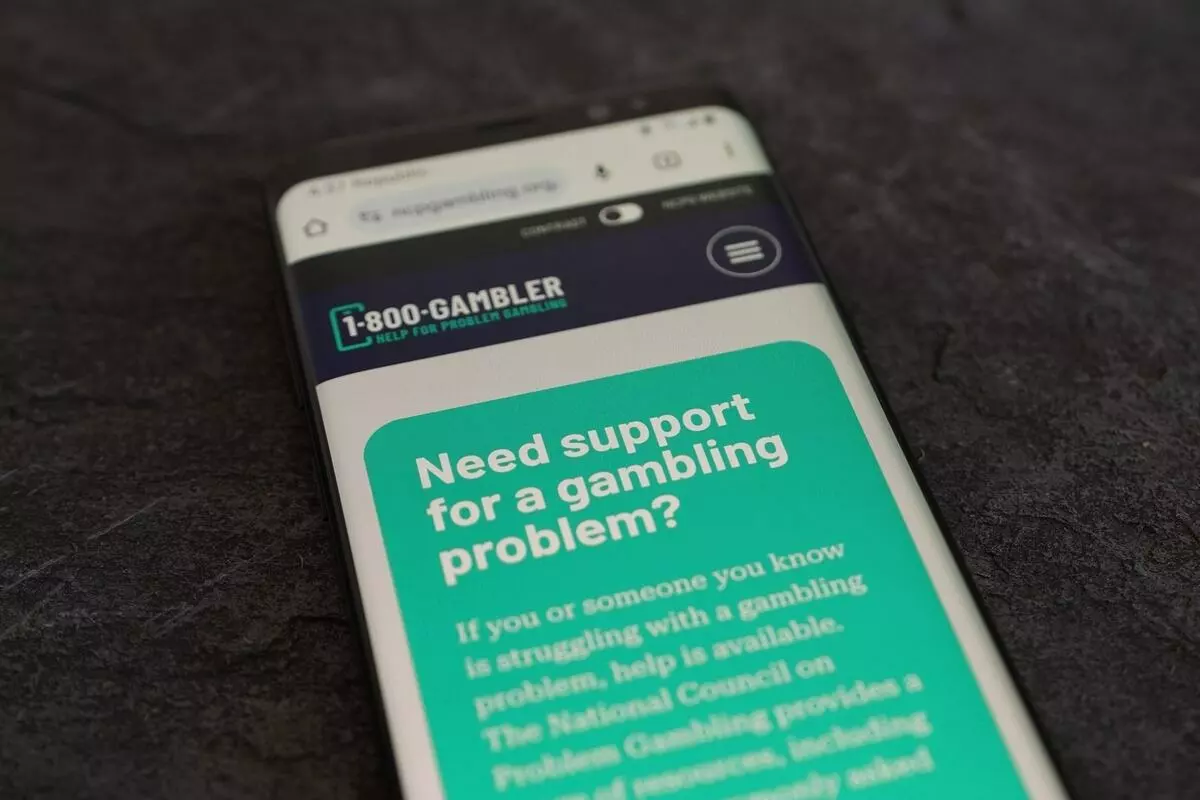
If you or someone you know has a gambling problem, you can contact the National Problem Gambling Helpline™ at 1-800-MY-RESET.
Loading …