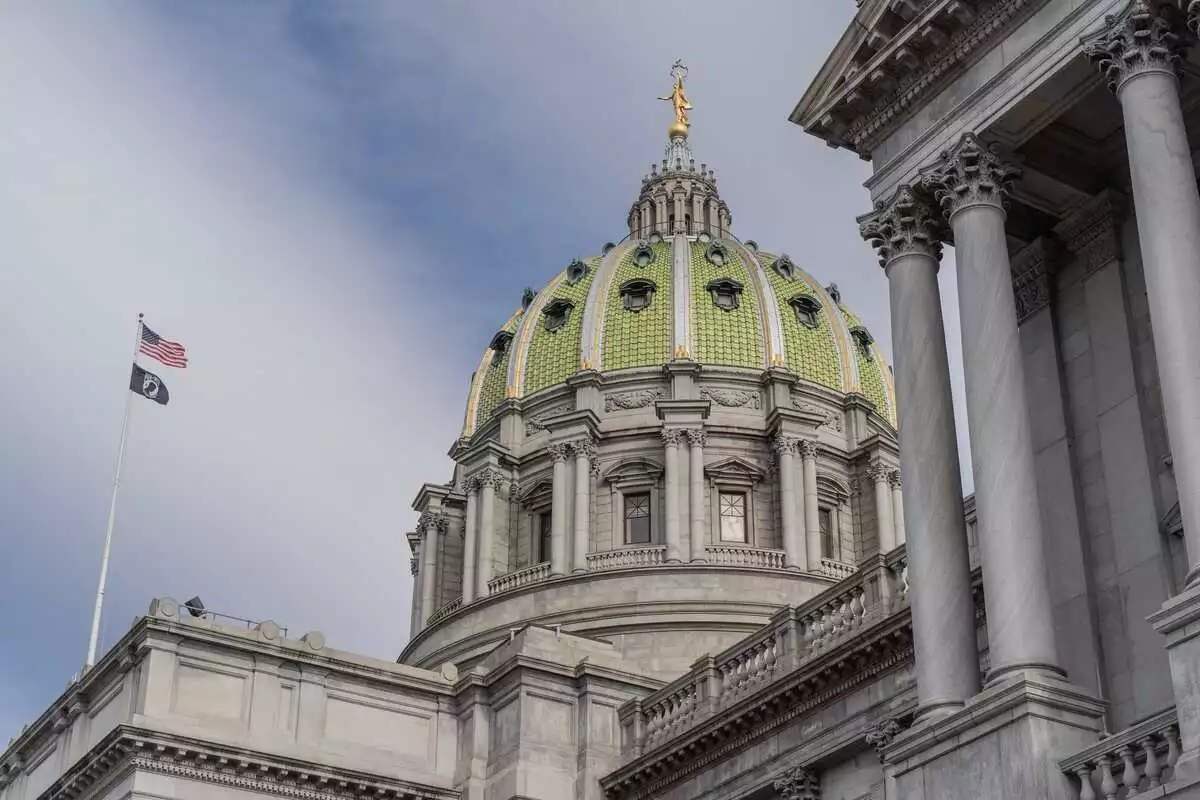
A new legislative proposal focused on regulating prediction markets has been introduced in the Pennsylvania House of Representatives. HB 2711, if passed, would force prediction markets to refund and pause the accounts of any individuals under 21 in Pennsylvania who engage in prediction market activity.
It would also restrict entities or individuals involved in the gaming industry from offering their services as liquidity providers or market makers to prediction platforms, regardless of whether those gaming operations take place within or outside the commonwealth. While the bill remains in its introductory stage, it would become law if it is signed by the governor upon being passed by the state House and Senate.
READ: Pennsylvania House Bill 2711 (introduced in July 2026)
Unlike the recently passed North Carolina budget proposal, PA House Bill 2711 would not seek to tax prediction market transaction fees. Instead, the bill would mandate that prediction exchanges liquidate any pending trades initiated by state residents who are between the ages of 18 and 20. Those accounts could be reactivated by the exchange once the individual account holder turns 21.
Furthermore, HB 2711 appears to outright prohibit entities and persons tied to gaming activities from offering market-maker services to existing prediction markets. As currently written, businesses such as DraftKings and FanDuel, along with their personnel, would be banned from coordinating with prediction apps in terms of providing liquidity.
Other restrictions included in the bill revolve around the prohibition of “death” markets, sports contracts that are linked to events in which minors participate, and accounts operated by traders who have “self-excluded” from each platform. Civil penalties for non-compliance with the proposed rules range from $10,000 to $1 million per day.
The new trend of states acknowledging and allowing prediction markets to operate while adding unique, state-sponsored restrictions on those platforms places prediction exchanges “between a rock and a hard place,” according to Straight to the Point Substack author Steve Ruddock.
“If they abide by these laws, no matter how friendly they are, they would undercut their legal argument that the Commodity Futures Trading Commission (CFTC) is the sole regulator of prediction markets,” stated Ruddock in his newsletter on Tuesday.
Indeed, the CFTC-regulated prediction market landscape has significantly shifted in recent months, with frontrunner Kalshi now facing imminent geofencing restrictions in Nevada, Michigan, and Washington. Just last week, Underdog launched its federally regulated exchange in the United States, but deliberately geoblocked its markets in more than 10 jurisdictions to steer clear of ongoing legal battles concerning whether sports event contracts should be categorized as “derivatives” or “bets.”
Novig, an exchange that plans to focus exclusively on sports-based event contracts, will have a similar decision to make once it officially launches later this summer. The CFTC is currently engaged in legal battles with a growing number of states to secure its “exclusive jurisdiction” claim over prediction market platforms. However, the pushback from states and tribes on sports contracts, coupled with state-sponsored legislation like HB 2711, is quickly eating away at the federal agency’s claim in the meantime.
Loading …