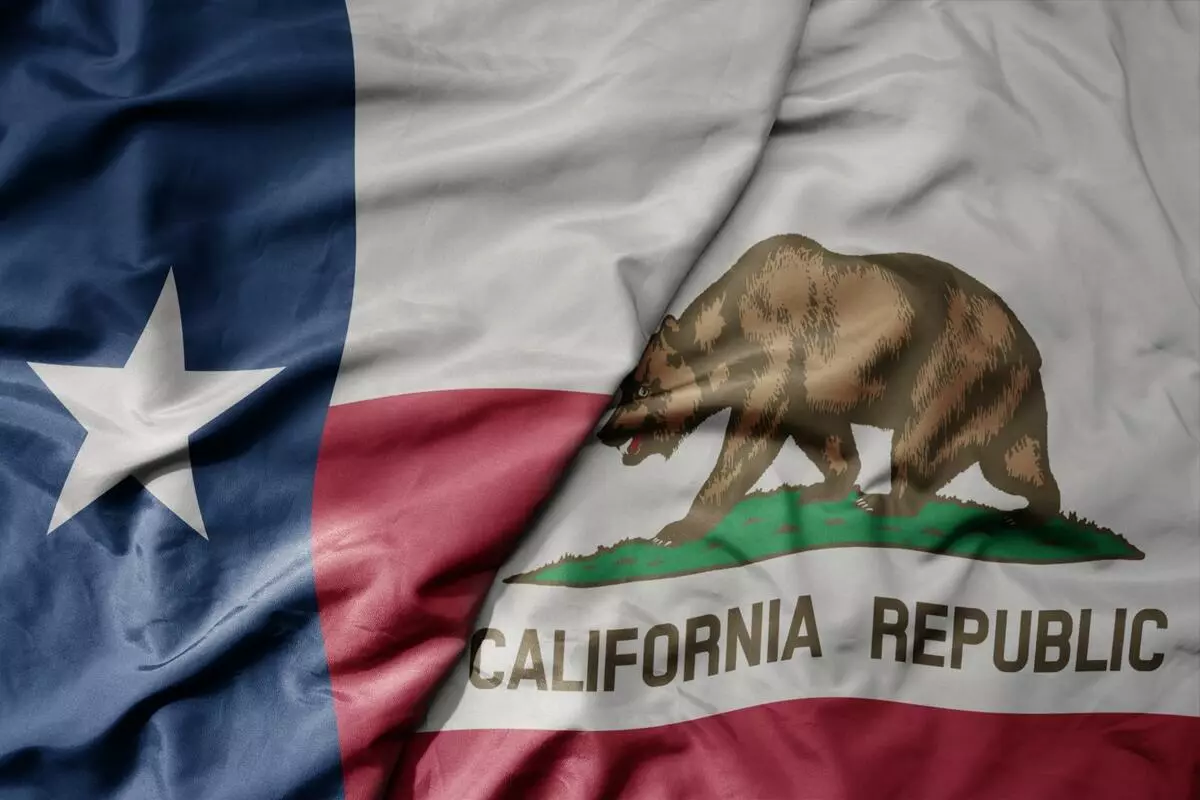
A recent study released by research and analytics firm Eilers & Krejcik Gaming shows that prediction markets are taking over the sports forecasting markets in Texas and California. The agency’s inaugural Prediction Market Monitor statistics show that exchanges like Kalshi and Polymarket aren’t necessarily infringing upon regulated activity in states that have formally legalized online sports betting. Instead, they are taking over where online sports betting legislation has yet to become law.
Demand for sports related predictions “is coming from outside the [regulated] system,” posted EKG co-founder Adam Krejcik. According to the study, roughly 69% of all prediction market sports contracts originate from jurisdictions that do not have a formal infrastructure established for online sports betting.
The research also shows that an approximate total of 43% of all prediction market sports contest activity in the United States occurs within the borders of California and Texas. Neither state has come close to legalizing online sports betting, although a cumulative $600 million was spent in lobbying costs on CA Propositions 26 and 27 back in 2022. The measures failed to legalize online sports betting.
One of the main fears among proponents of state-legalized online sports betting is that prediction market “event contracts” tied to sports contests will eventually seep into the customer bases that reside in those jurisdictions. That hasn’t occurred “for now,” according to Krejcik.
Prediction markets “are filling a product vacuum — not meaningfully cannibalizing sportsbooks.” The study estimates that only 39% of sports-based event contracts originate from within states that offer legal online sports betting.
If you place legal sports betting and event contracts tied to sports contests in the same category, Kalshi’s total volume is already one-fifth of what regulated OSB leader DraftKings achieves in monthly handle. DraftKings Sportsbook is currently available, via statewide regulation, in only half the country.
By comparison, prediction market apps Kalshi and Polymarket are available in all 50 states – although several states have filed legal complaints to ban sports related PM contracts outright. Both New York and Wisconsin sued prediction markets in April, claiming their products are simply “sports betting” under the guise of “event contracts. The CFTC has filed its own lawsuits against both states, asking the respective district courts to acknowledge the federal government’s “exclusive jurisdiction” over prediction markets.
By the end of this year, EKG believes prediction market event contracts that involve sports contests will account for approximately 20% of all OSB-equivalent activity within the US. The fact that almost all legal OSB jurisdictions have a 21 minimum age requirement (versus the 18+ status of prediction markets) could be a major contributor in the new customer growth of prediction exchanges.
“Valuations are already catching up,” remarks Krejcik at the end of his LinkedIn post. “Polymarket and Kalshi are now being valued at [more than $20 billion] — in some cases exceeding leading regulated gaming operators.”
Loading …