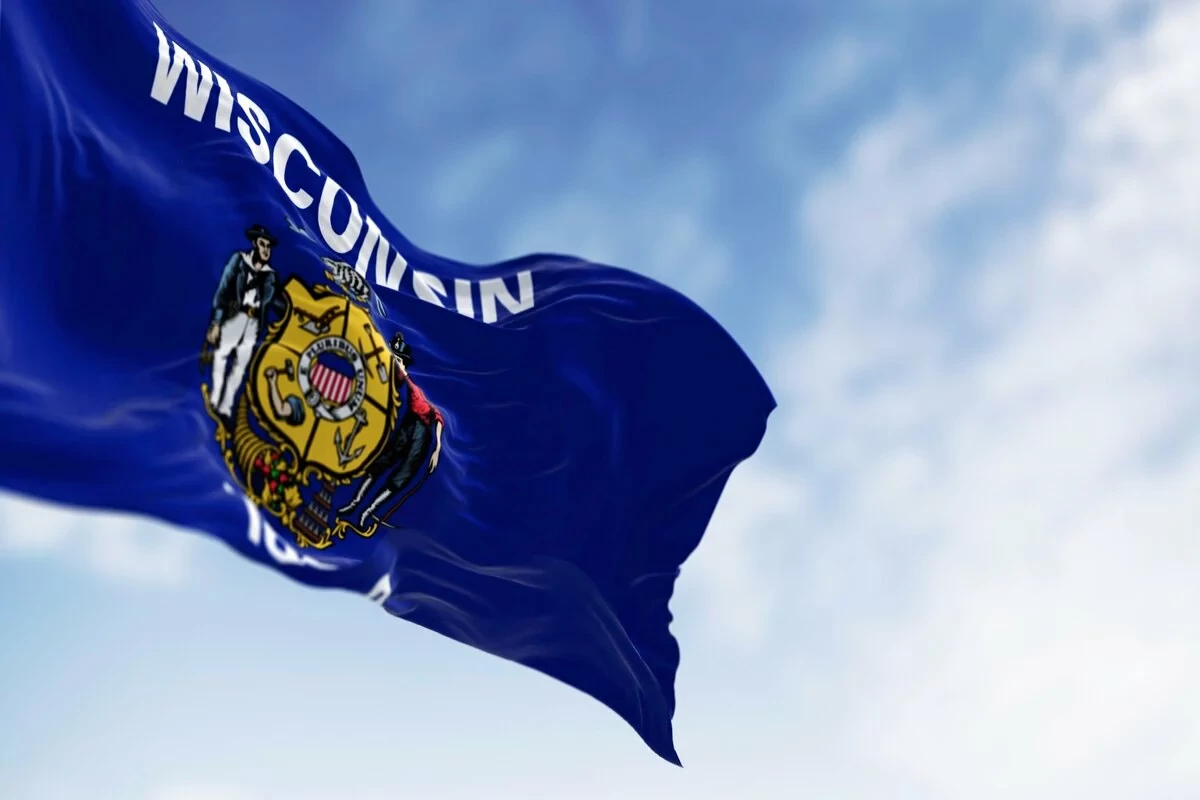
The Wisconsin Department of Justice has filed suit against prediction market apps Kalshi, Polymarket, Coinbase, Robinhood, and others for alleged illegal gambling activity. The complaint, filed Thursday in the capital city of Madison, accuses prediction market services of using the term “event contracts” as a “fig leaf to disguise the casino-style sports betting they facilitate in Wisconsin.” (SOURCE: Wisconsin DOJ v. Kalshi, Robinhood, and Coinbase (Page 6) – April 23, 2026)
In an official press release, Wisconsin Attorney General Josh Kaul specifically accused Kalshi of generating more than $1B in annual revenue from its prediction markets, and claimed that approximately 90% of that amount is derived from sports contracts. In all, the three suits encompass the operating companies and primary affiliates of Kalshi, Polymarket, Crypto-dom, Coinbase, and Robinhood.
Earlier this month, Governor Tony Evers signed Assembly Bill 601 into law, essentially legalizing online sports betting within the state, but only if it (technically) occurs within tribal borders. The new law allows the 11 federally recognized tribal nations in Wisconsin to revise their sports betting compacts to include online sports betting.
To operate legally, the servers that host the data associated with WI internet sports wagers must be located on tribal lands. All land-based sports betting in Wisconsin must likewise be located within tribal territory. All forms of non-tribal gaming and sports betting in the state remain prohibited.
Retail gaming facilities, via exclusive compacts between Wisconsin and tribal gaming interests, were originally authorized in 1991, drawing heavily on rules established by the Indian Gaming Regulatory Act (IGRA) of 1988. However, those early 1990s deals limited the scope of authorized gaming activities to bingo, raffles, pari-mutuel betting, and state lottery sales. Wisconsin didn’t legalize land-based sports betting until 2021, a few years after the United States Supreme Court ruled on PASPA (Professional and Amateur Sports Protection Act), declaring it to be unconstitutional.
The April 23rd complaint filed by the Wisconsin Department of Justice gives prediction markets 20 days to respond by writing, but current trends point to a protracted legal battle that could span well beyond the 2026 calendar year. State-based legal challenges to prediction markets and their products are becoming more commonplace as the lines between “betting” and “trading” are hotly disputed among business executives and politicians alike.
Prediction market apps such as Kalshi and Polymarket remain adamant that the “event contracts” their users buy and sell are a form of trading, even when they relate to the outcomes of sports contests. According to prediction market proponents, the trading activity that takes place on platforms such as Kalshi, Polymarket, and others is legal, and complies with federal guidelines set forth by the Commodity Futures Trading Commission (CFTC).
Loading …