Prediction markets aren’t new, but Polymarket election predictions have taken things to another level. This crypto-driven site has become a go-to spot for trading on political outcomes, especially during high-stakes U.S. elections.
But how does it work, and why can’t this be called Polymarket election betting? This article covers how Polymarket works, why it’s become the top name in political prediction markets, and how it handled billions in volume during the 2024 U.S. election cycle. We’ll also dig into the legal side, recent changes around access, and more.
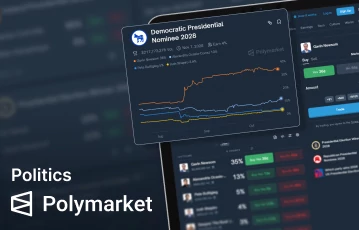
Polymarket is a New York–based prediction market app that lets users buy and sell shares in outcomes of real-world events, events like elections, economic policy, or even celebrity happenings. It’s been around since 2020 and was launched by Shayne Coplan.
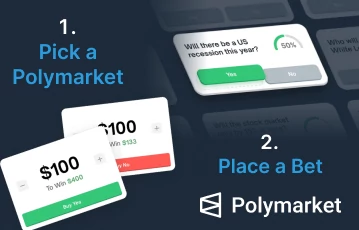
For every question, like “Will Candidate X win the 2028 U.S. presidential election?”, there are two sides, YES or NO. Each side has a price between $0 and $1. If your prediction turns out right, you get $1 per share. If not, you get $0. The closer the price is to $1, the more the market thinks that outcome will happen. Unlike a typical sportsbook, Polymarket sports prediction markets use blockchain tech and smart contracts to run the markets. You’re not playing against the house here. You’re trading against other users, and many of those are backed by automated market makers.
Polymarket sits alongside other prediction market sites, but what sets it apart is scale, and how active its election markets are. In 2024 alone, it reportedly handled around $9 billion in trading volume, with the U.S. presidential race as the top driver. The site also got a huge funding boost, pulling in over $70 million from names like Vitalik Buterin and Founders Fund. Then came a massive move. Intercontinental Exchange (the same parent company as the NYSE) committed to investing up to $2 billion. That deal valued Polymarket at around $8 billion and set it up to share election market data with traditional finance clients.
Let’s break it down into pieces so it’s easy to follow.
Every election market on Polymarket is built around a yes/no question. For example “Will Donald Trump win the 2028 U.S. presidential election?”
You buy YES shares if you think he will. If he wins, you get $1 per share. If he loses, you get nothing. The price of a share (say $0.72) reflects what the market thinks the probability is. In this case, the market sees a 72% chance of Trump winning. Prices adjust constantly based on what people are trading. But just like traditional sports betting, your prediction must be correct for you to win a payout, and there is always a winner and a loser.
The Polymarket app doesn’t act as the counterparty. It’s a peer-to-peer market. Each trade pairs someone who wants to buy YES with someone selling YES (or vice versa for NO). In reality, most of the time you’re matched with an algorithmic market maker that offers prices based on supply, demand, and past movement. If a big news story breaks, a candidate drops out, a poll swings, or something unexpected happens, the market reacts instantly. Prices move in real time, just like standard sports betting adjusts odds based on the flow of information.
Polymarket lays out how markets will settle before trading starts. They cite official sources (like election commissions or reputable news outlets) to verify the outcome. Once that happens, YES shares pay out at $1 and NO shares pay $0, or vice versa. You can also exit your position before the market closes if you want to lock in a gain or cut a loss. Either way, you’re predicting outcomes with real money tied to your call.
Polymarket’s election markets didn’t just attract casual traders. They exploded during the 2024 U.S. race, dominating the site’s activity and putting prediction markets in the headlines. This wasn’t just about politics, it became one of the largest financial events in the prediction space.
| Metric | Figure |
|---|---|
| Total volume on main “Who will win?” market | $3.2–$3.3 billion |
| Share of open interest tied to elections | ~90% |
| October 2024 election trading volume | $2.5 billion |
| Total predictions placed | ~13 million |
| Single largest market (by volume) | 2024 U.S. Presidential Election |
| Highest shift in odds (Biden withdrawal) | From ~20% to ~70% in days |
The 2024 U.S. presidential election wasn’t just a political event, it was the biggest single market in Polymarket’s history. Over $3.2 to $3.3 billion changed hands on the main “Who will win?” contract.
In the lead-up to Election Day, about 90% of open positions on the site were tied to election markets. During October 2024 alone, trading volume hit $2.5 billion. Nearly 13 million individual predictions were placed. That kind of volume blew past anything we’d seen before on a prediction site. And it got noticed, not just in crypto or politics circles, but by institutional investors and mainstream media.
One standout moment was the Biden withdrawal. After the June 27, 2024, debate, Polymarket’s odds that Biden would drop out of the race spiked from 20% to 70%. That shift happened weeks before he officially announced his withdrawal. But Polymarket wasn’t always spot-on. In the VP selection market for Kamala Harris, the crowd gave Josh Shapiro higher odds than Tim Walz. Walz ended up being the pick. It was a good reminder that just because there’s money backing a prediction doesn’t mean it’s a lock.
Polymarket might look like just another prediction site, but trading on political outcomes carries its own set of challenges. From unexpected price swings to bigger questions about fairness and regulation, there’s more to election markets than meets the eye. Let’s look at some of the real considerations before you start predicting outcomes.
Election markets can be volatile. A single news item can swing prices by 20 points. And not every race has deep liquidity. If you try to trade big positions, you could end up moving the prices yourself.
Some critics argue that high-dollar prediction markets distort public trust or let wealthy traders manipulate narratives. That’s especially concerning during close elections. Others argue that prediction markets help surface public sentiment earlier than polls or pundits. And in some cases, the market has spotted real shifts before the media did.
Before trading, understand how contracts and Polymarket fees are worded. Don’t assume that “YES” means what you think it does, read the resolution criteria. Also, remember that a 70% price doesn’t mean something will definitely happen. You’re predicting outcomes, not reading a crystal ball.
Polymarket isn’t some quirky crypto experiment anymore. It’s a heavily backed prediction site with billions in volume, growing regulatory clarity, and a foothold in U.S. financial markets. If you’re there to track sentiment or trade positions, it’s really shaping how people interact with political outcomes. If you’re checking out prediction market apps or just want to see how others are trading on high-stakes global events, Polymarket is a big part of that story.
If you want to give it a try, click the banners on this page to sign up and check out the latest election markets.
With Polymarket election prediction markets, you trade against other users in a market, not the house. Prices shift based on demand, there are no fixed odds like at a traditional sportsbook.
Market volatility, limited liquidity in smaller races, and the normal risks that come from backing predictions on random events with money. Contracts can also be misread if you’re not clear on the resolution terms.
Prices move based on user activity. If more people buy “YES” shares, the price rises. It’s supply and demand, not a sportsbook setting the line.
Each market has defined resolution rules. Once an outcome is confirmed by official sources, shares settle.
Yes, Polymarket operates using USDC on the Polygon blockchain. You’ll need a crypto wallet and access to stablecoins to fund your account.
Loading …