Polymarket has finally made its much-anticipated return to the US, offering thousands of prediction markets nationwide. But the question on everyone’s mind is: are there any Polymarket fees that you need to watch out for?
There are a few different types of transactions to consider on Polymarket, so it’s important to understand how fees could affect you. This includes the usual deposits and withdrawals, trading fees, and any potential blockchain network fees that apply outside of the platform itself. Keep reading as we dig into the details.
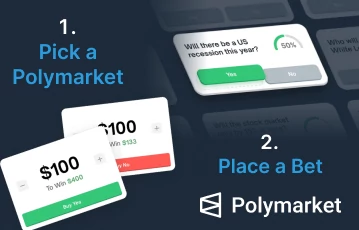
If you’re looking to make election predictions at Polymarket by trading on their various markets, the first step is funding your account. From there, you’ll place trades to buy or sell shares, and eventually, you might request a withdrawal. Each of these actions could involve fees, so it’s important to understand how they work. Let’s break down each one in detail:
Polymarket charges a trading fee of 0.1% on each transaction you make on the site. This fee is applied whenever you buy or sell shares in a market, meaning that every time you take a position on an outcome, a small portion of the transaction goes to Polymarket.
At 0.1%, this fee is relatively low compared to many other prediction sites, making it affordable for both casual traders and high-frequency participants. It’s also automatically deducted from the trade, so you don’t need to calculate it manually. But having the awareness of its implications means you can plan your trades and understand the overall cost.
Whether you make payments using the Polymarket app or the official site, there are no charges for deposits or withdrawals. It makes managing your bankroll much more predictable, as you can move money in and out without worrying about hidden charges. This is in contrast to many alternative prediction market sites, which charge fees for both deposits and withdrawals.
When you trade on Polymarket, a 0.1% fee is applied to every buy or sell transaction across the site. To make it easier to understand, here’s an example of how the fee affects different trade amounts:
| Trade Amount (USD) | Trading Fee (0.1%) | Total Cost / Net Received |
|---|---|---|
| $50 | $0.05 | $50.05 (buy) / $49.95 (sell) |
| $100 | $0.10 | $100.10 (buy) / $99.90 (sell) |
| $500 | $0.50 | $500.50 (buy) / $499.50 (sell) |
| $1,000 | $1.00 | $1,001.00 (buy) / $999.00 (sell) |
Even though Polymarket doesn’t charge deposit or withdrawal fees, it’s important to remember that network or blockchain fees may still apply. These fees are not controlled by Polymarket but are a standard part of using cryptocurrency for transactions. Every time you deposit funds or withdraw from your account, the underlying blockchain processes the transaction, which can involve small fees to miners or validators.
The exact amount can vary depending on network congestion and the type of cryptocurrency you’re using. While these fees are typically small, they are still something to keep in mind, especially if you’re making frequent or smaller transactions.
Here are a couple of helpful tips and tricks that can be used to reduce your Polymarket fees:
One of the easiest ways to minimize fees on Polymarket is to reduce the number of trades you make. Since each buy or sell comes with a 0.1% trading fee, constantly jumping in and out of positions can slowly chip away at your balance. Instead of reacting to every market move, take a step back and focus on placing well-researched trades with stronger conviction.
Because blockchain network fees apply to every deposit and withdrawal, making fewer but larger transfers can help you avoid paying multiple small network fees that add up over time. Also, try to make these transactions during off-peak periods when fees tend to be lower.
As of November 2025, Polymarket offers prediction markets to US residents under the close regulation of the Commodity Futures Trading Commission (CFTC). This means you can enjoy a safe, secure, and reliable experience on a wide range of prediction events, including sports, crypto, politics, culture, technology, and more. The Polymarket odds across these different prediction markets are also super impressive when compared to key competitors.
The site and mobile app are also super easy to use with a focus on cryptocurrency payments, including the stablecoin USDC. While these payments may incur some network fees, as we’ve already discussed, they’re incredibly fast and ensure excellent security.
Here is a quick summary of the pros and cons of Polymarket prediction markets:
Polymarket keeps things simple when it comes to fees, and once you understand how each one works, it becomes much easier to manage your costs. The 0.1% trading fee is low compared to many alternatives, and the site’s zero-fee deposits and withdrawals mean you can manage your bankroll stress-free. Just keep a watchful eye on any network fees you might be charged outside of Polymarket, as these can add small fees.
Overall, Polymarket remains an affordable, transparent option for anyone interested in prediction markets. If you’d like to check it out for yourself, you can use any of our links on this page.
Yes. Every buy or sell transaction carries a 0.1% trading fee at Polymarket.
No. Polymarket does not charge fees for deposits or withdrawals. However, standard blockchain network fees may still apply when using cryptocurrencies.
Yes, Polymarket is regulated by the Commodity Futures Trading Commission (CFTC).
No, there is no Polymarket sports betting, but you can make predictions by trading contracts related to sports events.
Loading …