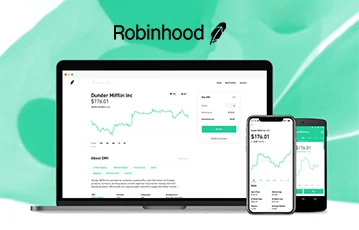
Replace Robinhood odds with probabilities and you’ve got an idea of how their prediction markets service works. You’ll see questions with yes or no answers, and you need to choose which one you think will be correct.
Here, we’ll explain more about prediction markets, how they work, and how to trade in event contracts if you join Robinhood. You can use the website or their app to keep track of changing positions. Participants predict outcomes of sporting events, elections, and even events happening in popular culture. We’ll see how these probabilities work below.
If you’ve tried sports betting (or indeed betting on other topics) in the past, you’ll be familiar with looking at the odds of various outcomes happening. With prediction markets, you’re looking at probabilities instead. Robinhood offers a range of prediction markets, each focusing on a single question you can answer yes or no to.
Instead of betting on sports, you’ll look at Robinhood sports trading, deciding whether you think something will happen or not. You’ll find several differences between betting and prediction market trading, so we’ve displayed those in this table.
| Betting | Prediction Market Trading |
|---|---|
| Bet on a range of outcomes, i.e., which team will win an event | Trade on yes or no probabilities, i.e., will X team win the event – yes or no? |
| View odds for each potential outcome | View the percentage likelihood that an event will happen or not |
| The sportsbook provides the odds | The participants back either yes or no and influence the market position |
| Choose how much you want to place on a bet | Buy one or more shares in event contracts, paying the same price for each (a 68% likelihood will cost 68 cents per share) |
| If you win, your bet is multiplied by the odds given when you placed your bet | If you guess correctly, you receive $1 for each share you bought |
While betting provides live and changing odds, prediction markets reflect the opinions of traders involved in them. For example, you might find a prediction market based on the Most Valuable Player (MVP) for the current pro football season. We found this market at Robinhood, with 40% of people saying Drake Maye would be the MVP (yes), while 60% of people said he wouldn’t be (no) at the time we wrote this guide.
As time goes on and teams play more matches, you’re likely to see changes in those percentages, based on Maye’s performance. If you buy shares in Robinhood event contracts and you think you’d be better off exiting early, you can do so. Alternatively, you can wait until the market resolves – this means you’d wait and see whether Drake Maye was the MVP or not for that year.
If you chose correctly, you’d receive $1 for each share you bought in that event contract. If you guessed the wrong answer, you would not receive anything. This means that you could check current Robinhood forecasts to see whether you want to buy shares now or wait and see whether the percentages change. You can see that every market has a winner and a loser, no matter what happens.
Just as live odds regularly change to reflect the latest information in sports betting, you will see the positions change as people keep track of events in a particular event contract as well. For instance, 40% of participants backed Drake Maye as the MVP for the current year, but this might change if more people back this event to occur.
This might lead to 55% of people thinking he will be the MVP, with 45% thinking that he won’t. This shows how the situation can change according to information and people’s opinions. Note that similar scenarios occur in Robinhood election trading and other areas of interest.
You might find prediction markets complicated to understand to start with, but they’re all based on a basic format – yes or no predictions. The form you’ll make your trades on has the relevant Robinhood fees displayed, so you’ll know what you will pay before you commit. Check our pros and cons here to get a better sense of what to expect.
You can see that prediction markets work differently from regular betting on sports and other occasions and events. In some ways, they’re easier to understand, since every prediction market provides you with two scenarios – yes or no. You can visit Robinhood by using one of the links we have given you on this page, to find out more about their range of prediction markets in sports, politics, and even weather conditions.
While you don’t have any odds to look at, you can keep track of the changing opinions of other participants, as you think about the yes or no probabilities and which one you might like to back and trade on.
No – they supply prediction markets rather than betting, so this means you need to look at the probability of a certain event happening. You can choose to buy shares in a yes or no outcome.
Yes, they’re regulated and overseen by the Commodity Futures Trading Commission. As a Federal agency, they’re responsible for all relevant sites on a nationwide basis. Prediction markets are legal because they’re a financial entity and not involved with betting.
Robinhood provides prediction markets in a wide range of sports, along with culture and economics. To participate, you must find a market and buy shares in yes or no, according to whether you believe that market will resolve in the relevant way. If you are correct, you receive $1 for each share you purchased.
Loading …