A federal appeals court ruled New Jersey cannot treat Kalshi’s sports contracts as gambling.
The court noted that Kalshi operates under CFTC‑regulated derivatives law, not state betting rules.
The decision is the first U.S. appeals ruling to give CFTC “exclusive jurisdiction” over such sports prediction contracts.
On Monday, April 6, 2026, a Federal Appeals court handed Kalshi and fellow prediction markets a landmark victory. The court ruled against New Jersey, stating that NJ gaming regulators cannot prevent residents from trading sports event contracts on the platform.
The dispute revolved around Kalshi’s sports trading services, with the state arguing that the operator’s offerings were actually sports betting. As a result, they were violating the state’s gambling laws. However, the court rules in favor of Kalshi, noting that the prediction market falls under the regulation of the US Commodity Futures Trading Commission.
New Jersey triggered the legal clash in March 2025 when it issued Kalshi a cease-and-desist letter. The claim was that the platform’s sports-related event contracts violated state gambling laws that prohibited wagering on collegiate sports.
Kalshi responded by suing the state. It argued that its contracts qualify as “swaps,” a category of derivatives under the Commodity Exchange Act that can only be regulated by the Commodity Futures Trading Commission. The CFTC had already licensed Kalshi to operate as a Designated Contract Market.
A lower-court judge sided with Kalshi and issued a preliminary injunction that blocked state enforcement. New Jersey later appealed this, but most judges on the 3rd Circuit upheld the injunction after concluding that the Commodity Exchange Act likely supersedes state law.
On appeal, there was a three-judge panel of the 3rd circuit. Two of them voted in Kalshi’s favor, noting that the CFTC-regulated status of the prediction market protects Kalshi from state-level sportsbetting bans. Judge Jane Richards Roth disagreed, saying that Kalshi’s contracts look like sports betting and should be treated under NJ’s gambling rules. However, it was a 2-1 vote, so the majority supported Kalshi.
New Jersey’s Attorney General Jennifer Davenport also strongly pushed back on the decision. She stated that it allows certain companies to offer sports gambling in New Jersey without complying with the gaming rules that apply to betting sites. Her office said it is evaluating all available options, which could include requesting the full 3rd Circuit to rehear the case.
Kalshi’s cofounder and CEO, Tarek Monsour, took to X to celebrate. He posted, “This is a big win for the industry and millions of users.” And it really is. It is the first time a US Court of Appeals has held that the Commodity Exchange Act gives the CFTC exclusive jurisdiction over prediction market sports-related event contracts.
The New Jersey decision also paves the way for other prediction markets in the state. It strengthens the argument that sports event contracts are still financial derivatives rather than traditional sports betting. As long as an operator is running a prediction market regulated by the CFTC, it can point to this ruling to support the idea that federal law preempts state bans.
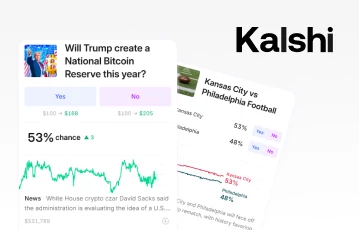
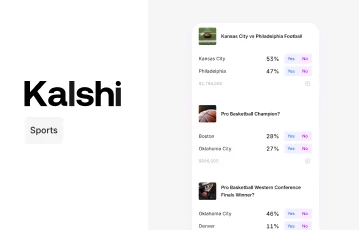
Kalshi is one of the best prediction markets where you can trade event contracts across categories such as sports, politics, climate, and entertainment. These contracts represent Yes and No outcomes. So, you pick “yes” if you believe an event will happen, and “no” if you think the event will not happen. Each market has its own price, ranging between $0.01 and $0.99. You get a $1 payout for every correct event contract.
The 3rd Circuit ruling on Monday marks a turning point in the fight over who regulates America’s prediction markets, particularly sports-related event contracts. While it would not change the outcomes of legal disputes in other states, it shows there’s hope that Kalshi can expand its prediction offerings in the US.
Loading …