The political climate in the United States has evolved in such a way that even the most mundane elections can become a hot-button topic for debate. Given the way federal elections work in the US, there are major elections that occur every two years (known as the midterms), with every four years featuring an actual presidential election.
As a result, Polymarket traders find that the maximum time you have to wait between one midterm election and the next is two years, and that doesn’t count the intraparty “primary” elections that precede traditional “general” elections that pit one party against another.
Following are the Top 5 all-time politics markets ever on the Polymarket exchange.
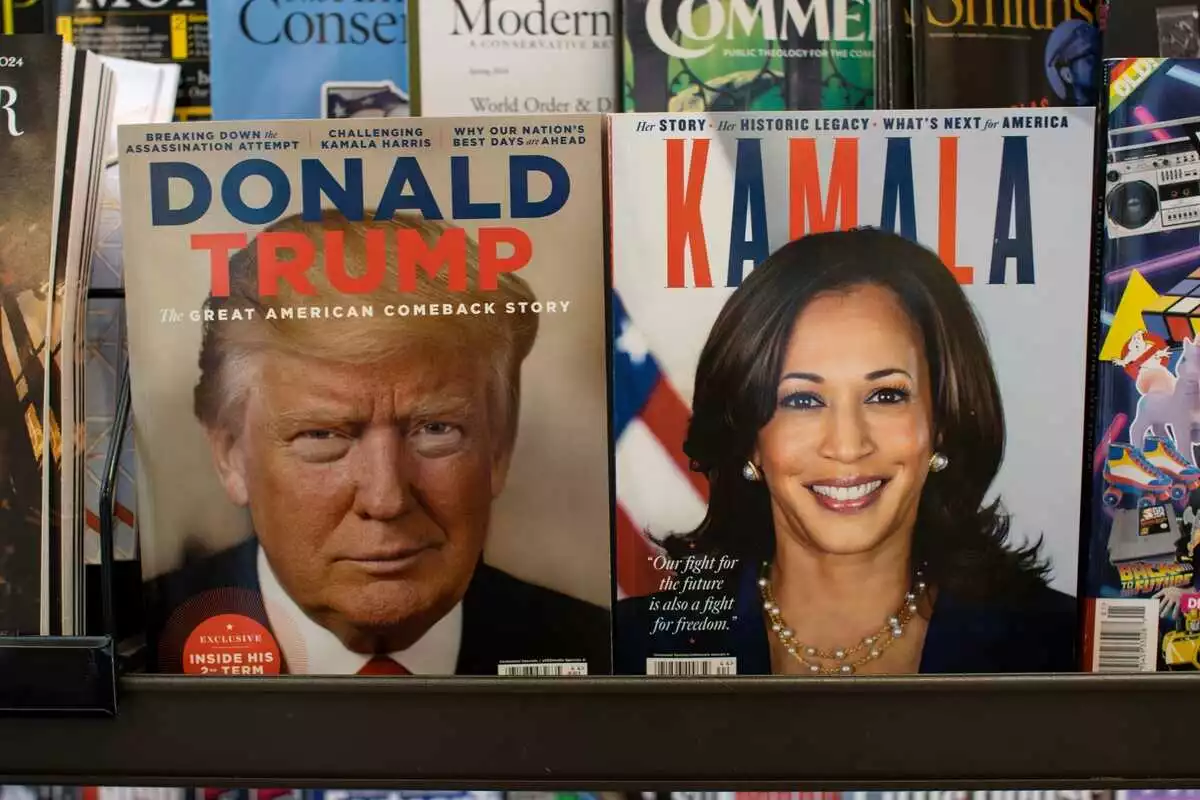
Four billion dollars. That’s the total amount that Polymarket traders put into the 2024 general election for US president. The race featured everything you’d want: a perceived close race heading into election day, two candidates who attracted strong emotions from their supporters/detractors, and traders on both sides who were confident they were getting a great deal by placing “yes/no” trades on their favorite candidate.
In the end, Donald Trump was re-elected to his second term as the 47th president, winning all seven “swing states” and banking a surprising (to many) popular vote victory as well. Trump was the first Republican presidential candidate in the US to win the popular vote since George W. Bush did it in 2004. By the time all the results were in, Donald Trump obtained 312 electoral votes to Kamala Harris’s 226.
Although many pundits predicted that the market would take up to two weeks to resolve, the 2024 US presidential election was decided in the early morning hours of November 6th, 2024, once Hawaii’s votes were accounted for. The “Blue Wall” didn’t hold for Democrats, Donald Trump completed his epic political comeback, and the rest is history.
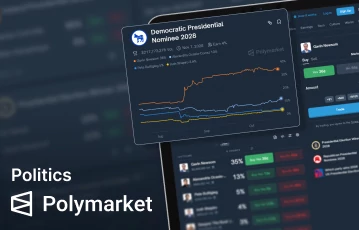
This market has quickly taken over the number two spot for biggest politics markets in Polymarket history. This likely won’t be decided until a few months before the actual 2028 US presidential general election. However, that hasn’t stopped Polymarket traders from pouring in $1.2 billion in trading volume on who the eventual Democratic nominee will be.
California Governor Gavin Newsom is the perceived frontrunner, but the field is highly competitive and features some of the biggest names in US politics. New York Representative Alexandria Ocasio-Cortez, former Vice President Kamala Harris, and Georgia Senator Jon Ossoff trail behind Newsom in popularity, but are still seen as very viable candidates to win the Democratic bid for president in 2028. The field also includes sitting Pennsylvania Governor Josh Shapiro as well as TV personality Jon Stewart.
The two-term limit on US presidents was enacted after Franklin D. Roosevelt served four presidential terms. This means that, barring an act of Congress or otherwise unforeseeable “emergency” action, Donald Trump won’t be the Republican nominee for the 2028 general election. With $665 million in total trading volume, Polymarket forecasters are split between two supposed rivals: current Vice President J.D. Vance and current Secretary of State Marco Rubio.
TV and social media personality Tucker Carlson comes in at third place for the potential 2028 Republican presidential nominee, followed by Donald Trump Jr., Ron DeSantis, and Vivek Ramaswamy. As of mid-2026, both the Democratic and Republican conventions for the 2028 presidential election are expected to take place in August 2028, roughly three months before the general election.
Back in January 2026, all eyes were on the Federal Reserve and whether it would implement a 25-basis point (0.25%) rate cut or retain the current interest rates. By the time the Fed’s decision was made (to keep interest rates steady), Polymarket forecasters had placed almost $660 million in trades on this market alone.
The topic was such a hot-button issue due to the tensions between then-Federal Reserve Chairman Jerome Powell and President Trump. After all was said and done, the Fed decided to leave interest rates as-is. Jerome Powell is no longer the Fed chairman. He stepped down on May 15th, 2026, and Kevin Warsh has since taken his place.
With $641 million in total trading volume and more than two years to go before the November 2028 general election for US president, this market has the best chance of overtaking the number one spot on this list. A lot can happen between now and late 2028, which is why the overall trading activity on who will be the next US president probably won’t heat up until that year’s primary elections begin.
Currently, J.D. Vance, Marco Rubio, and Gavin Newsom represent the Top 3 candidates according to Polymarket traders, but that can change in an instant if a candidate announces other intentions. Right now, the main focus of both political parties is on the midterm elections of 2026, but the 2028 presidential cycle will begin shortly after this November’s midterm elections.
Will the 2028 US presidential general election winner market outperform the $4 billion in trading volume from the 2024 general election? Only time will tell. In the meantime, you can sign up for a Polymarket prediction market account and start trading on your own predictions.
Loading …