The Father Of Artistic Figure Skating Is A New Yorker Who Lived During The 19th Century

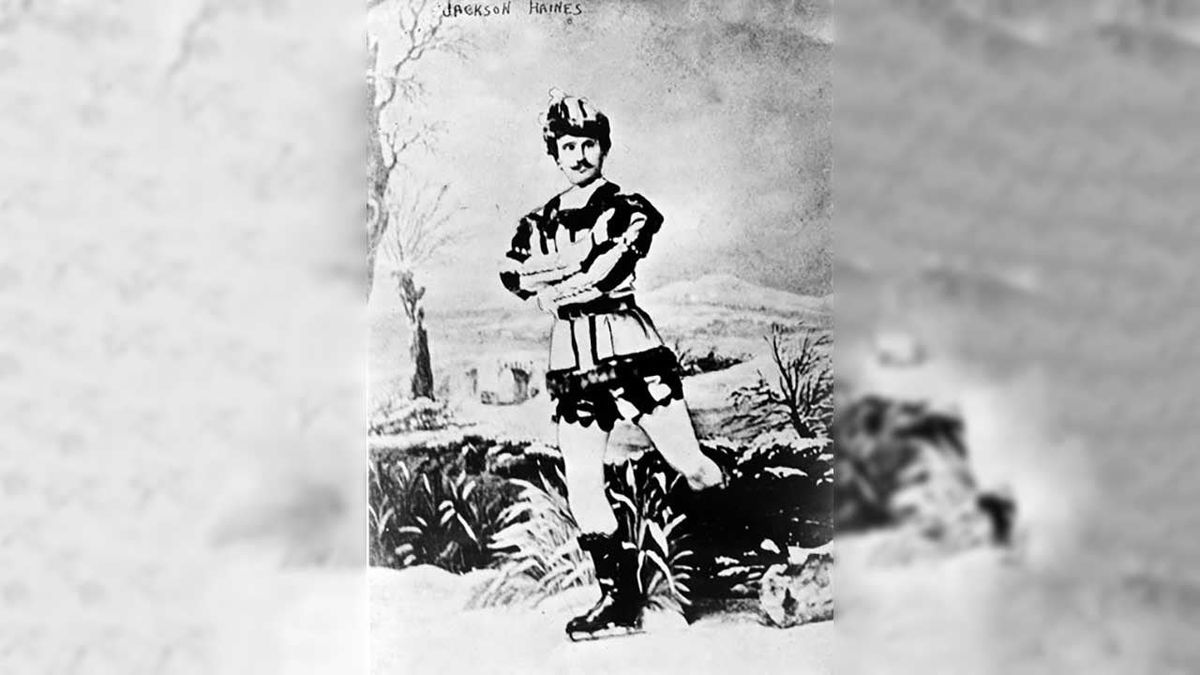 Library of Congress/Wikimedia Commons
 Skating on ice dates all the way back to 3,000 BC. Or, anyway, the oldest pair of skates date back that far. The blades on these early skates are made of animal bones with holes bored through them; leather straps attached the skate to the foot.
As you can imagine, skating on ice developed in places that had a lot of ice; it was, at the start, largely a northern European pursuit. Those early skates were discovered in a lake in Switzerland, although it is believed that skating on ice actually originated further north, in Finland. We are never going to get to the men’s final in Pyeongchang at this pace, so let’s step on the gas a bit.
Jump forward a few thousand years and ice skating really takes off, first in Holland and then across Europe and North America. It was a multifaceted process, with geographic features shaping the kind of skating that developed and took hold in a given place. If your city or town had rivers that froze solid throughout the winter, you might end up racing on the ice in a sort of forerunner of modern day speed skating. If you had a small frozen pond where distance racing was not an option, you might try to come up with cool tricks you could do on skates, a form that eventually evolved into what we now call figure skating. Those early tricks included doing things like jumping over hats that were stacked on the ice, but skaters also perfected their edges, leaning from the inside to the outside, backwards and forwards, drawing figures on the ice.
The English really perfected this kind of skating—the edge work, the drawing of figures on the ice—and eschewed the style that was emerging around the same time, which was more performative and emotional, with florid movements and arms raised above the head. The confluence of the two would eventually become something like the sport it is today. “The notion that skating was not just an exercise or a form of locomotion but a means of expressing sensation, feelings and aesthetic ideas came to define the type of skating that would, in the late 1800s turn into figure skating,” Mary Louise Adams writes in Artistic Impressions: Figure Skating, Masculinity, and the Limits of Sport.
The person credited with developing the artistic side of skating in the late 19th Century is Jackson Haines, an American skater and dancer from New York. “Haines saw in skating tremendous theatrical and artistic possibilities,” Adams writes. “Haines experimented with a form of skating inspired by dance. He fit his skating to music, developed new moves (including the sit spin, which for many years was called the Jackson Haines spin, and invented a one-piece skate.”
But his style and innovations did not gain much traction in the U.S., which was more taken with the English style. So Haines went to Continental Europe to see if he could do any better there.
He did. Adams notes that Haines performed exhibitions in Norway, Sweden and Russia that were very well received. But it was in 1868 in Vienna where Haines really left his mark. In the mid-19th century, Vienna was going through something of a “waltz craze” and Haines cannily performed to waltz music in front of an elite audience that included Kaiser Franz Joseph I. The response to his performance was overwhelmingly positive.
The style that Haines pioneered would be called the Continental, and Vienna ended up becoming a prominent skating city for decades after Haines’ performances. (Haines died in Finland in 1875.) And figure skating—despite a name that points to an English style focused on technique and etching figures in the ice—has evolved in Haines’ image. It’s bold and expressive while being athletic and daring; there are rules, but beauty matters, too.
I think Haines, one of the first skaters to set his movements to music, would be proud to know that a skater performed to “ Rapper’s Delight” in the Olympics.
Related
Mississippi State Looks Ugly in First Big Test

Why This Cheating Scandal Could Break Online Poker for Good


MLB Playoff Picks: Padres vs. Brewers and Braves vs. Dodgers

UFC 332 Betting: Best Bets for Silva vs. Wang and More

MLB Playoff Picks: Rays vs. Yankees, Padres vs. Brewers

Week 5 College Football Betting: Three Picks That Stand Out
- MLB Playoff Picks: Rays vs. Yankees, Padres vs. Brewers
- Week 5 College Football Betting: Three Picks That Stand Out
- Two UFC 332 Fights Are Seeing Major Line Movement
- UFC 332 Underdog Pick: King Green vs. Esteban Ribovics
- Two Friday College Football Friday Betting Picks to Kick Off Week 5
- MLB Playoff Futures: 3 Bets to Make Before the ALDS and NLDS
- UFC 332 Betting Splits: Where the Sharp Money Is Landing This Weekend