AP's Dumb Baseball Poll And The Durable Myth Of The Overpaid Ballplayer

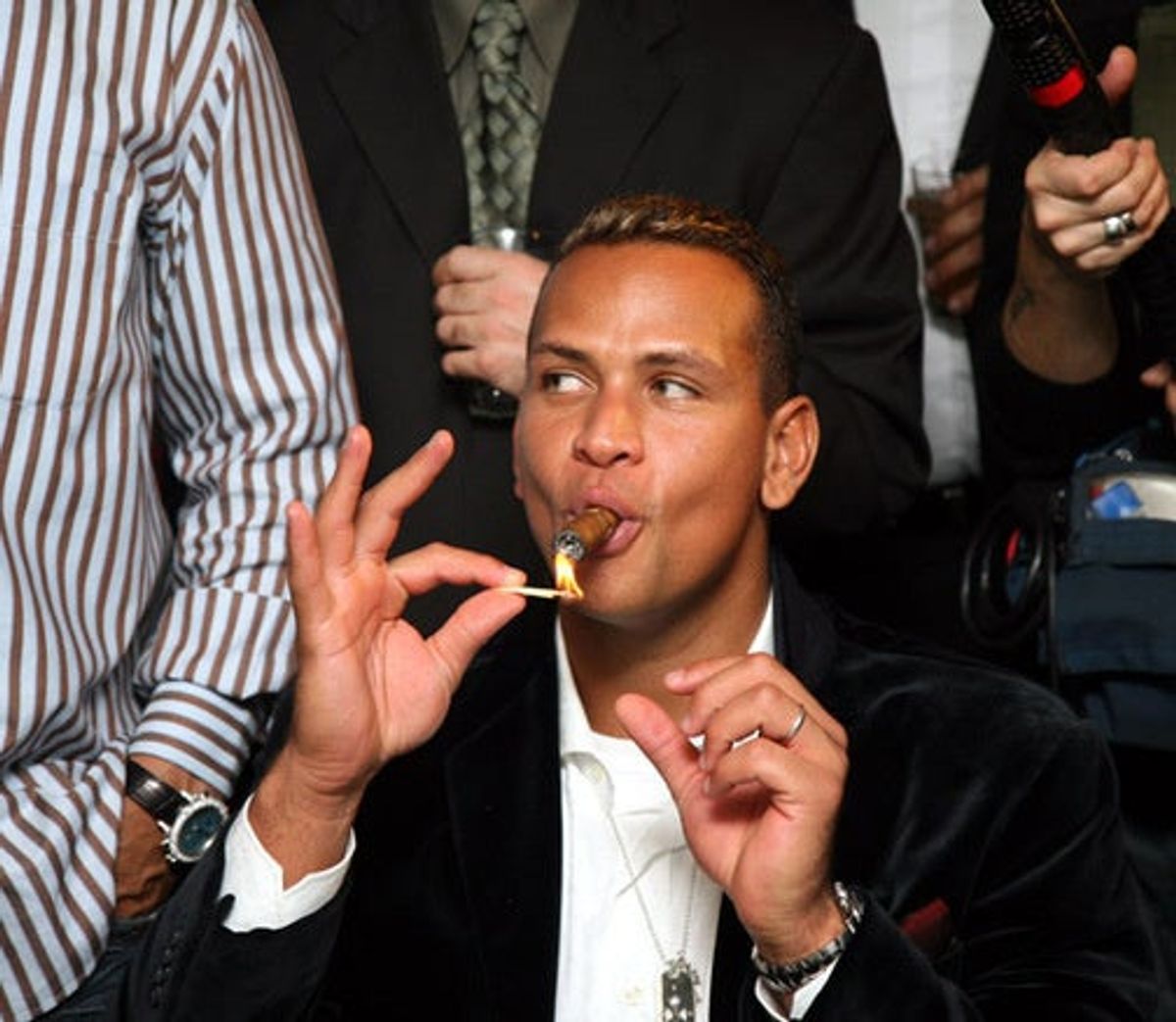
The Associated Press and Knowledge Networks recently teamed up for a state-of-baseball poll that revealed nothing whatsoever except the silly dogmas of the sort of people who commission state-of-baseball polls, i.e. sportswriters.
As a look at the concerns of the common baseball fan, the survey was mostly useless, unless you're totally flabbergasted by word that 56 percent of fans have reached the commonsensical conclusion that the All-Star game shouldn't determine World Series home-field advantage. As a glimpse into the group mind of the sporting press, however, it was revealing.
The one newsworthy item to emerge from the poll is that fans identified the cost of attending a game as baseball's foremost problem. (The steroids issue rates third; naturally, half of the poll's 22 questions center on PED use.) This isn't really surprising, given that we're in the midst of a epochal economic crisis and everything. But here's how the survey framed the question (Wave 1 was conducted before opening day; Wave 2 was a more recent round of polling):
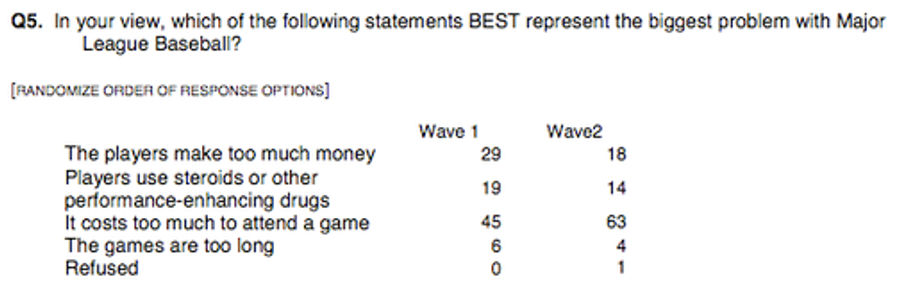
So of the many, many things wrong with the game, AP/Knowledge Networks chose four issues, the last of which is plainly idiotic (this is a poll of baseball fans, after all), the first of which is an old canard that grows more and more offensive every season.
I'll give fans a pass here and say that the 29 percent who deemed high salaries to be baseball's biggest problem were merely choosing one of two responses available to them that related to matters of the pocketbook. But why would AP/Knowledge Networks even offer the answer in the first place? Why not, oh, "owner greed" instead? Or "publicly funded baseball stadiums"? Or "baseball's anti-trust exemption"? Or "a commissioner who operates on the theory that the game's fans are slackjawed halfwits"? Or "the Washington Nationals"?
How are player salaries a legitimate issue for fans, beyond whatever vague class anxieties they inspire in the upper grandstands? This can't be said enough: High salaries do not cause high ticket prices. Period. No matter how often owners lie about it. Hell, in terms of economic stimulus, isn't that money better off in the hands of an athlete with generous views on wealth redistribution, rather than in the pockets of an owner who needs to refinance another Cessna?
The AP is trafficking in an old myth here — the overpaid ballplayer — one that long ago would've been retired if sportswriters weren't so predisposed to taking management's view on, well, everything. Here, via Matt Yglesias, is a chart of worker compensation as a share of national GDP. (I realize this isn't the cleanest comparison, but it at least provides a rough index of what American business considers to be fair.) The figure hovers between 56 and 59 percent. Baseball players' share of leaguewide revenue is only 52 percent, the lowest of any major team sport and significantly lower than what an average American employee earns as a share of the overall economy. The AP poll was right, in a way. Salaries are a major problem facing baseball. They're too small.
Knowledge Networks-Associated Press Poll (PDF) [AP] Poll: MLB fans feel priced out at ballparks [AP]
Related

Los Angeles Chargers Shouldn’t Resist Justin Herbert Trade

5 Fights to Make After UFC Vegas 112

Brewers vs. Dodgers Game 3 Predictions, Picks and Odds
The 5-0 49ers Are Finally Getting the Respect They Deserve
Jorge Masvidal Makes $100K Pick to Beat Islam Makhachev

Dana White's Contender Series Week 10 Predictions and Picks
- Bills vs. Rams Odds, Prediction and Best Bet for MNF
- Three Longshot NFL Futures Worth Betting in Week 5
- Falcons vs. Ravens Odds, Prediction and Best Bet for Sunday Night Football
- White Sox vs. Guardians ALDS Game 5 Betting Pick
- UFC Vegas 122 Betting Odds: The Biggest Line Moves Before Allen vs. Duncan
- UFC Vegas 122 Picks and Predictions: Three Bets for Allen vs. Duncan
- College Football Week 6 Bets: Three Picks for Saturday’s Biggest Games