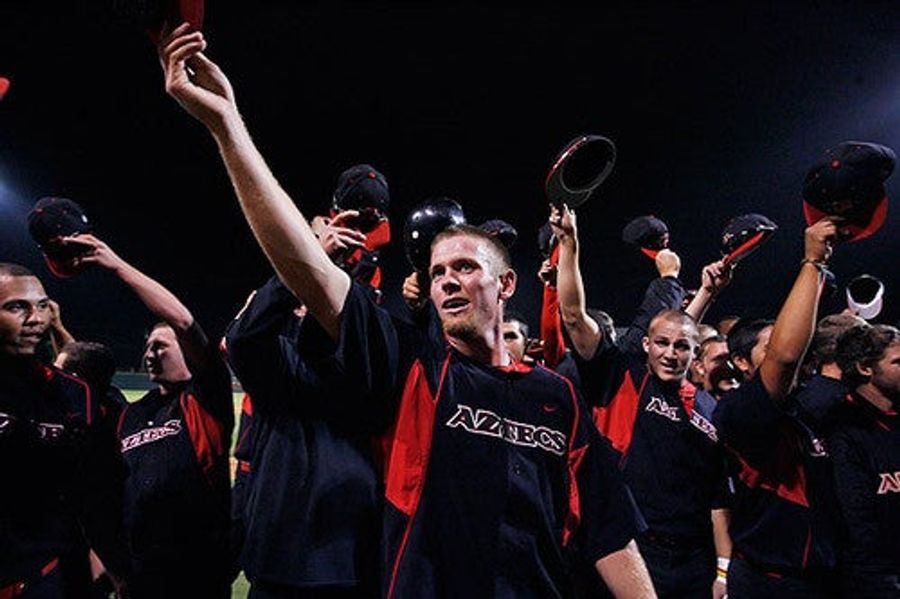
<![CDATA[Deadspin: amateur draft]]> http://tags.deadspin.com/assets/base/img/thumbs140x140/deadspin.com.png <![CDATA[Deadspin: amateur draft]]> http://deadspin.com/tag/amateurdraft http://deadspin.com/tag/amateurdraft <![CDATA[Nationals Sign Strasburg At The Buzzer; Anti-Boras Demagoguing To Begin Shortly]]> The Nationals locked up the best pitching prospect ever with 77 seconds to spare, and Scott Boras once again nudged the whole draft right up to the point of going tilt.

Stephen Strasburg signed a four-year big-league contract for $15 million, with a record bonus of $7.5 million, which some busybody Nats teammates may deem "reasonable" compensation but which, it bears repeating, is approximately $85 million less than Strasburg might've gotten on the open market. If the number seems smaller than expected, consider that the contract doesn't cover his arbitration years, when he'll see a significant salary bump.

Four hours before the deadline — which, it also bears repeating, is one of the many cumbersome devices whereby baseball tries to prevent its owners from leaving the negotiating table wearing a barrel — 10 of the top 15 picks remained unsigned. There was some handwringing that this might be the year the draft falls apart altogether, though ultimately all but three first-rounders wound up signing, and big-league clubs once again merrily flouted MLB's spending recommendations. Writes Baseball America's Jim Callis:

Major league clubs combined to spend $160,160,100 on bonuses for players signed in the first 10 rounds, just short of the $161,048,300 teams spent in the same rounds in 2008. The 2009 total will surpass 2008 if first-round pick Aaron Crow signs with the Royals or sandwich-rounder Tanner Scheppers signs with the Rangers.

That's not much savings to show for all the effort MLB put into slashing its bonus recommendations by 10 percent, leaning hard on clubs not to exceed those guidelines and restricting the flow of signing information.

Final bonus data won't be available for a few weeks, but it's possible that the industry will break its draft bonus record of $188,297,598 set a year ago.

Callis also reports that this draft has set new records for largest bonus (Strasburg), largest guarantee (Strasburg), largest bonus for a high schooler (Donovan Tate's $6.25 million) and largest bonus for a prep pitcher (Jacob Turner's $4.7 million). All three are Boras clients, and this virtually guarantees that, as we approach the expiration of the Collective Bargaining Agreement in 2011, baseball will once again throw the superagent in the pillories and publicly shame him for the game's allegedly out-of-control signing bonuses. The league will demagogue this issue right up until it signs off on a new CBA, which will very likely include a strict slotting system like the NBA's. What's absurd here is that the draft remains the biggest bargain in the game, and yet baseball has managed to convince everyone, including the players, that things have gotten out of hand. Strasburg will make $2.5 million in 2011, when even conservative projections have him pitching like an All-Star. Barry Zito will make $18.5 million.

The Strasburg Era Begins
[Washington Post]
Nationals Sign Top Draft Pick, but Need $15 Million to Do So [New York Times]
$160.2 Million Spent In Top 10 Rounds [Baseball America]
Draft ‘09: Is This The Year Things Break? [Baseball Prospectus]

]]>
http://deadspin.com/index.php?op=postcommentfeed&postId=5339742&view=rss&microfeed=true
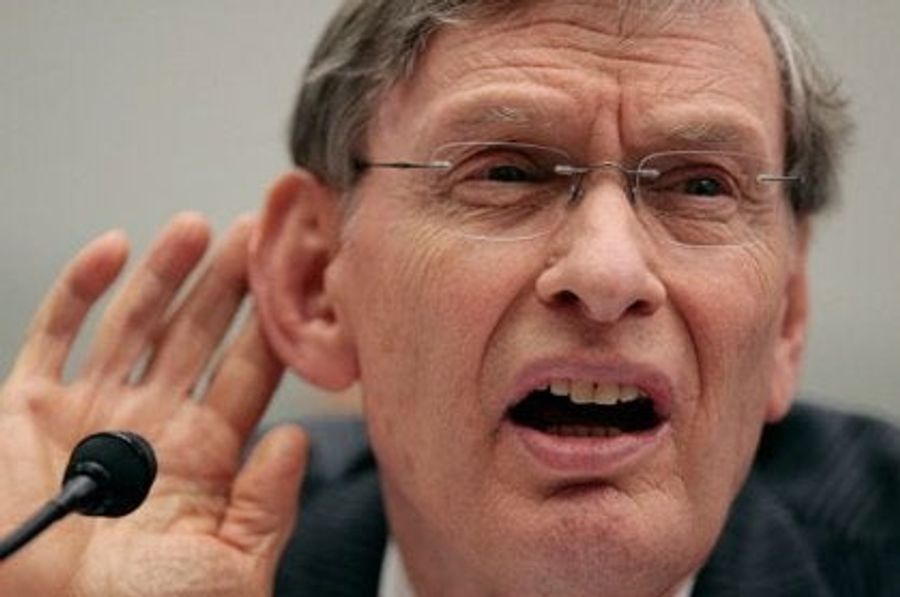
<![CDATA[America's Verdict On Bud Selig's Draft Performance: "Boring LOL"]]> Poor Bud Selig can't walk in front of a camera without inspiring a visceral sort of loathing among, well, everyone. Case in point: last night, the baseball amateur draft's primetime debut.

The commissioner-for-life was around to announce the picks, a relatively simple task that David Stern uses once a year to trick everyone into thinking he's human. But if Twitter is a representative sample of the country — and, lord, let's hope it isn't — then Selig failed miserably. In fact, according to his critics, Bud Selig is ...

"... almost uncomfortable to watch"
"... a charmer"
"... worse than dull."
"... [awful] at absolutely everything he does."
"... lost in the green room"
"... just awkward"
"... the most unsmooth commissioner in the history of sports."
"... boring lol he looks so robotic."
"... an inept moron"
"... awful at this draft business"
"... the first person I have ever heard pronounce a certain Ohio city as "Cincinnat-uh." (note: certain Ohio city is not Cleveland)"
"... BORING WHEN INTRODUCING PLAYERS"
"... not amused by applause."
"... a skinny guy, yet he spent $400k last year on meals"
"... just awkward announcing the picks"
"... a colossal douche bag"

And my favorite, for the sputtering yet economical expression of hatred:

"... such a... fuck bud selig."

Search - "bud selig is" [Twitter]

]]>
http://deadspin.com/index.php?op=postcommentfeed&postId=5286114&view=rss&microfeed=true
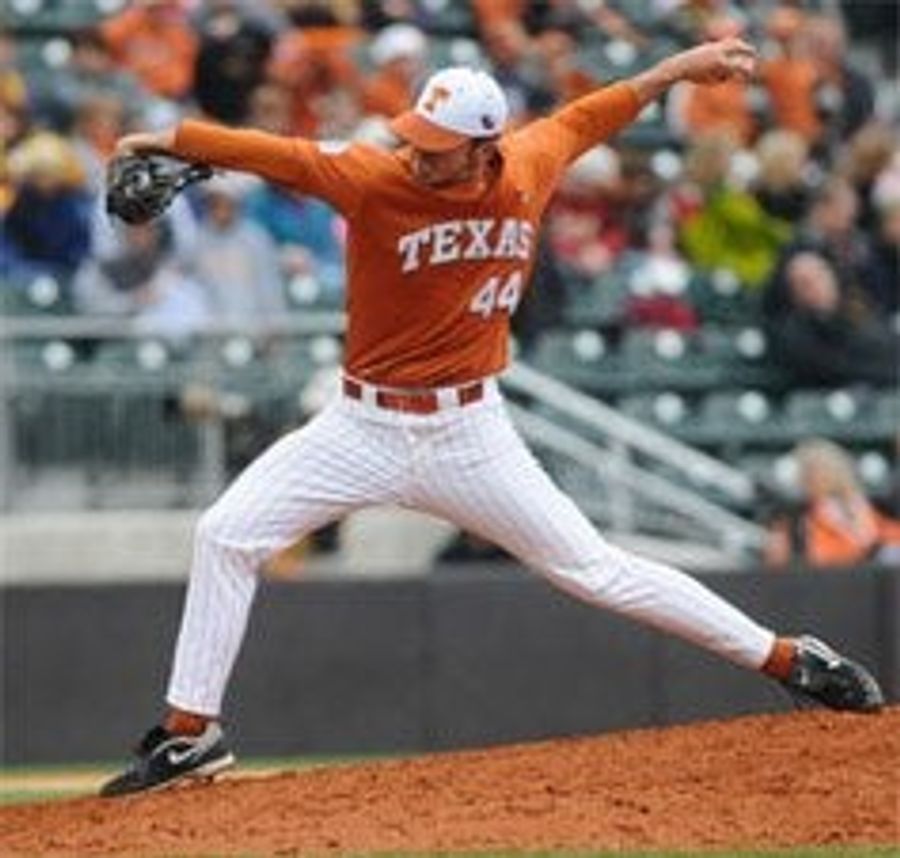
<![CDATA[Tigers Draft What's Left Of Austin Wood]]> With the 150th pick, Detroit selects Austin Wood, the kid who threw 169 pitches in an NCAA regional. He will be optioned immediately to Dr. James Andrews' waiting room. [MLB.com]

]]>
http://deadspin.com/index.php?op=postcommentfeed&postId=5285998&view=rss&microfeed=true
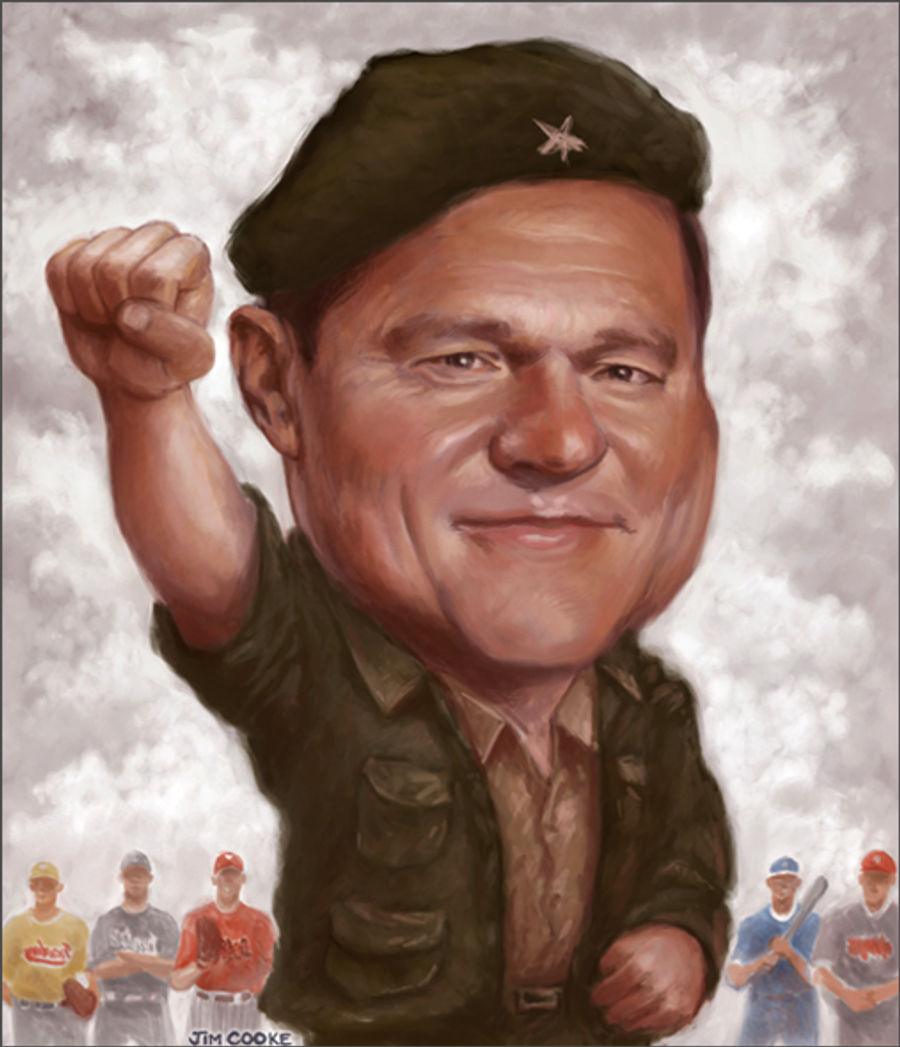
<![CDATA[Why Scott Boras Isn't As Evil As You Think He Is]]> Tomorrow, Scott Boras begins the process of jimmying a record bonus out of the Nationals on behalf of Stephen Strasburg. Let's dispense with the usual frog-raining about baseball's superagent and see him for what he is: Scott Boras, labor revolutionary.

The amateur draft is baseball's annual rite of pretending that Boras is a terminal malignancy on the game. The draft is now, also, a certifiable event, albeit one that on television more closely resembles Bingo Night at the Boca Kiwanis club. This year's will be broadcast in primetime (with Twitter updates), part of baseball's effort to make its draft a sport unto itself, like football's and basketball's. This is an important development, if only because it further pretties up the uncomfortable fact that the draft is a hopelessly crooked and quasi-legal system for apportioning labor, one we'd never tolerate in any other area of working life except in the American fairyland of sports. (Imagine if hospitals or law firms were staffed like this). Boras' offense against baseball boils down to this: He has made an unfair system a great deal more equitable, almost by accident, certainly not out of any high-minded principle, one 5 percent commission at a time.

"He's hardly Robin Hood," says Baseball Prospectus' Kevin Goldstein, one of the sharper Boras observers around. "But Boras' job is to get the most money or the best deal for his clients, period. The draft greatly limits his ability to do that. So he works very hard to find ways either around or to explode as much as he can of the draft." Goldstein calls him "a trailblazer."

Baseball's draft dates back to 1965; it was designed explicitly to suppress the rising bonuses on the open market. That year, the first pick in the league's very first draft was Rick Monday, who received a $104,000 signing bonus, or nearly half as much as Rick Reichardt pried out of the Dodgers the year before. In 1982, the first pick was Shawon Dunston, who got $135,000. This is all the more remarkable when you consider that, five years earlier, Marvin Miller delivered free agency to baseball and pulled the game out of the Pleistocene Era.

Free agency may have been a great liberalizing force on the majors, but it did little for the ballplayers riding buses in the Texas League and nothing whatsoever for the amateurs on the verge of professional baseball. Minor leaguers, lacking union representation, have always floated in a weird limbo where their fate is determined by two parties — Major League Baseball and the Major League Baseball Players Association — who at best have only an oblique interest in their well-being. The result is that the job of ensuring that minor leaguers got fair value for their services fell, for better or worse, to the agents, a wingtipped fleet of César Chávezes. That someone like Scott Boras came along was an inevitable outcome of baseball's misshapen evolution.

The amateur draft offered that sweet spot where a player's self-interest lined up neatly with Boras' (an agent gets a cut of a player's signing bonus, then often has to wait four years for another payday). He declared himself in 1983 with a talented pitcher named Tim Belcher, who was drafted by the Twins but on Boras' recommendation rejected their offer of a $100,00 bonus. Belcher was tossed into the supplemental draft pool and picked up by the Yankees, who, depending on your source, offered anywhere from $30,000 to $50,000 more.

From there, Boras set about laying siege to the draft (much of this comes from Kevin Goldstein's reporting, which Baseball Prospectus subscribers can read here).

• In 1991, he found himself with a client, Brien Taylor, who even now, years after he ripped up his shoulder in a trailer-park fight, makes scouts sound like the sort of people who see the Virgin Mary in grilled cheese sandwiches. It was Boras' additional good fortune that the Yankees, of all teams, were picking first. Taylor enrolled in a junior college, and Boras fenced the Yankees into a corner, euchering them out of $1.55 million, or nearly a million more than the highest bonus on record. "I don't think anybody remotely saw that bonus happening," says Allan Simpson, founder of Baseball America.

• In 1994, Jason Varitek was a college senior drafted with the 21st pick by the Mariners. Seattle significantly lowballed its offer; Boras had his client sign an independent league contract, making him a professional baseball player who — as Boras argued in a grievance — was no longer subject to the provisions of the draft and therefore a free agent. The Mariners relented, and baseball never got around to closing the enormous loophole through which Boras would shove J.D. Drew a few years later.

• In 2000, at Boras' suggestion, Landon Powell, a high school junior and one of the top prospects in the country, got his GED, thus making him draft-eligible. No announcement was made; no one knew Powell was fair game. The 2000 draft went by, and Powell of course went undrafted, and Boras argued successfully that Powell was now a free agent. It was a victory, but only a limited one. As Goldstein writes: "[T]he messiness of the situation had many teams unwilling to step into the fray, despite their desire to sign the talent. He would not sign, and he returned to high school." Powell wound up playing four years at South Carolina and signed with the A's in 2005 as a client of SFX.

Examples abound (and not all of them reflecting well on Boras). "It's kinda like being a goalie, if you're baseball," Goldstein says. "You're staying in the same place, and Boras shoots from 8 milion angles. You never know where he's gonna shoot from next."

The goal, in each instance, is free agency, something for which Curt Flood sacrificed his career and for which Marvin Miler needed years of painful legal wrangling to bring about — a virtuous end, whatever the circumstances and however slippery the means. Scott Boras has given his clients something very close to it, just by reading the fine print.

This year, Boras could represent five of the top 10 picks, Strasburg being the jewel of the bunch. He will certainly get his record bonus, probably closer to $20 million than the widely bruited figure of $50 million. Facile people will claim, as the Los Angeles Times did, that "the exploitation is long over," which is only true if you disregard the $100 million Strasburg might've made on an open market. During the inevitable holdout, Boras will once again be turned into the face of everything wrong with baseball, a bizarro realm where the common fan more readily identifies with billionaire owners like Tom Hicks than the middle-class kids who stand to make money off their talent for the game.

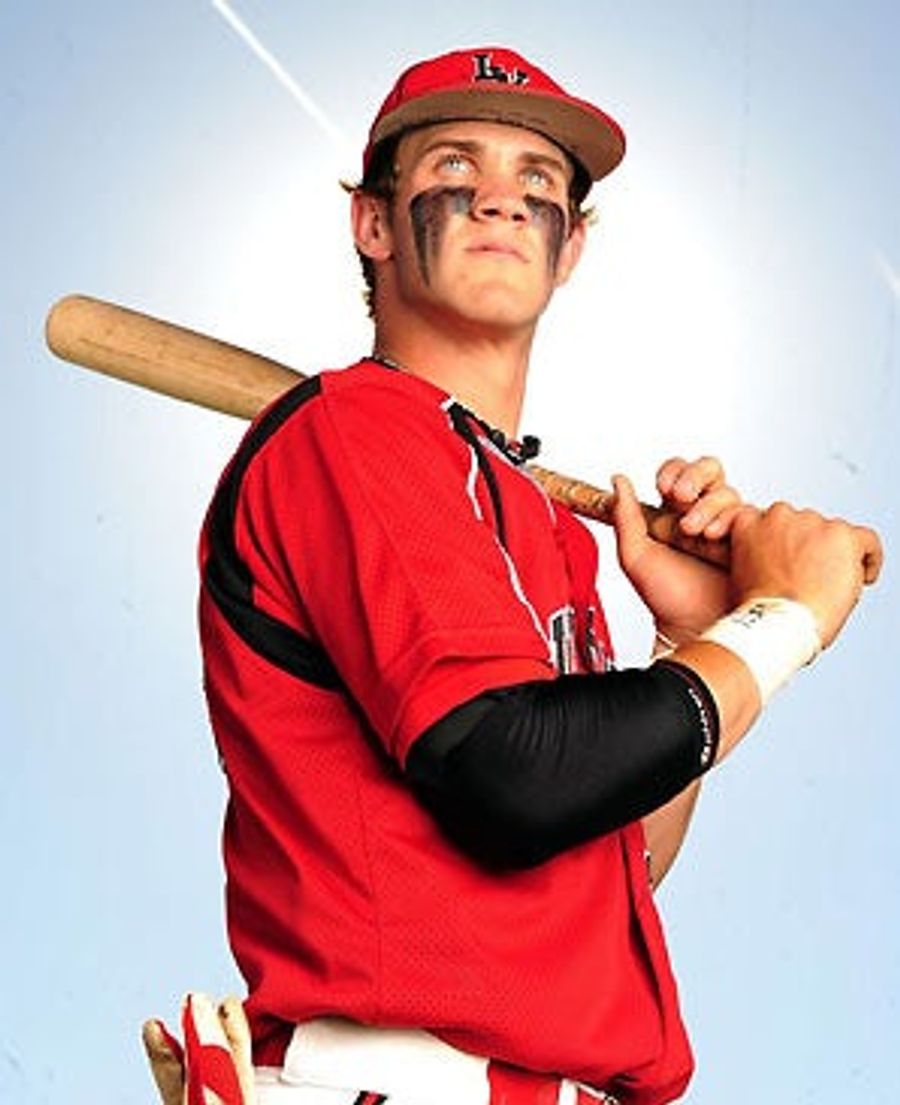
Baseball long ago won this public relations battle, and for that reason, Strasburg's record-breaking deal could wind up boomeranging on Boras. The issue of signing bonuses is sure to come up when the CBA expires in 2011. Baseball, summoning the bogeyman of Strasburg's massive bonus, will certainly fight for a strict slotting system, not unlike what the NBA has (right now, Major League Baseball only suggests how much teams pay their draft picks; more often than not, the slot recommendations are flouted). The players, susceptible to the argument that a dollar given to an unproven prospect is a dollar plucked from a veteran's pocket, will very likely bargain away large chunks of the current system. Boras, unable to bid up signing bonuses, will effectively be marginalized (this probably explains why you're hearing loose talk that he wants Chosen One Bryce Harper's family to move to the Dominican Republic, which isn't covered by the draft).

The irony is that, because of Boras' unruly success in looking out for his players' interests, he may wind up screwing them in the end. And perhaps at that point it will be time for Boras to move on, settle into a new line of work, one that's worthy of a guy who, however crassly, has served the players and ultimately the game so well. Baseball commissioner, maybe?

ILLUSTRATION: Jim Cooke

]]>
http://deadspin.com/index.php?op=postcommentfeed&postId=5283119&view=rss&microfeed=true
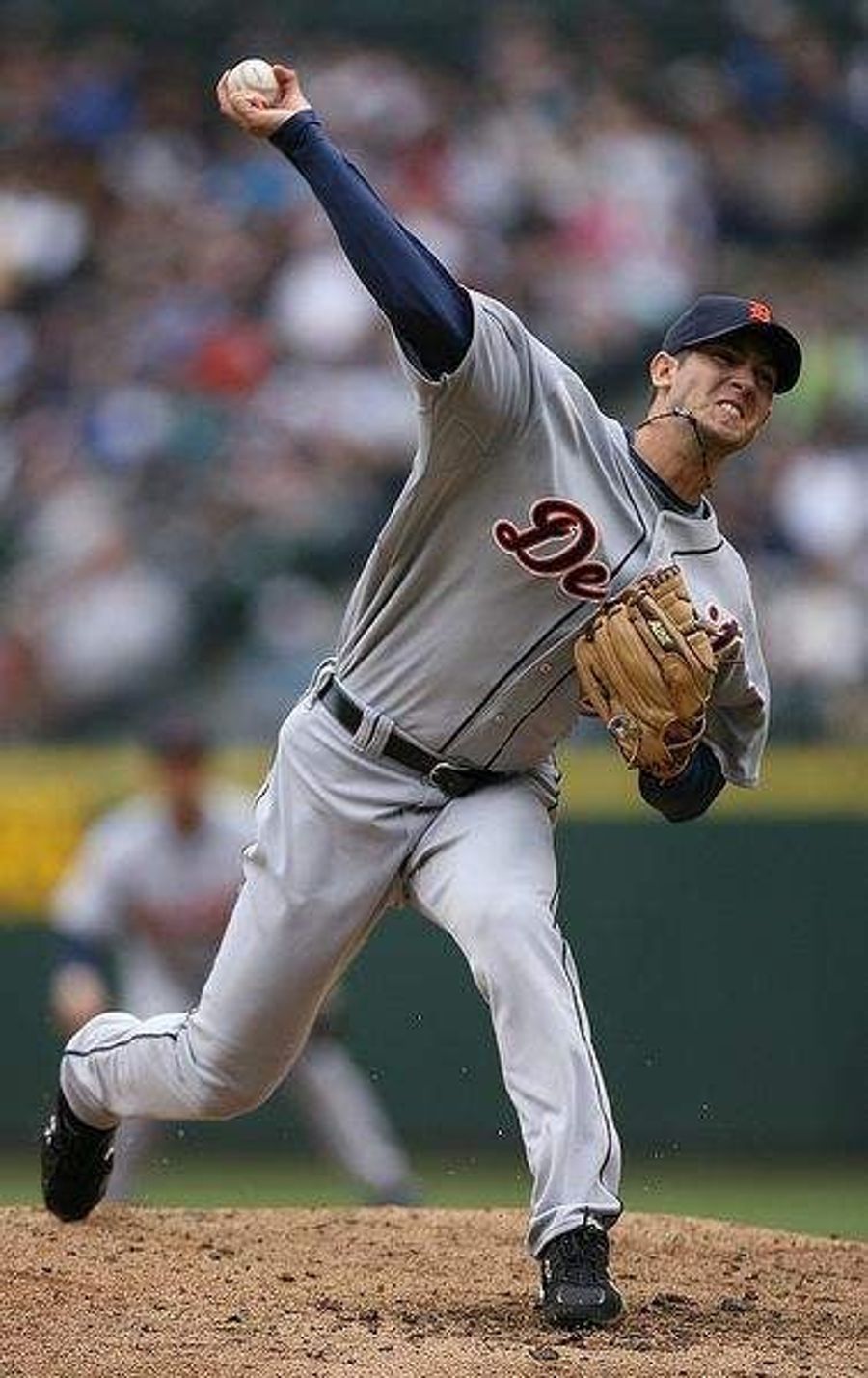
<![CDATA[Why Rick Porcello Matters]]> Rick Porcello won his fifth straight start yesterday, which ensured the 20-year-old a long season of being inaptly compared to Doc Gooden. He'll probably finish the year reminding everyone of Zach Duke instead, but there's a reason to hope he doesn't, and it has to do with the amateur draft.

Go back to 2007. Porcello was far and away the best high schooler in the draft and very likely a top-five prospect overall. It's proof that the system is irrevocably broken that he fell to the Tigers, who had the 27th pick. This was largely because of "signability issues," which is a baseball euphemism for "Scott Fucking Boras" and which doesn't exist in other leagues, where salary caps mostly free teams from the burden of lying constantly about their finances.

Porcello, as expected, wound up signing for a fat pile of money — four years, $7.3 million, the largest contract ever granted a prep player signed out of the draft — just about busting the openly collusive slotting system whereby Major League Baseball, in suggesting how much teams pay their draft picks, tries very earnestly to protect owners from themselves. The Tigers merrily flouted the slot recommendation, a reported $1 million, annoyed Bud Selig in the process, did Tigers fans a favor by investing in their product, and got a very good prospect at a still-considerable discount. And since then, more and more teams have followed suit.

Porcello wasn't the first time a team — or even the Tigers — had gone over slot. But the size of his contract and his early, if unsustainable success on the mound (3.48 ERA but only 32 strikeouts against 16 walks in 51.2 innings) have made him the face of a small triumph of good sense over greed and institutional stupidity, an enormous upset in the baseball world. I see no problem in overhyping someone like that.


Rookie Rick Porcello wins fifth consecutive start as Tigers beat Kansas City
[MLive.com]
Porcello, Jackson have 20-20 vision [Yahoo]
How good can Rick Porcello be? [Nick Underhill]
Tigers ink Rick Porcello, irritate Selig [Detroit Tigers Weblog]

]]>
http://deadspin.com/index.php?op=postcommentfeed&postId=5272250&view=rss&microfeed=true