<![CDATA[Deadspin: Dark Side Of The Locker Room]]> http://cache.gawker.com/assets/base/img/thumbs140x140/deadspin.com.png <![CDATA[Deadspin: Dark Side Of The Locker Room]]> http://deadspin.com/tag/dark side of the locker room http://deadspin.com/tag/dark side of the locker room <![CDATA[ Dark Side Of The Locker Room: Stephon Marbury Is Puzzled By My Godlessness ]]> Being a sports reporter is, at times, an absolutely horrible job. Sure you get to watch games, travel and interact with athletes, but there is a horrendous downside. (Which is pretty much everything else.) And this is never more disturbingly clear than when a reporter has their first (or 50th) awful experience with a half-naked, exhausted athlete. Sometimes they'll be openly dismissive, sometimes they'll yell, and sometimes, well, they'll fart in your face. Most of these stories never end up in the newspaper the next day. So now, Deadspin proudly presents "The Dark Side of the Locker Room" where current and former sports writers can share some of their most distressing interactions. If you've got your own story to share, please send it along to ajd@deadspin.com.

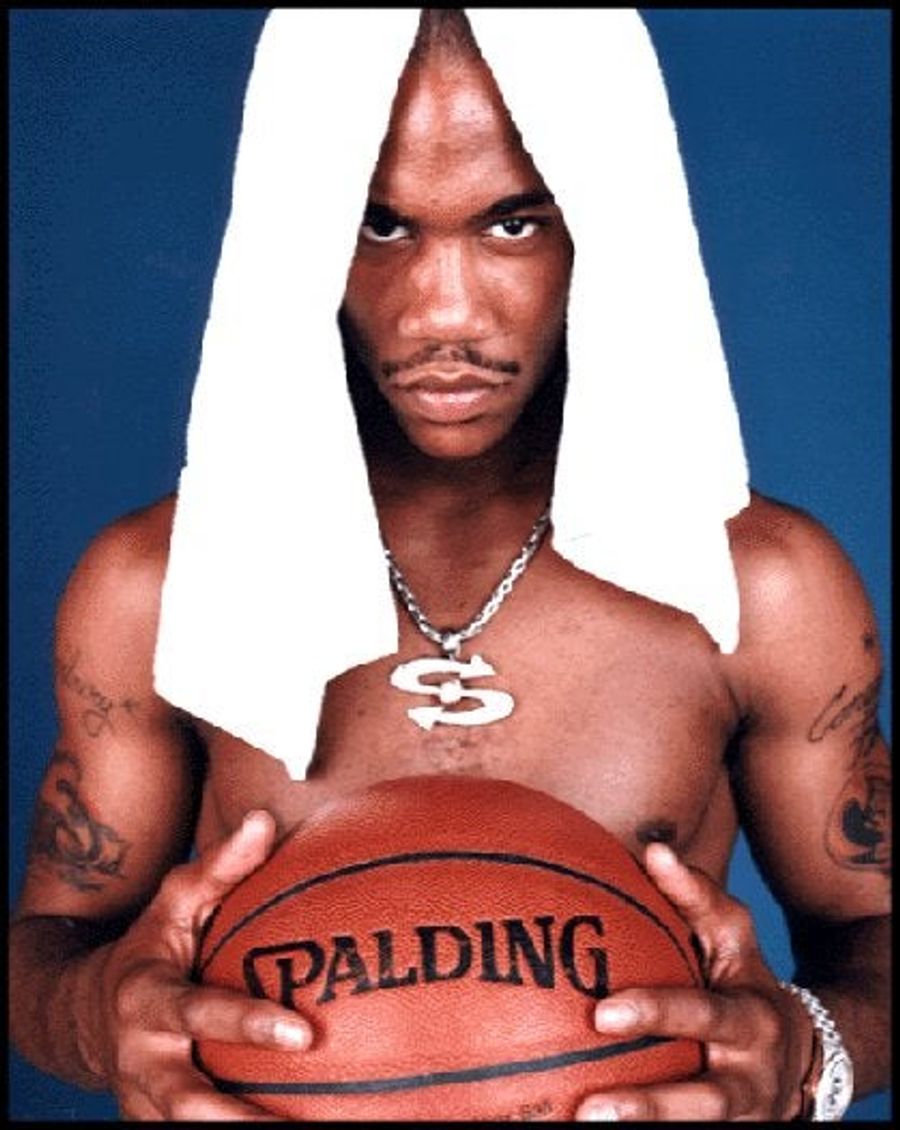
Tommy Craggs is a writer for Play and Slate and other magazines. Tommy Craggs spent an enlightening period of time with the Knicks' Stephon Marbury for a New York magazine profile. Here's one part that didn't make the story.

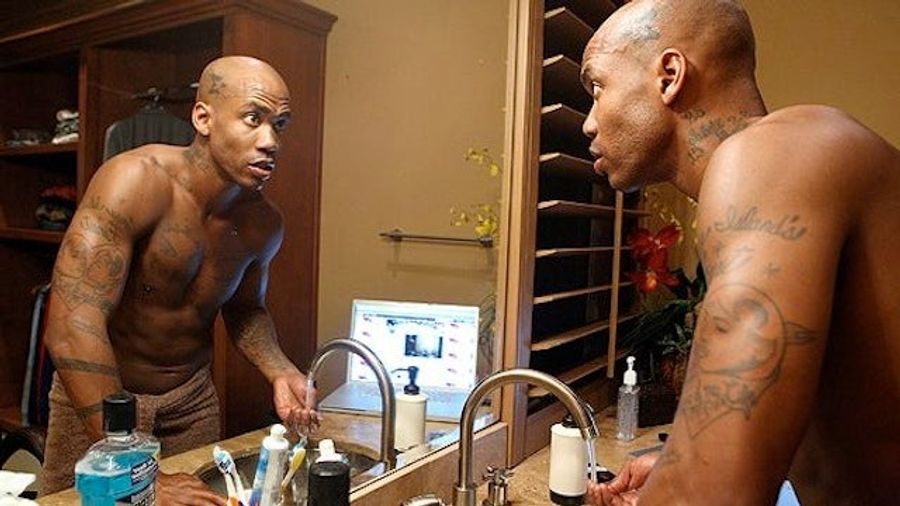
We were sitting in a Charleston, S.C., hotel room, Stephon Marbury and I, debating the finer points of Holy Scripture. Specifically, we were talking about Noah's Ark and spaceships, but let's not get ahead of ourselves. This was a little less than a year ago, the night before training camp and in retrospect probably the last good night any Knick would have that season. I was in Charleston on assignment for New York Magazine, working on a profile of Marbury, who in the preceding six months had given an excellent impression of a man gone completely and very publicly round the bend. There were the rambling interviews. There was the cameo in the Anucha Browne Sanders lawsuit, from which we learned that Marbury was doing full-gainers into the Knicks' intern pool. And there were the weird pronouncements: "I drink life’s happy water which is bottled at the divine source," he blogged for the New York Post at one point, a sentiment that falls roughly halfway between Lourdes and Jonestown.

It was getting late, and Marbury was tucked snugly into bed, and all I could see of him was his large bald dome, lolling about just above the covers. A personal assistant, a fellow named Gaylord, was snoring softly from a nearby couch. We were on the sixth floor of the Charleston Place hotel, where earlier in the day Marbury had checked in under the initials "JCIMS." In the past, he told me, he would travel under a series of different names — usually "Star-something," he recalled. But perhaps he found it a touch grandiose, naming himself for the firmament. So "JCIMS" it was. Jesus Christ Is My Savior.

We talked about many things that night. About the Knicks. About his shoe line and his philanthropy. About the business of basketball. (It was here that he declared memorably: "If I didn't play the way how I played, I wouldn't have gotten no max contract. ... Don't get mad at me, because I'm telling you what's real. One plus one is two, all day long, and it's never gonna change. And that's factorial.") He spoke wistfully of the family time he'd sacrificed for the game. "Like my son going to the bathroom for the first," he told me. "Those are monumental moments."

Mostly, though, Marbury seemed bored. He had played basketball's boogeyman for so long — since the start of high school, really (reading The Last Shot now, you're struck not by young Marbury's ambition and cynicism, with which we're very familiar, but by the lucidity of his thoughts, with which we most definitely are not). By now Marbury was well-accustomed to explaining himself to journalists, and before long his answers started to drift from their moorings and more and more seemed to be directed at the Monday Night Football game unfolding on his television.

It was about this time that I said I don't believe in God.

Let me say here that I generally found Marbury to be an accessible, fairly genial subject, or at least I did right up until he proved himself to be neither, just a few weeks later. (This had something to do with my contacting Gaylord, his assistant, without Marbury's permission, after which I was denied any future access. This still seems backward to me, but as the Good Book tells us, "The wind blows where it wishes.") Marbury liked to communicate via text message, and I can report to you that even Stephon Marbury, on occasion, says "LOL." So believe me when I tell you that, while what follows may at times sound like a pointed exchange between a believer and a skeptic, it was not, as these things go, altogether unpleasant. It was just so unexpected: an epistemological inquiry with Stephon Marbury

It began when I spotted a Bible on the end table and asked if he had read any of it today.

"I'm in Genesis," he explained. "I'm reading from the front to the back."

"The good stuff's up front," I offered.

Marbury agreed. "Genesis is hot."

He turned to me. I knew where this was going. "What's your religion?" he asked.

I told him I had none.

"At the end of the day, it's all about you and your relationship with — you believe in God, right?"

I don't.

"You don't believe in God?"

I don't.

Marbury chewed on this for a moment. "Everybody's different," he said. "You don't believe in God. So ... are you an atheist?"

Yes, I would say so.

Some bad Abbott and Costello dialogue ensued. Marbury began poking at the edges of my non-belief. He was trying to take its measure.

"So that's like you not believing — like, if I said to you, somebody could jump from the free-throw line, you automatically don't believe it?"

It's nothing like that.

"So you don't believe there was a Jesus Christ?"

I do. He was a great carpenter.

Marbury laughed. "That's cool. That's what you believe."

We went on in this vein for awhile. I expressed the standard skepticism about Noah and the 300-cubit-long boat that could somehow accommodate the rough equivalent of the San Diego Zoo, at which point Marbury dropped the following thought on my head that we now pick up midstream:

"... Why does green mean that's the color green? Why can't you say another word for green being green? Know what I'm saying?"

I did not.

"If your mind can transform thoughts to create rockets to go into space, who is to say if an Ark was built? Like, if you could build spaceships to go from off this ground, to go up into the sky, and go land on the moon — you're saying, these things can't happen? So everything gets challenged, you understand what I'm saying?"

I did not, but he was rolling now.

"So at that time, they probably would say, 'Nobody can make a rocket to go up into space.' You know what I'm saying? Who's gonna build it, how they gonna built it to go all the way up?"

It soon emerged that Marbury had never met an atheist. And so, for a half-hour, he turned the questions onto me. He asked if I felt lost. He asked if I felt confused. He asked what I wanted out of life. He invited me to church. (Marbury goes to Christian Cultural Center, a megachurch at the far edge of Brooklyn. It's the sort of church that has ATMs. A few weeks after this interview, I texted Marbury and asked if his offer was still good, joking stupidly that God might strike me down at the door. He responded: "GOD will never strike you down. GOD is love and love is love. You don’t get it, and that’s ok. In time.") Atheism seemed to confound him. I ventured that in fact he probably had met an atheist before, and that many, if not all, of the journalists covering him are very likely atheists (not that I had any evidence). "For real?" Marbury replied. He thought that over for what seemed like a long time.

The next day, after practice, I was milling around the sideline with the rest of the media. I heard someone call out.

"Hey, Tommy! Tommy!"

It was Marbury, splayed lengthwise and propped on an elbow. He was rolling back and forth on some sort of padded cylinder. I went over to him. The beat guys, none of whom knew me from Adam, turned to look at me. "All?" Marbury asked, gesturing to the press. "All of them?" Embarrassed, I explained the matter to my colleagues. Howard Beck, from the New York Times, just shook his head and smiled thinly and began to walk away. "I'm not even going to touch that."

Amen.

]]>
Mon, 08 Sep 2008 14:30:37 EDT DAULERIO http://deadspin.com/index.php?op=postcommentfeed&postId=5046837&view=rss&microfeed=true
<![CDATA[ There Goes My Hero: Golden Richards Won't Wake Up ]]> Being a sports reporter is, at times, an absolutely horrible job. Sure you get to watch games, travel and interact with athletes, but there is a horrendous downside. (Which is pretty much everything else.) And this is never more disturbingly clear than when a reporter has their first (or 50th) awful experience with a half-naked, exhausted athlete. Sometimes they'll be openly dismissive, sometimes they'll yell, and sometimes, well, they'll fart in your face. Most of these stories never end up in the newspaper the next day. So now, Deadspin proudly presents "The Dark Side of the Locker Room" where current and former sports writers can share some of their most distressing interactions. If you've got your own story to share, please send it along to ajd@deadspin.com.

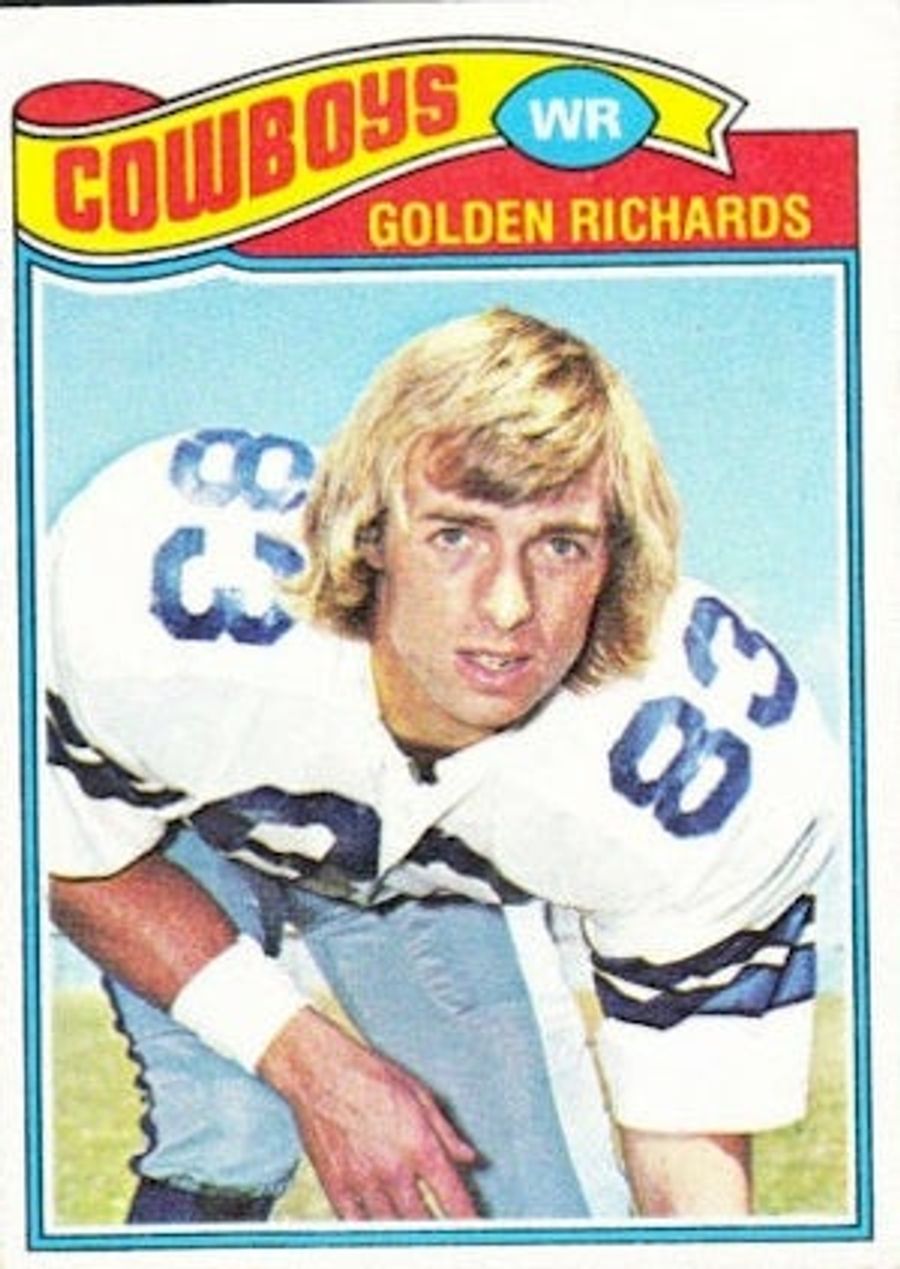
Today's story comes from Joel Reese, a Chicago-based freelance writer who's impressive body of work can be found at Joelcreese.com. Joel shares his harrowing tale of watching former Cowboys' fan favorite Golden Richards fall apart.

I wasn’t a sportswriter when I met former Dallas Cowboy Golden Richards. I wasn’t really a writer at all. I was a naïve grad student from the University of Montana who drove to Salt Lake City to profile the former wide receiver—who happened to be my childhood idol. I wanted to do my master’s thesis about how he’d pulled his life together after being arrested for drugs.

Instead, I watched as he overdosed in front of me.

The story begins on a Sunday morning, December 1992, in a rented house in Missoula, Montana. I’m a grad student in journalism and I’m reading the Missoulian’s Sports section when I see a one-paragraph blurb with the headline: “Former Dallas Cowboy Arrested.” Who could that be? I wonder.

I start the story, and my heart just about stops: Former Cowboys wide receiver Golden Richards has been arrested in Salt Lake City for trying to buy pills with checks he stole from his dad. He has no money, no job, and has been in and out of rehab several times. This simple one paragraph story absolutely floors me.

When I was growing up in the mid-’70s, Golden Richards had been my idol. My adolescent bedroom was covered with his pictures and articles about him. I had his birthday memorized (Dec. 31, 1950) and I owned every one of his football cards. I’m not sure why—undoubtedly, there were some homoerotic stirrings in my prepubescent loins that I’d rather leave alone. I knew he wasn’t exactly a star—it would be akin to worshipping, say… Steve Kerr. Both had blond hair, both had their moments, but both were hardly Michael Jordan.

But Golden did have one play for the ages: In Super Bowl XII, he caught the first running-back-option pass completed for a touchdown in Super Bowl history, thrown by fullback Robert Newhouse. The score sealed the Cowboys win over the Denver Broncos, 27-10. It was my favorite sports moment.

I’d had no idea what happened to him since he retired—I figured he owned a fishing-tackle business in rural Utah (I knew he was an outdoorsman) and was doing just fine. Not this.

A few months later, my advisor approved a profile of Golden for my master’s thesis, so I start making phone calls to find him (remember, this is pre-google). I finally track him down via his brother Doug, who was assistant Attorney General of Utah. Golden and I finally connect a few days later, and after a putting me off a few different weekends—once to go skiing with Mike Ditka, he tells me—I make the eight-hour drive from Missoula to Salt Lake City to interview him.

I arrive at his unassuming home in Murray, a southern suburb of Salt Lake City, and I nervously knock on the door. A few seconds later, the door opens, and there he is. Golden Richards. Holy shit.

He’s wearing a white button-down shirt and Wrangler blue jeans, and he stands under six feet. He’s still got the long blond hair (rocking a slight mullet, I hesitantly realize), and he looks weathered and tired. But he’s friendly and he extends his hand. “Glad to meet you, Joel—I’m Golden Richards.” He invites me in.

We talk for three hours, and he’s totally normal, cool, and down-to-earth. He chuckles at “the crazy days of the NFL… I tell you what.” We drink Pepsi and look out onto the Wasatch Mountains as he goes over his career. He talks about his greatest moments in the league: “Everyone assumes my most memorable moment was the Super Bowl, but it wasn’t,” he says. “It was every time it was 3rd and six and I caught an eight-yard out to keep the drive going. The camaraderie in the huddle.”

After three hours of golden memories, I get into my car and start driving back to Sean’s place—the friend of an ex-girlfriend who was letting me sleep on his couch. I’m absolutely euphoric. I’d hung out with Golden Richards. And he was the coolest guy! And we were going to hang out more the next day!

Sure, things might get a little more difficult—the understanding was, we were going to talk about his career highlights on the first night, then the more difficult stuff the next day. (i.e., “What was it like to be picking through your own vomit, looking for traces of painkiller?”)

But it would be fine, I was sure. He was totally cured now—he’d told me himself. “I was at the bottom of the valley, but now I’m at the top of the mountain,” he’d said. Then, I swear to God, David Bowie’s song “Heroes” came on my radio. This is just too good to be true, I thought.

I was right, because the next day was really fucked-up.

I get to his house at about 10 in the morning, and I can tell something is amiss. He’s edgy, tense. We drive around Salt Lake City—him behind the wheel, me in the passenger seat, tape-recording our conversation. He pulls into a gas station, saying he needs to check his antifreeze.

He opens the hood, checks his coolant, says everything is fine. He won’t look me in the eye. We’re standing in front of his car, next to a pay phone (remember, this is 1994). Then he asks me a question.

“Say, listen, my teeth are killing me,” he says. “My dentist said it’s from being knocked around so much on Sundays. I took some Tylenol this morning, but it’s not working. Do you have any painkillers, Tylenol 3, or anything like that?”

Whoa—say what? Painkillers? From someone who served jail time for trying to buy pills with checks he stole from his dad? This seems very wrong. “No, sorry,” I say. “I don’t have anything like that.”

“Does the guy you’re staying with?” he asks me.

“I don’t know—I don’t know if he’s around,” I say.

Golden pulls out a quarter and holds it out in front of me. “Can you call him to see?”

This seems to be happening in slow-motion. Golden wants me to take the quarter and call the guy I’m staying with—who I barely know—and ask him if he has any pills. I know I should say, “Look, this is fucked up, I’m not going to ask him if he has any drugs for you.” But I’ve never written anything like this in my life. This is my first big “story.”

And hell, he’s Golden Richards. He’s my childhood idol.

So I take the quarter and dial Sean. I try to think of some savvy way to get around this—maybe I can hang up and talk to the dial tone, or dial a wrong number or something—but Golden stands so close that I can smell the leather of his brown bomber jacket.

Sean answers. I tell him Golden has a toothache and hesitantly ask if he has any pills. Sean puts the phone down, checks in his bathroom, and finds some old pills from a prescription that was never finished. Demerol. Golden takes the phone from me and starts schmoozing him. He hangs up and we drive to Sean’s place.

He’s not home when we get there, but there’s an orange bottle of pills on the dining-room table with a note that reads, “Hey Golden—hope these help! Sean.” I don’t get a close look at the bottle, but when he picks it up the chikka-chikka of the pills inside makes it sound about half full. Golden looks at the bottle’s label, then asks, “Do you think he has anything else?” Jesus. “I don’t know,” I say.

Golden then goes to the bathroom and starts rummaging through Sean’s medicine cabinet.

I feel sick. Clearly, the day is getting away from me—this is most definitely not what I had planned. There is silence, then Golden comes back into the room, saying there was nothing else in the bathroom. We leave and get back into his car.

We drive around Salt Lake, and he takes me past his parents’ large pink house, the high school where he starred in just about every sport. Ok, I think. His teeth were hurting, but now he’s ok. Everything is cool.

But no, everything is not cool. Slowly, Golden starts to act… weird. His stories start trailing off, becoming rambling tales that make no sense. His voice gets whispery, and I can’t really hear him. He keeps licking his lips. He gets us lost, pulling into cul-de-sacs and stalling the car. “Why don’t you let me drive,” I say. “No, I’m ok,” Golden says.

But he’s not. The car is weaving and slowly crossing the center line. He pulls into a parking lot and we sit in silence. Finally, I say, “Are you feeling ok?” Stupidly, I still can’t figure out what’s happening, because I’ve been with him for the entire time that I can remember and I didn’t see anything weird.

“I’m just kind of like, I don’t know,” he said. “The rest of my head.”

Then it dawns on me: The pills. Sean’s bathroom. He must have taken them there. “Golden, how many of those pills . . .” I say.

“Say, do you want a cold drink?” he says.

That was a coherent sentence, I think. Maybe he’s ok. “No thanks,” I say.

The car starts rolling toward the restaurant. I look over at him. Golden’s eyes are shut, his head lolling backward. He’s blacking out.

“Golden, better hit the brakes—you’re about to hit that wall,” I say. “Oh, shit,” he says, slamming on the brake pedal.

“Say, how many of those pills . . . How many did you take, a bunch of ’em?” I ask.

“I just, I don’t know,” he says. “I felt crazy, like jumping right through that window . . .” His head tilts back again.

“Why don’t I drive?” I say.

“. . . blinding in my eye, can’t function,” he says. “Ok.”

I walk over to the driver’s side and help him out of the car. Then I lead him around to the passenger’s side, and help him into the seat. He is no longer a man; he is a drowsy, disoriented child.

He fades in and out of consciousness but remains lucid enough to give me directions to his place. I help him up the stairs and into his apartment. I hang his leather jacket on the back off a dining room chair and help him sit down on the couch. I go back to his jacket and rifle through the pockets and find the pill bottle. It is empty.

I go back to the living room and Golden is crawling on all fours in front of the couch. I duck into Golden’s bedroom, call information, and ask for an emergency drug hotline. I blurt out what’s going on: “I’m with someone who’s been addicted to pills for a long time and seems to have downed half a bottle of Demerol,” I say. “Where is he now?” the woman on the other end of the line asks. I run back into the living room, and Golden is passed out on the rug. “He’s on the floor,” I say. “Ok, go see if he’s still breathing,” she says.

In other words, go see if he’s dead.

“Ok,” I say and run back to the living room, lean over him, and hear breath rasping out of his mouth. His hair hangs around his purplish face and his eyes are closed. I run back to the phone.

“Yes, he’s still breathing,” I say.

“Ok, call 911 immediately,” she says.

I hang up and dial 911, and the paramedics arrive a few minutes later. They take his blood pressure, check his pupils, and lift him onto the stretcher. They wheel him out, tubes snaking up to his face, his eyes wild and uncomprehending.

A round-faced policeman appears in front of me and starts grilling me, asking me how Golden got the pills.

“I got them for him,” I say.

“You got them for him?” he asks. “Why? Did he pay you? Who are you?”

He’s going to arrest me, I think. He thinks I’m Golden’s dealer.

“Look, I got them for him because he said his teeth hurt,” I say. “I didn’t know. I’m his biggest fan.” The cop shakes his head and walks away.

The ambulance takes Golden to a nearby hospital, where they pump his stomach and keep him overnight. Later, he tells me the whole thing was caused by a grand mal seizure or an allergic reaction. “It wasn’t the pills,” he swears. I drive back to Missoula the next morning.

I write about the experience for my master’s thesis. After some time passes, I send the story around to various magazines. I get nibbles from Esquire and Playboy, but Texas Monthly is enthusiastic about it and runs the story in their December 1995 issue. (By the way, Mike Ditka told me he hadn’t talked to Golden in ages. “See, he lies,” Ditka says. “I can’t ski—I’ve got two artificial hips.”)

I don’t speak to Golden again after the story comes out, but Greg Garber of ESPN calls me later to find Golden for a video piece about him and Joe Gilliam of the Steelers. Greg and I keep in touch, and after he’s done with his story I ask him what Golden thought about my story.

“He hated it, and feels like you betrayed him,” Greg says.

“Oooh, that kind of hurts,” I say. “What did you tell him?”

“I said, ‘You should be grateful—that guy saved your damn life,’” Greg says.

“Yeah, but… well, I guess,” I say. “What did he say to that?”

“He agreed,” Greg says.

And that’s the last I’ve heard of Golden Richards.

(To read the original version of this story, go here.)

]]>
Tue, 20 May 2008 14:20:13 EDT DAULERIO http://deadspin.com/index.php?op=postcommentfeed&postId=5009887&view=rss&microfeed=true
<![CDATA[ Even Joe Posnanski Gets Yelled At ]]> montgomery1.jpgBeing a sports reporter is, at times, an absolutely horrible job. Sure you get to watch games, travel and interact with athletes, but there is a horrendous downside. (Which is pretty much everything else.) And this is never more disturbingly clear than when a reporter has their first (or 50th) awful experience with a half-naked, exhausted athlete. Sometimes they'll be openly dismissive, sometimes they'll yell, and sometimes, well, they'll fart in your face. Most of these stories never end up in the newspaper the next day. So now, Deadspin proudly presents "The Dark Side of the Locker Room" where current and former sports writers can share some of their most distressing interactions. If you've got your own story to share, please send it along to ajd@deadspin.com.

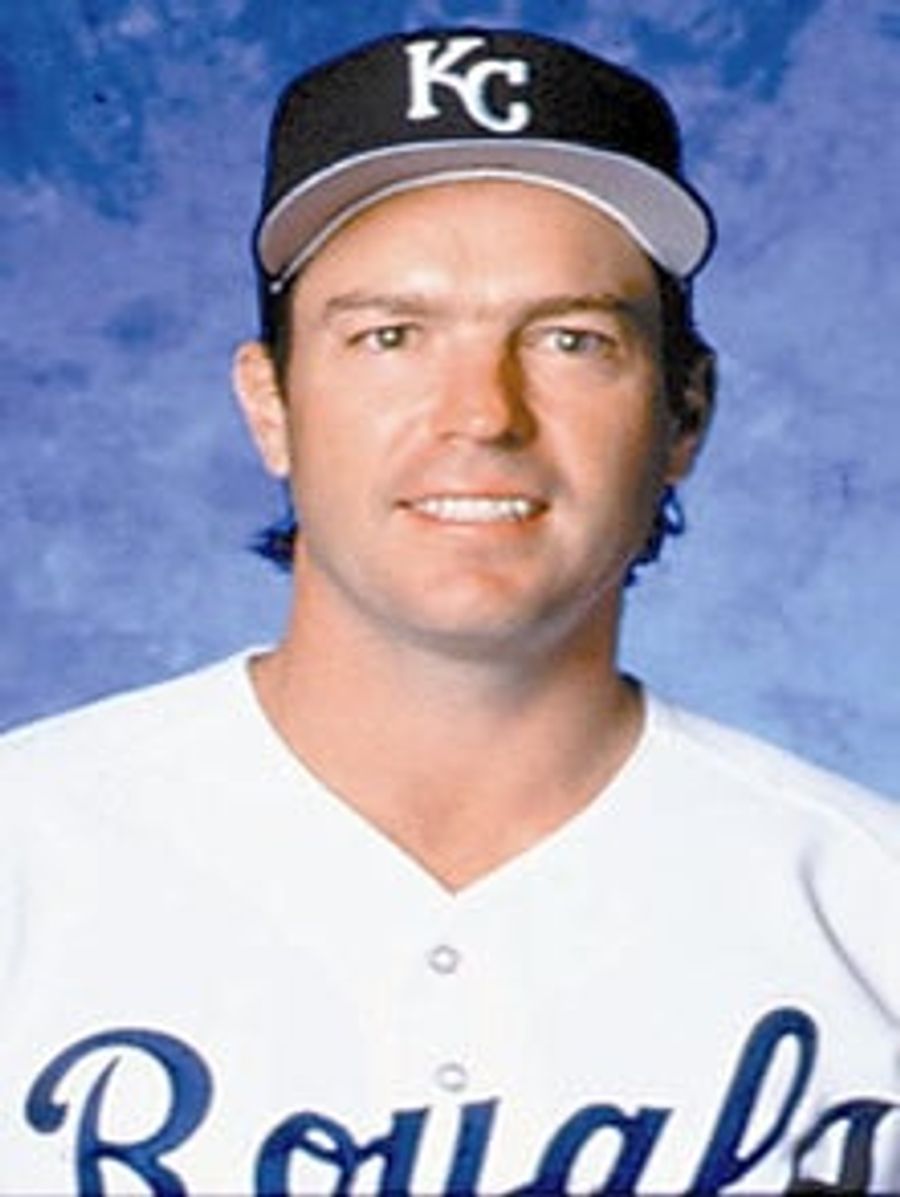
Today's story comes from venerable Kansas City Star sports columnist Joe Posnanski, who shares this tale of turbulence with former Royals' relief pitcher Jeff Montgomery. Posnanski's online musings can be found here.

—-—-—-—-—-—-—-

Man, I've been on the dark side of the locker room a few times. And I'm supposedly one of the nice guys. Here's one, had to be like 10 or 11 years ago, and I wrote a column ripping Jeff Montgomery, the old Royals relief pitcher. I don't recall all the details, but Jeff had been quoted ripping the manager, and he was also pitching lousy, and those two didn't seem to blend too well in my mind. So I ripped him pretty good. I couldn't tell you now if it was "fair." Maybe it wasn't. It was a long time ago. It probably was fair.

I'd had a pretty decent relationship with Jeff. I respected him and all that and I knew he was a competitive son of a gun, so I thought he might have something to say the next day. Of course, I had to be there to take it. That's part of the deal. So I start driving to the stadium, and I turn on the radio, and they're interviewing Jeff, and he's just ripping me. So I have a pretty good idea what was coming.

I go to the locker room to find him. He's not around. I wait by his locker for a while, and a few guys are telling me, "Man, Jeff's going to kill you," and I'm smiling and nodding, "Yep, he's going to kill me," like a complete jackass.

I'm not much good in those sorts of settings. But the job is the job.

Finally, Jeff shows up and he gets right up in my face, and he says, "I've been looking for you." And I say, "Yeah, Jeff, I've heard. That's why I'm here."

Then he grabs the Royals PR guy, and says, "Follow me." And we go back to the stairwell that was behind the clubhouse. It's just us three now, and Jeff starts wrapping a towel around his hand, like he's going to hit me with it. And then, all of a sudden, he jumps forward, raises his fist, and looks like he's about to hit me, only he stops and he shouts, "I should KILL you, man."

And then he starts screaming. I don't know how long we were in there, but it felt like quite a long time. He's screaming, and he's pacing around, and every so often he gets close to me and raises his hand like he's going to hit me, and then starts pacing around again.

Now, I'm not going to tell you I'm the bravest guy around, because I'm not. I'm a bald, chubby-to-fat sportswriter. At first, I had that, "Damn, I'm going to have a fight with Jeff Montgomery and he's going to pound on me like Sonny pounded Carlo," feeling in my stomach. But after a couple of minutes, I realize he really isn't going to hit me, there isn't going to be a one-sided fight, and then it's like I have one of those out of body experiences. Suddenly it's like I'm looking down on the scene, and I'm thinking, "WOW, this guy is mad. Look at him. He's really, really mad. He's like crazy mad. Look at this guy, pacing around, stomping around, that towel wrapped around his hand, he's really mad. I mean, this guy is mad."

And then, it becomes sort of a mini-struggle not to laugh. Well, I don't know that I was every close to laughing, but he WAS mad.

My favorite part was when the thing ended, and Jeff says, "Do we understand each other?" and he stomps off. The PR guy turned to me and in a shaken voice whispers: "I just want to thank you for allowing me to be a part of that."

Now, as mentioned before, I had a lot of respect for Jeff. And I still do. When the screaming ended, I went outside and there were like five TV cameras around and reporters and they were all like, "What happened?" I walked by, and then went over to Jeff. And he said: "That was between me and Joe, man to man, and I'm not going to talk about it," which I thought was cool. At least he called me a man.

A couple of months later, he retired. And I wrote a pretty positive retirement column: he deserved that. I wrote a little bit about the incident and talked about how Jeff was really good pitcher who succeeded because he was a battler. He never backed down. He seemed to appreciate that.

A few years later, I ended up competing in the Royals fantasy camp, which Jeff happened to run. He was going around the room asking people which number they wanted. He turned to me and said something like, "Hey, Posnanski, what number does Mr. Sportswriter want?"

I said, "What number did you wear, Jeff?"

He said: "Twenty-one."

I said: "Yep. That's the one I want. You know you're my hero." Nobody around the room got it, but Jeff smiled, and nodded, and we understood each other.

** It's a good thing, looking back, that Paul O'Neill had not been in the fantasy camp seven years earlier.

]]>
Tue, 06 May 2008 14:20:42 EDT DAULERIO http://deadspin.com/index.php?op=postcommentfeed&postId=387537&view=rss&microfeed=true