<![CDATA[Deadspin: nfl concussions]]> http://tags.deadspin.com/assets/base/img/thumbs140x140/deadspin.com.png <![CDATA[Deadspin: nfl concussions]]> http://deadspin.com/tag/nflconcussions http://deadspin.com/tag/nflconcussions <![CDATA[Heads Roll At NFL's Concussion Committee]]> Ira Casson and David Viano, co-chairmen of the NFL's brain-injury committee and spiritual heirs to the quacks who cooked medical studies for Big Tobacco, have resigned. In response, NFL retirees forgot what they were going to say. [NYT]

]]>
http://deadspin.com/index.php?op=postcommentfeed&postId=5412990&view=rss&microfeed=true
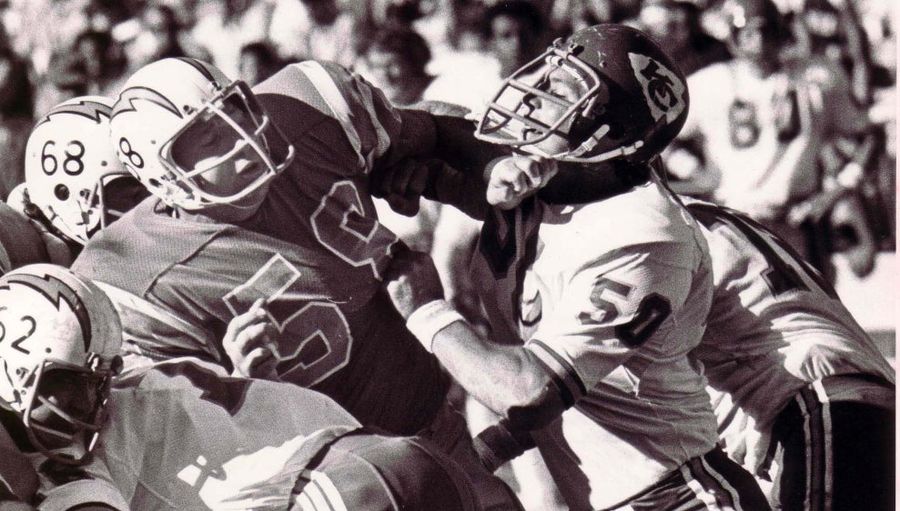
<![CDATA[Messing With Our Heads: A Former Player's Lament]]> With the brains of football players now a matter of national concern, writer Michael Oriard, a former Chiefs offensive lineman and a cultural historian, worries about both his own fate and the NFL's.

A few weeks ago I was asked to comment on Carson Palmer's remark that, sooner or later, someone was going to die on a football field. I repeated then what I have figured out over many years of reading and writing about football: that the threat of serious injury has always been fundamental to football's appeal. It makes the players' risks and thus their courage real, their athletic skills immensely more impressive. Each season sees football fatalities, but rarely in the NFL and never on the field due to a blow. The last person to die in an NFL game was Detroit's Chuck Hughes in 1971, but from a heart attack, not a violent collision — coincidentally four days before my Kansas City Chiefs played the Lions on Thanksgiving Day. I still remember the eerie feeling, as I trotted onto the field, knowing that someone had died there just a few days earlier.

Though rare, sudden violent death has always been a possibility in football. Research is now suggesting that the accumulation of little hits can be as dangerous as big ones, with death coming in slow-motion, after years of dementia, rather than suddenly. And everyone who played may be at risk, not just the extreme cases whose grisly stories make for sensational reading.

The occasional tale of a Mike Webster or John Mackey has always grabbed me, but it has also always seemed an extreme case. The recent deluge of reports on the research on the brains of former NFL players feels altogether different. Malcolm Gladwell's comparison of football to dogfighting in The New Yorker didn't jolt me — that bit of melodrama was for rhetorical effect. The grisly accounts of the final days and later autopsies on Webster, Terry Long, Justin Strzelczyk, and more than a dozen others were more jolting, their cumulative effect overwhelming. Chronic traumatic encephalopathy (CTE), of which I'd never heard until a few weeks ago, suddenly seemed the NFL's version of the Black Death.

But what has really jolted me is the less sensational, more mundane research by Kevin Guskiewicz of the University of North Carolina's sports concussion research program. For those who haven't yet read about it, Guskiewicz and his team fitted sensors in the helmets of UNC players through which they could measure the impact (or g-force) of every blow to the head. The magnitude ranges from small to more than 100 g's, the equivalent of a head hitting a windshield in a 25 mph collision (without a seatbelt). Even in practices without full pads players received blows with g-forces in the 50s, 60s, 70s, and 80s. A typical lineman suffered 31 blows during one day of training camp (I'm guessing that that meant two practices). A similar study at the University of Oklahoma determined that linemen experience blows of 20-30 g's on every routine play. And they add up: one neurologist reports that Mike Webster, the first of the former players to be diagnosed with CTE, "endured probably 25,000 violent collisions during his career."

I've been reading these reports less as someone who has been writing about football for many years than as someone, 61 years old, who played a lot of football a long time ago. And as the father of a son who has played more recently. The research on the later consequences of early head trauma raises the possibility that my son and I, too, might have tiny bombs planted in our brains with fuses of indeterminate length.

* * *

That's overly melodramatic, too, and I have not been brooding over my future and my son's ever since I encountered Guskiewicz's research. But I have been thinking about things that I thought I knew but now know in new ways.

As I've suggested, I don't believe that I am seriously at risk. I sometimes find myself walking downstairs, only to discover that I've forgotten why I was going, but so do my friends who never played football. We laugh about these "brain farts" as we laugh about our prostate exams and sigmoidoscopies, the routine indignities of getting old. Not the early signs of dementia. But reading about the new research has me sorting through my football memories like a lapsed Catholic returning to the confessional after 40 years. Let's see, I was never a starter in the NFL, only a backup center and special teams player, and I didn't play like a wild man on the "suicide squad." (I was attending grad school at Stanford in the offseasons, after all, not hanging on in the NFL until they had to carry me off the field.) I cannot recall a single diagnosed concussion, but I vividly remember a forearm to my head from Atlanta's Tommy Nobis on a kickoff ... and my head-rattling tackle of a Bronco kick returner on another one ... and, oh yeah, the Bengals' Mike Reid really rang my bell in a practice before the College All-Star Game in 1970 ...

I also have to remember that little hits add up, too, and the brain doesn't discriminate between hits in practice and hits in games. Mike Webster suffered 25,000 hits? My total would be a whole lot smaller. But if I figure 10 games and 30 full-contact practices for each of four college seasons, 20 games and 40 contract practices for each of five seasons as a pro, plus 20 days each spring in college and 20 days in training camp for all nine seasons, that's a conservative estimate of 700 days of contact. Add another 60 days for each of four seasons in high school, and the total comes to about 840 days of contact football. How many hits each day? If I estimate, very conservatively, even 10, the total would be 8,400 (of varying g-force). Not 25,000 but still a lot.

I'm guessing that a lot of former NFL players are running similar calculations these days. Based on how I feel today, I think I'm okay, maybe in part because I have a long neck, wholly unsuitable for an offensive lineman, that perhaps ironically protected my brain. I suffered a pinched nerve in the spring game my junior year at Notre Dame, and for the next six seasons I had to be careful not to use my head recklessly to avoid recurrences. I experienced maybe a dozen "stingers" every week anyway, but now I wonder if those meant the force of the blow was being conducted to my cervical spine, rather than to my cranium.

My physical legacy from 18 years of tackle football is a messed-up spine: disk protrusion, spinal stenosis, degenerative disc and facet disease, etc., in both the cervical and lumbar regions. I have extended bouts of sciatic-nerve pain on my right side and femoral-nerve pain on my left, and pain and numbness from neck down my right shoulder and arm. Surgery is in my future, but for now I'm managing my issues with lots of stretching, exercise and staying fit. If my inconveniently long neck was indeed a shock absorber for blows to my head, I count myself lucky. I'll take my spine over a damaged brain any day.

Linemen of my generation were smaller, 255 to 280 pounds or so, not 300 to 340 (I played center at 242, medium size for a quarterback today). When the rules for pass-blocking changed in 1978, allowing offensive linemen to extend their arms and open their hands, linemen began growing larger, as sheer bulk and upper-body strength became assets. Linemen of my generation blocked more with our heads, but linemen of the following generations have been bigger and stronger, their collisions more violent. I wonder if younger NFL retirees will prove to be more afflicted with CTE than players of my generation.

* * *

As a father, rather than a former player, the research suggesting that football can do long-term damage to even high school players is particularly chilling. My younger son, who played football, proved to be susceptible to concussions, getting more or less one per season from about the sixth grade through high school. Lots of parents know the routine: I would awaken him every few hours through the night to ask him his address and phone number, then let him fall back asleep after he delivered the correct answer. Fortunately, he never played for a coach who tried to get him back onto the field before our doctor had cleared him. His mother and I are not obsessing about the possibilities of long-term effects, but given parents' unlimited capacity to worry about our children, that would change the moment he started complaining about headaches.

For now, I'm grateful that I did not face a decision whether to tell my son that he could no longer play football after receiving, say, his second concussion. I know from my own youthful experience and from watching my son and his teammates, as well as from my reading, that football can provide self-validation for boys and adolescents. Whether the needs it serves are biological or social and cultural, football's power derives at least in part from the fact that it is "rough." I've long thought that younger brothers (like both my son and me) were particularly drawn to football as kids; and I've seen in my own community that some of the smallest boys in their classes are among those who switch from soccer to football in the fifth grade, when football starts. Through high school, football can be a useful puberty- and testosterone-management tool.

My son is now 25; the issue is no longer our family matter. (And I don't even want to think about the circumstances that would make me wish I had known when he was in the sixth or seventh grade what we are now learning about concussions.) What do today's younger parents with sons who want to play football do with the knowledge that numerous small blows can have dangerous cumulative effects? If I can presume for a moment to speak for conscientious parents in general, we know that we cannot protect our kids from every possible danger, nor do we want to keep them from all risk-taking or prevent them from becoming self-sufficient. But we do want to protect them from foolish, unnecessary and excessive risks. Will it one day make as much sense to keep your son away from football as it does to strap your toddler into a car seat? For now, the degree and magnitude of the risks from youth football are still uncertain. But the more we learn from researchers, the riskier it seems.

I have no reason to be angry. I have no reason to feel betrayed. I'm not inclined in general to play "what if" with my past, or to brood on what's happened as if I could still change it. In any case, I have no symptoms of cognitive impairment. I'm not inclined to headaches, and my memory lapses seem normal for my age. Because I played too few years to qualify for an NFL pension, I have no history in retirement with the NFL or the NFLPA, let alone a history of denied benefits to which I feel entitled.

But I feel enormous sadness for teammates and other former NFL players who are not as fortunate as I still appear to be. And the future of football seems uncertain right now. The Congressional hearing on brain damage to NFL players will not resolve the crucial questions about just how dangerous football is. For now, parents have more reasons than ever to be wary of letting their sons play football. And the NFL has to worry not only about potential liability for the disabilities of former players, but also about the game's future. One of Roger Goodell's worst nightmares has to be the possibility that football will come to be regarded as boxing is today: a potential and very violent path to celebrity and wealth that only the most economically desperate would consider and that the vast majority of Americans find unpalatable.

We need much more research — on large number of former players, over a long period of time — to know just how dangerous football is to the human brain. Knowing the answer might be a blow not only to the NFL but to all lovers of football. But continuing to not know might be considerably more painful for those who play the game.

Michael Oriard is a professor of English and associate dean at Oregon State University, and the author of several books on football, including Bowled Over: Big-Time College Football from the Sixties to the BCS Era, just published by the University of North Carolina Press. He played football at Notre Dame in the late 1960s and for the Kansas City Chiefs in the early 1970s.

]]>
http://deadspin.com/index.php?op=postcommentfeed&postId=5392883&view=rss&microfeed=true
<![CDATA[NFL Dementia Study Is Not Exactly "Scientific"]]> The NFL would like everyone to just calm down about all the brain-melting that they help create every Sunday, at least until they can finish their own personal scientific study that will be totally fair and not at all biased.

The league's "committee on concussions"—the fact that you even have to form a committee on concussions should tell you something—is currently conducting a long-term study on the effects of head injuries on NFL players, and even though it won't be finished for several more years, some experts in the field are already calling it a load of bunk. Not only is the science itself dubious, but the man conducting the research is not exactly an impartial juror. The New York Times tears it down in today's paper:

Every independent expert in epidemiology and neurology contacted by The New York Times cited at least one of the following issues: that the study's paucity of subjects will leave it unable to find any statistically significant difference in dementia rates; that a study financed by the N.F.L. and run by its committee doctors cannot be considered trustworthy; and that Dr. Ira Casson, the league's primary voice in discrediting all outside evidence, should not personally be conducting all of the neurological examinations.

Casson is already on record as saying there is no evidence of a connection between the brain trauma experienced by NFL players and long-term health problems. Yet, he is the one doing the neurological examinations on former players that will make up the bulk of the study. It's easy to see why he might want the results to turn out a certain way. In fact, half the doctors working on the study are employed by the NFL. (Casson's response to his critics is essentially, "Hey, who's the doctor here?")

In addition, the study is only comparing NFL players to other (non-professional) football players, instead of comparing them to the general population, which means it will be harder to detect differences between the two groups. Finally, the NFL is gathering test subjects by sending letters and phone calls to former players who, as one neurologist helpfully points out, are highly unlikely to respond if their brains have already turned to mush.

I guess we'll never really know whether getting repeatedly hit in the head with blunt objects is bad for your health. Oh well.

N.F.L. Study of Dementia Has Flaws, Health Experts Say [NY Times]
[Image via]

]]>
http://deadspin.com/index.php?op=postcommentfeed&postId=5390872&view=rss&microfeed=true
<![CDATA[Even High School Football Players Are Destroying Their Brains]]> The doctor who sliced open the late Mike Webster's brain and determined that football can cause severe and debilitating brain damage has discovered the same sort of neurodegenerative disease in high school players. Are you ready for some Congressional hearing?

Bennet Omalu is the doctor at West Virginia University who diagnosed Webster — and later fellow his NFL alums Terry Long and Andre Waters, both suicides — with what he calls chronic traumatic encephalopathy (CTE). Omalu was the subject of a lengthy GQ feature that found the NFL generously cribbing from the Philip Morris playbook. And now, according to Julian Bailes, chair of West Virginia's Department of Neurosurgery, Omalu has found CTE on the high school level. From a Q&A with GQ:

We're not just talking about NFL players. The congressional hearings are possibly looking into the effects of head trauma on college and high school players, too.
Shockingly, we have found this even at the high school level. Bennet Omalu has examined the brains of three high school players who died as a result of injuries they sustained from playing football. In the brain of one of the players, he found incipient CTE, chronic traumatic encephalopathy.

CTE in a high school football player-the same sort of brain damage that led to the downfall of Mike Webster, Terry Long, Andre Waters, and so many others?
Right. In a high school player. It gets back to the point you made in the GQ article: What is the NFL's responsibility for the greater good? The greater good, meaning all the young men and women who desire to participate in football and other contact sports, the ones who aspire at a young age to emulate the NFL and their players and are fueled by their advertising and the incessant bombardment of our society. What is their responsibility to the greater good? I don't know. They're going to have to answer that.

This comes on the heels of an NFL-commissioned study out of the University of Michigan that found abnormally high rates of cognitive decline among former players. On Friday, the House Judiciary Committee announced it would hold hearings "on the lasting impact of head injuries suffered by National Football League (NFL) players and the coverage they receive from their benefits plans and other matters." Congress last addressed the sport's brutality a century ago, and we got a governing body out of it that, for its many faults, at least succeeded in making the game safer. This is a public health matter now, and it even has a celebrity face: the woozy one belonging to Jesus Christ Football Star His Own Concussed Self.

UPDATE: Game Brain [GQ]

]]>
http://deadspin.com/index.php?op=postcommentfeed&postId=5374591&view=rss&microfeed=true
<![CDATA[NFL Gets Brained By Its Own Study]]> The NFL is slowly coming around to the idea that football can cause significant cognitive damage to its participants. Previously, this view was held by only players, fans, neuroscientists and those members of Western civilization not on the NFL's payroll.

This is the upshot of a recent study by the University of Michigan's Institute for Social Research that suggests, among other things, that former players between ages 30 and 49 are diagnosed with memory-related diseases at a rate of 19 times the normal rate. The findings aren't particularly surprising, but they do buttress a growing scientific literature about the risks of head injuries to NFL players.

The study's real value lies in the fact that it was commissioned by the NFL. Until now, the league has responded to suggestions that its sport can cause cognitive decline by trotting out anyone in-house with a toy stethoscope and a medical degree to shake their heads gravely in front of a camera. Many of these doctors — among them a since-discredited quack extraordinaire named Elliot Pellman, the NFL's former top medical adviser — were the same ones who thoroughly cooked a 2004 study that found "no evidence of worsening injury or chronic cumulative effects of multiple MTBIs [Mild Traumatic Brain Injury] in NFL players." It was PR masquerading as scientific inquiry. It was the NFL behaving an awful lot like Big Tobacco. (Don't believe me? Go read Jeanne Marie Laskas' GQ story.)

These doctors have long served as a sort of public-relations auxiliary. When research based on ex-player surveys linked multiple concussions with depression and dementia, Pellman went on TV and said, "When I look at that study, I don't believe it." When the same study found its way into the journal of the American College of Sports Medicine, Dr. Henry Feuer, medical consultant for the Indianapolis Colts, called the findings "virtually worthless." Dr. Ira Casson, co-chairman of the NFL's MTBI committee, dismissed survey studies out of hand, saying "they're subject to all kinds of error and misinterpretation and miscalculation."

Now, the NFL finally has its own study, one that draws much the same conclusions that the league's own doctors had rubbished earlier. This puts the NFL in the uncomfortable position of having to trash its own product. Per the New York Times' Alan Schwarz:

An N.F.L. spokesman, Greg Aiello, said in an e-mail message that the study did not formally diagnose dementia, that it was subject to shortcomings of telephone surveys and that "there are thousands of retired players who do not have memory problems."

"Memory disorders affect many people who never played football or other sports," Mr. Aiello said. "We are trying to understand it as it relates to our retired players."

[...]

Dr. Ira Casson, a co-chairman of the concussions committee who has been the league's primary voice denying any evidence connecting N.F.L. football and dementia, said: "What I take from this report is there's a need for further studies to see whether or not this finding is going to pan out, if it's really there or not. I can see that the respondents believe they have been diagnosed. But the next step is to determine whether that is so."

This is the old gambit — crapping on the science and then demanding more science on which to crap — but it's certainly progress when the NFL's own hired help is telling the league things it doesn't want to hear. The NFL is staring at a cavalry of tort claims just on the horizon. No number of spinning quacks will change that now.

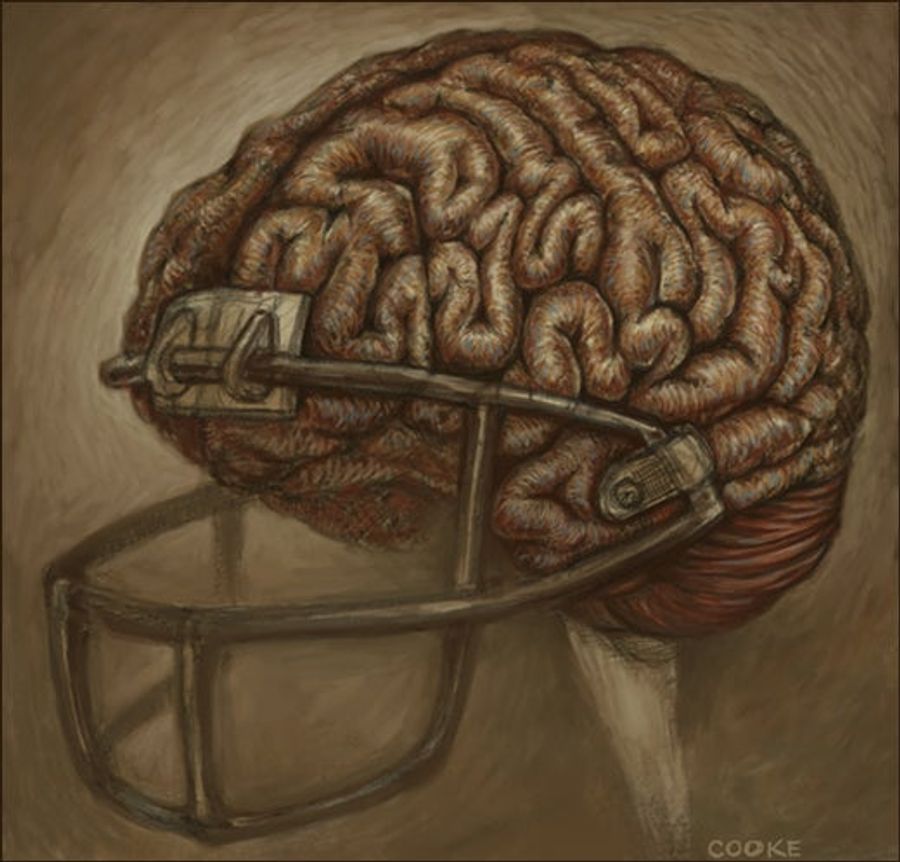
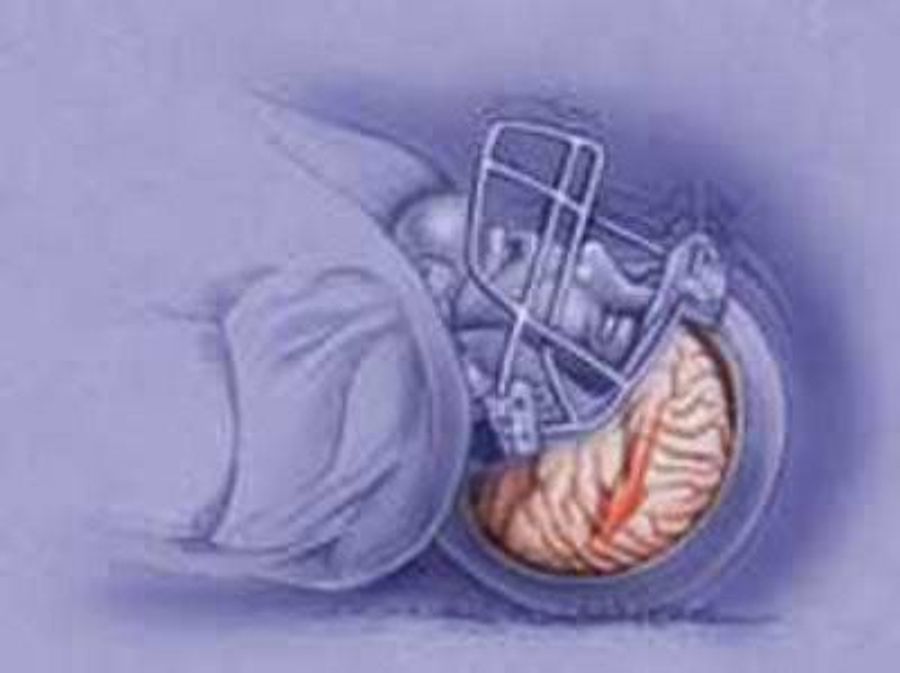
Image via GQ

Dementia Risk Seen in Players in N.F.L. Study [New York Times]
Game Brain [GQ]

]]>
http://deadspin.com/index.php?op=postcommentfeed&postId=5371155&view=rss&microfeed=true
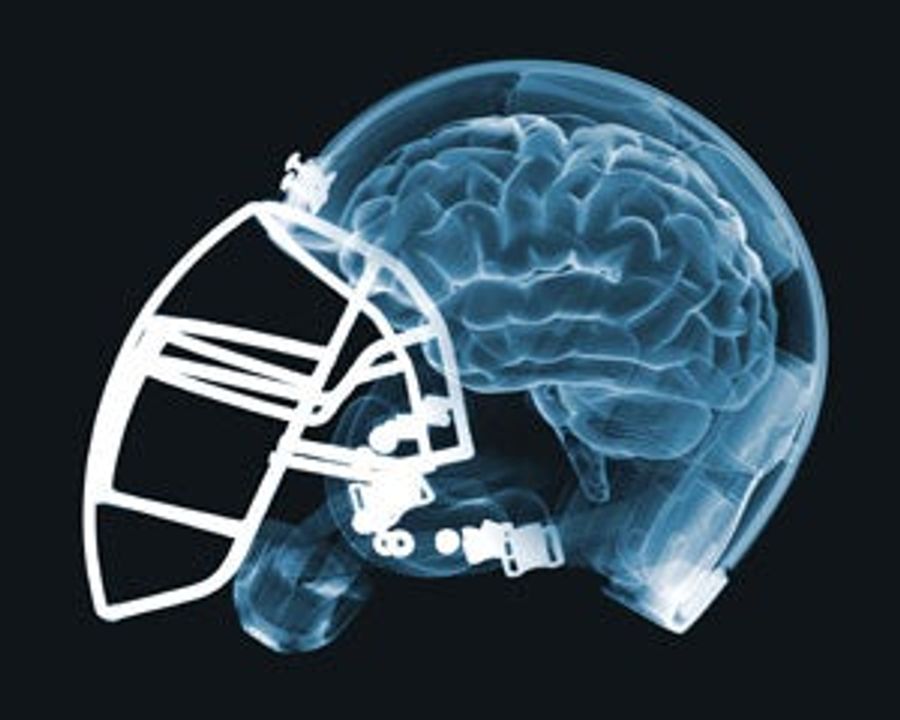
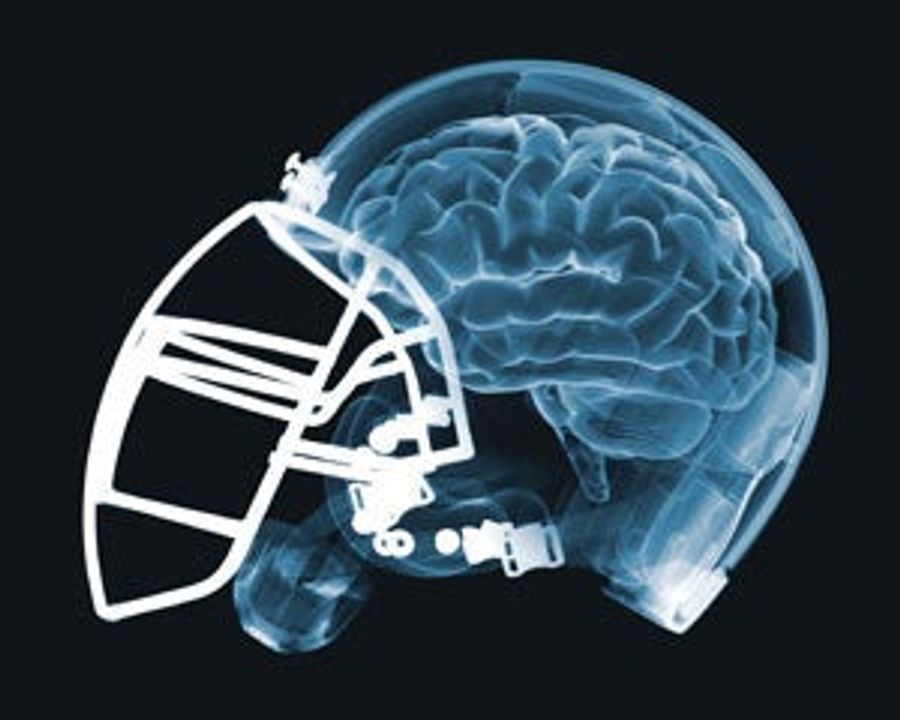
<![CDATA[This Is Your Brain. This Is Your Brain On Football]]> A couple days ago, more definitive evidence that the professional helmet-smashing lifespan of an NFL player has detrimental effects on the human brain. It still probably won't change the way the game is played.

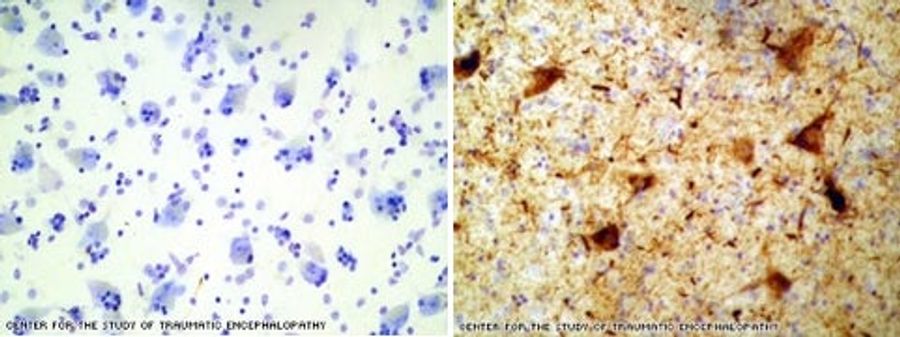
Researchers at the Center for the Study of Traumatic Encephalopathy (CSTE) used the brains of seven dead NFL football players, including John Grimsley, Mike Webster, Andre Waters, Justin Strzelczyk, Terry Long, and Tom McHale. The results of their findings showed that the players, even though most were in their 30s and 40s, all had the brain make-up of an 80-year-old man with onset dementia.

"What's been surprising is that (the damage is) so extensive," said Dr. Ann McKee, a neuropathologist at the Veterans Administration Hospital in Bedford, Massachusetts, and co-director of the CSTE. "It's throughout the brain, not just on the superficial aspects of the brain, but it's deep inside."

The damage affects the parts of the brain that control emotion, rage, hypersexuality, even breathing, and recent studies find that CTE is a progressive disease that eventually kills brain cells.

Yet, Dr. Ira Casson, co-chair of the NFL's concussion committee that was formed in 2007, is still not 100% convinced:

"It’s very hard to react to things and to case studies that are not presented in appropriate, scientific form and have not gone through peer review. I think that there are many questions that still are out there as to whether there is a kind of traumatic encephalopathy associated with football. I think we don’t know. I think that there is not enough scientific evidence to say that there is.”

The reality is it's the responsibility of the player to know when to stop. The NFL's never going to step in because then the league would take on more responsibility and blame for the premature deaths of many of their ex-players. There's a difference between player concussions that are "reported" to team trainers and those that actually happen. Many concussed players never speak up— if the dizziness subsides before they get back to the sidelines, well, they're fine. Back in the game.

And most players know the risks and play through the warning signs. 45 seems so far away when you're a 25-year-old that it might as well be 80.

I interviewed Bill Romanowski in late November about his nutritional supplement business (Nutrition53) and this issue came up. Romanowski estimates he suffered 20+ concussions throughout his football playing career. At 42, he's already suffered the memory loss, depression, and slurred speech, but he was convinced that his supplements were helpful in staving off the effects. And Bill still wants to play. I asked him if he'd play the game any differently if he knew what he knows no — if he knew it would add another 10 healthy years to his life to be with his family and friends and children — and, without pausing, he said "No." He even said that even though he's probably one head shot away from being a vegetable, he'd strap on the pads tomorrow.

I'm sure many in the league share the same attitude. So how do you fix that?

Brutal Damage To Football Players Brains [Boing Boing]
Dead athletes brains show damage from concussions [CNN]
Study of Ex-NFL Players Ties Concussion To Depression Risk [NYT]

]]>
http://deadspin.com/index.php?op=postcommentfeed&postId=5141905&view=rss&microfeed=true