<![CDATA[Deadspin: the dark side of the locker room]]> http://tags.deadspin.com/assets/base/img/thumbs140x140/deadspin.com.png <![CDATA[Deadspin: the dark side of the locker room]]> http://deadspin.com/tag/thedarksideofthelockerroom http://deadspin.com/tag/thedarksideofthelockerroom <![CDATA[Coming Soon: Jonathan Papelbon's Dubious Taste In Cinema]]> "Dark Side of the Locker Room" is a compendium of journalists' bizarre, amusing and previously undocumented encounters with athletes (and often athletes' genitalia). Got a story? Send it to darkside@deadspin.com.

Today's story is from Alan Siegel, who was a sportswriter at The Eagle-Tribune in Lawrence, Mass., from 2005 to 2009.

In my four years at a suburban Boston paper, nothing made me feel smaller than covering the Red Sox. For 20 or so games a year, I parachuted in and tried to collect enough material for a column and a notebook. To the players, I was a gnat: barely noticeable and easily swatted away.

But being insignificant had its advantages.

While the big boys from the Globe and Herald rushed upstairs to the press box to file pregame updates, I usually was able to hang around the clubhouse until the access period ended. Sometimes, I caught somebody for a quick interview. On this afternoon in early April 2008, I was shit out of luck.

The Yankees were in town and players were scarce, save for a few pitchers sitting on the black leather couches assembled in the middle of the room. Manny Delcarmen was one, Clay Buchholz was another. Jonathan Papelbon, in practice gear, was around too, fiddling with the DVD player hooked up to a nearby flat-screen television. He was up to something, I could tell. When he popped in a disc he made a Bill Murray face. (If you've seen Papelbon's mound stare downs, you know it probably isn't easy for him to be deadpan.)

Curt Schilling once said of Papelbon in Sports Illustrated, "He's not exactly a charter member of Mensa," and many baseball fans would probably agree with the assessment. I prefer the characterization provided by Esquire's Chris Jones, who recently wrote, "Papelbon's not stupid. He just hasn't acquired professional mechanisms, an understanding of consequence: He says all the dumb things most of us probably think but keep back."

In other words, he's 16. So it shouldn't have surprised me when I noticed the Hustler Video logo pop up on the TV. It did, though. I figured I was seeing things. The title screen appeared. It looked like an SI swimsuit edition video, with lettering similar to the magazine's masthead. Oh, I though. Bikinis. This won't be too weird. Then the actresses came on screen.

Literally.

What I saw that day defied physics. It was fantastically filthy. From where I was standing, about 10 feet away, it looked like an open fire hydrant. In retrospect, I should've known. There's a reason they named the movie Squirts Illustrated.

(Can you imagine Papelbon asking a clubbie to make a porno run? Yeah, I need three tins of Skoal mint and the widescreen edition of Squirts Illustrated. Here's 100 bucks.)

It hadn't been on for more than a minute or two when, in a serendipitous moment, Theo Epstein and Terry Francona stepped out of the manager's office — just in time to catch their teenage reliever pulling a stunt Steve Stifler would've enjoyed. Francona managed a half smile. Epstein glowered. Sadly, I don't remember exactly what happened next. I don't know if someone pressed the stop button, or if Papelbon was scolded. I do remember that none of his teammates was laughing, which suggested to me that maybe this had happened before. And I remember, too, that the 10 or so reporters left in the clubhouse –- all male, at that point -– remained silent, as if watching video of a bursting human water main was the most normal thing in the world.

Finally, a writer, one of the nicest guys on the beat, smiled and shook his head. He'd clearly seen this act before, or at least some variation on it. He turned to the other scribes. "I'm out of here," he said, and we followed his lead.

Again, any sports journalist out there with a story to tell — print, online, broadcast — should send it along to darkside@deadspin.com. You know you've got a million of them.

]]>
http://deadspin.com/index.php?op=postcommentfeed&postId=5388660&view=rss&microfeed=true
<![CDATA[Old-School Skunk And The Ripe-Tomato Eyes Of Pete Johnson]]> "Dark Side of the Locker Room" is a compendium of journalists' bizarre, amusing and previously undocumented encounters with athletes (and often athletes' genitalia). Got a story? Send it to darkside@deadspin.com.

Today's story is from Franz Lidz, a frequent contributor to The New York Times and GQ. He was a senior writer at Sports Illustrated from 1980 to 2007, and a contributing editor at the now-defunct Condé Nast Portfolio from 2007 to 2009. He is the author of Unstrung Heroes: My Improbable Life with Four Impossible Uncles; Ghosty Men: The Strange but True Story of the Collyer Brothers; and Fairway To Hell: Around the World in 18 Holes.

Back in the Pleistocene epoch, I interviewed Pete Johnson, a Bengals running back who could cover the length of a football field in 9.9 seconds, but was exceedingly slow at getting to appointments. He agreed to be at my hotel at noon. When he hadn't shown up by 1 p.m., I called his "secretary."

"That's funny," she said. "He told me he was on his way." At 1:45, he called. "I'm on my way," he said. At three o'clock, I called his secretary back. "He should arrive any minute," she said. At 5:30, Johnson called again. "Almost there," he said. "See you at 6:10." To Pete Johnson, 40 minutes was "almost there."

At 7 p.m., the secretary was in the lobby bar. "We'll wait for him together," she said. At 8 p.m., Johnson swaggered in with his 2-year-old son in tow. "How come you're so late?" I asked. He grinned. "I'm not late," he said. "You're early." As it was, the secretary said, I was relatively lucky. "When he says he'll be somewhere at a certain time," she explained, "it generally means he'll appear anywhere from six to 48 hours later."

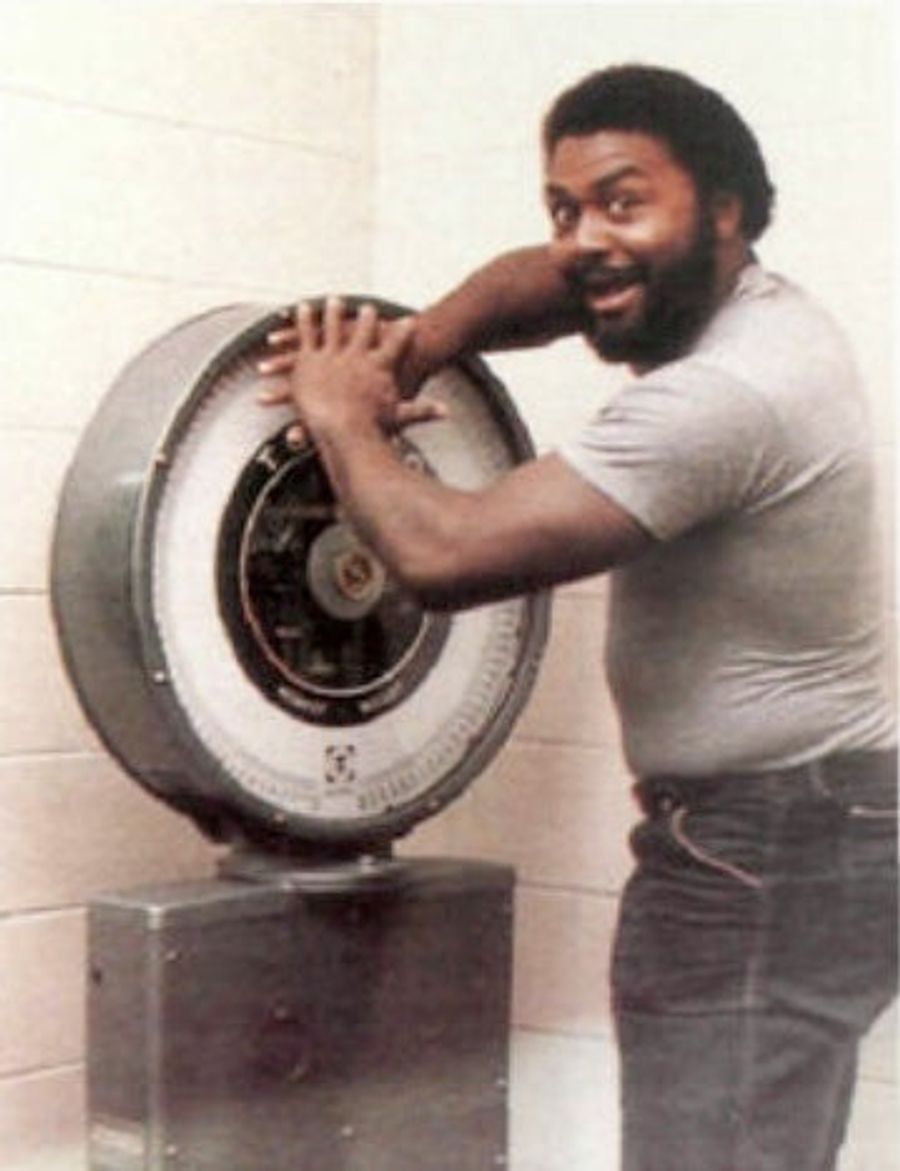
You may not remember Pete Johnson, and if you do, it's probably for his various legal woes. That's a shame. He was a great big smiling Panzer of a man, born Willie James Hammock but nicknamed Pete as a child because, during hot Georgia summers, he liked to chase the Peter Pan ice cream truck down the street. He sang tenor selections from Brigadoon in the clubhouse shower. He liked to ride bareback on a stallion named Black Sea. He tooled around in a customized van that he called The Cisco Kid, which was tricked out as a sort of rolling early-'80s fuckpad: floor-to-ceiling shag carpeting, a refrigerator, a stereo, a TV and a six-bottle wine rack next to the bed. He was a flake of the first order.

Tracking Johnson down was one thing; getting him to talk football was quite another. Rather than sit still on this occasion, he hauled everyone to a suburban pizza joint where man-sized toy animals decked out like rock musicians "played" Elvis Presley tunes. He listened to questions about his Super Bowl season and his college bowl games. He listened — but he didn't answer. He was watching a giant mechanical sheep play a riff from "It's Now or Never" on electric guitar. "Can't talk now," Johnson said. He offered to meet me the following morning at the team compound. "Eight a.m.," he said. "I promise."

The 2-year-old, who was a little bored, smashed a vanilla ice cream cone against his forehead. Johnson giggled. Soon he was rocking and rolling in time to an ersatz gorilla in a gold lamé suit. The gorilla was the keyboard man for the animal band, which was banging out The King's version of "Fools Rush In (Where Angels Fear to Tread)." "Boy," Johnson said happily, "that organ player sure can jam." He took out his driver's license and pointed to a box he had checked off. "See, I'm an organ donor," he said, laughing at his brilliant wordplay. I wrote down his address, sensing I might need it someday.

Much of this was chronicled in the Sports Illustrated story I wound up writing. What happened next was not, and I suspect it explains a lot of what came before. At 10 a.m. the following morning, Pete Johnson was again AWOL. I drove to his address. I knocked at his front door. When it swung open, I was swallowed up by a cloud of thick, gray smoke. The scent: old-school skunk with notes of pine and juniper.

The smoke cleared and I stood face-to-face with my subject, whose eyes were the color of tomatoes. Ripe tomatoes. He glared at the pen in my right hand. He glared at the notebook in my left. Then he said, "Fuck it, man! I thought you was Domino's."

Photo via the SI Vault

Again, any sports journalist out there with a story to tell — print, online, broadcast — should send it along to darkside@deadspin.com. You know you've got a million of them.

]]>
http://deadspin.com/index.php?op=postcommentfeed&postId=5377326&view=rss&microfeed=true
<![CDATA[A Solo On The Toy Drum]]> You've read our "Dark Side of the Locker Room" series, in which journalists share their bizarre encounters with sports figures and, frequently, their genitalia. Consider this the reverse: Sports figures share their (and, perhaps, their genitalia's) bizarre encounters with journalists.

Today's story is from Garrett Broshuis, a pitcher in the San Francisco Giants organization. He wrote the "Suitcase Chronicles" column for Baseball America and maintains a blog, Life in the Minors. You can follow him on Twitter @broshuis.

Given the success of other sausage tales, I thought I'd add my own salacious bit, this time with a misogynistic twist. (Note: I in no way condone misogyny, even though I'm not even sure what it means.) It was my second year of Double-A ball with the Giants affiliate in Connecticut, and I sat in a chair beside my locker awaiting the imminent arrival of my teammates after the game. I had pitched well and received a win that night (a rarity that season), and my arm was cocooned in bulging towels of ice.

The victory song began. The bass kicked in. The walls started to vibrate. Some guys began eating, others began to shower, a few even talked about the game. Suddenly the music stopped.

OK, so the music didn't really stop, but if this were Hollywood it would have. Because the unfathomable had just occurred: A woman had infiltrated our clubhouse.

At the entrance, the rules of the clubhouse were clearly displayed. (Well, not exactly clearly. Only the "Reglas del Clubhouse" remained, as someone had misplaced the English version.) None of us had ever read these rules, but we all assumed that it clearly stated "No Girls Allowed" under 4.1.1, just below the section on gambling and cheating. The Berenstain Bears had this clubhouse rule. Why wouldn't we?

This was a first for most of us. Our regular beat reporter was a guy, and every other beat reporter we'd ever had in the minor leagues was a guy. When in the hell did they start allowing women in here? Couldn't they see that we were trying to shower and do guy stuff?!

Worst of all, the woman approached me. She was a newspaper reporter, from either The Day or the Norwich Bulletin. I respectfully began answering her questions as she respectfully kept a distance of 3 feet between us. Her eyes fixated on a spot just above me, somewhere in the disorganized mess of my locker, and I began to think that this wouldn't be too bad. The thought even entered my mind that this was probably like a snake encounter: They were more uncomfortable than you and wanted to get away just as quickly.

As the interview wrapped up, things took a change for the worse. Most farms keep at least one jackass around, and this baseball farm was no different. They liven things up with random antics. Our jackass had a "mating call." He would flop his penis back and forth in a fashion similar to a Mexican toy drum. It even produced a similar sound. (Buyer beware of this toy.)

So, the poor woman was interviewing me, trying very hard not to look at the wrong thing. And it was at this moment that our jackass, standing about 5 feet away from her, commenced his mating call. He was flopping the thing around as fast as a hummingbird beats its wings. It was a virtuoso solo on the toy drum. I couldn't believe it.

The woman closed her eyes for a second. But somehow, with great resolve, she remained professional. So did I. Many of my teammates were laughing by now, but I kept a straight face. She thanked me for my time, turned away from the toy drum and went on her way.

I figured my teammate was in for all sorts of sexual harassment charges, but they never came. In time, we all grew accustomed to having the occasional woman reporter enter our safe zone. For those lucky enough to don a big-league jersey, I'm sure it became commonplace. We adapted to the change, just as the Berenstain Bears adapted. But I doubt anyone ever forgot that toy drum.

Any athlete out there with a story for "The Other Side of the Locker Room" should send it along to tips@deadspin.com. Subject: Other side.

]]>
http://deadspin.com/index.php?op=postcommentfeed&postId=5377263&view=rss&microfeed=true
<![CDATA[Pedro Guerrero Beats The Spread]]> We're bringing back our popular "Dark Side of the Locker Room" series, which you'll remember was a compendium of journalists' bizarre, amusing and previously undocumented encounters with athletes (and often athletes' genitalia). Got a story? Send it to darkside@deadspin.com.

Today's story is from Richard Hoffer, a former Sports Illustrated senior writer. He is the author, most recently, of Something in the Air: American Passion and Defiance in the 1968 Mexico City Olympics.

You'd think these stories — and there quite a few of them now that I think about it — would be born of some unwholesome prurience, or voyeurism. In fact, sports writers are not particularly interested in the relative size of their subjects' members. Really. Nakedness in a locker room is a working condition, and is no more provocative or remarked-upon than a three-piece suit in some other (perhaps — I say, perhaps — more dignified) occupation.

Still, there are these stories. I don't want to name names, but a colleague of mine is famous for his set-piece of a certain football player's magnificent appendage. The point of the story is not how immense it was — it may or may not have been the size of two orange juice cans duct-taped together, I don't remember — or even whose it was. I don't remember that either. The point is that just about anything can be a worthwhile challenge for our observational powers. I have heard the story many times but have never heard it repeated. The filigrees of elaboration have become a kind of improvisational theater, a one-man show, like Hal Holbrook doing Mark Twain. Anyway, the last time I heard it, there was, for the first time, the mention of substantial veining, "like ivy encircling a massive trunk." I remember two writers in attendance doing spit takes.

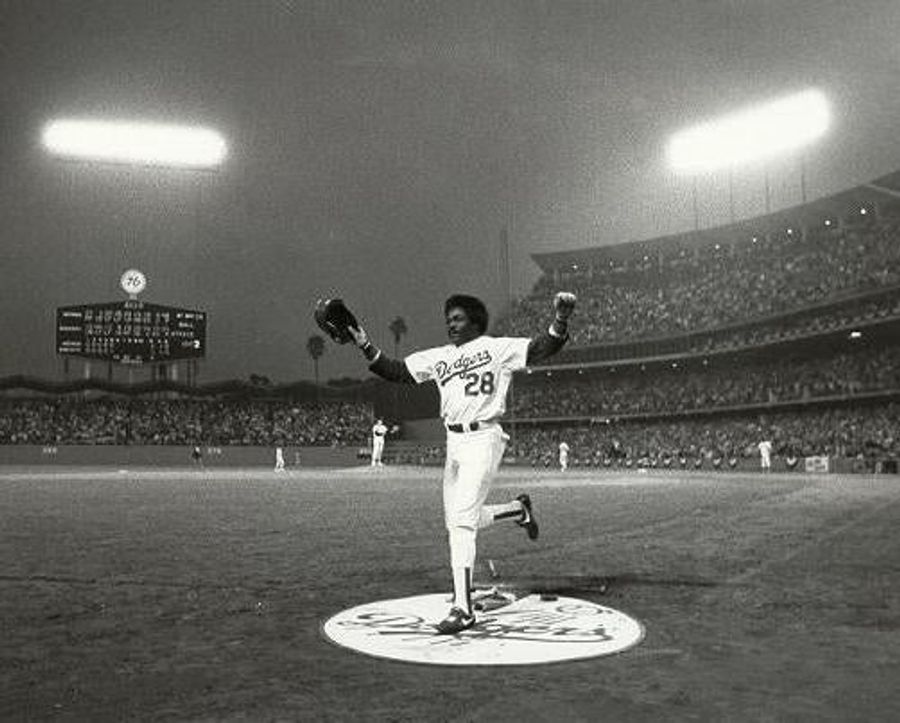
My own contribution to this genre, a little entry about Pedro Guerrero, is slight in comparison. Probably everyone who ever covered baseball, which features the most immodest mind-set in all of sports, has a similar anecdote. Dicks are always out, flaunted, bandied, waved and wiggled in a clubhouse. It's the most exaggerated exhibitionism this side of the Internet. And everybody was used to Pedro, in particular, flaunting, bandying or wiggling his. He was a good hitter in those days, but also wildly inappropriate, even by the standards of baseball. If you were in your interview crouch, transcribing some Dodger's quotes, you knew to jump if you felt something brushing your neck.

Even so, it was something of a shock that night when Pedro, naked as always, slathered his member across the banquet of post-game cold-cuts. It must have finally occurred to him that he simply could. I want to say he did it with relish, but that goes without saying. In any case, the clubhouse was seized with a kind of trauma, the players' eyes wide, their mouths agape at the singular destruction of dinner. We'd all seen Pedro wield his instrument in any variety of ways but never in the vandalism of free food.

Now I've been telling the story for all of these 30 years, more often than not when alcohol was available, but even so have never stooped to describing the offending anatomy. Whatever the veining, I'll leave it to others who were in the clubhouse that night. The size, the state of its circulation, the grip — none of it important. To me the whole point of the story rests with the sudden appearance of Bill Russell, that innocent from Kansas, returning to the clubhouse after one of those dugout interviews, the ones where the star of the game chats with the radio guy for a free Timex or a car wash coupon.

My memory can't be perfect and who knows if, after all this time, a flourish hasn't crept into the anecdote, an embellishment, a harmless ornamentation. It's been 30 years, after all. But I'm quite sure, I can see it in my mind's eye, that Russell surveyed the spread before him, however strangely unattended, and set about making his customary sandwich. Free food is free food.

I seem to remember that at one point Russell looked up from the construction of this monstrosity, perhaps puzzled by the stunned silence around him or just the unnatural attention he was receiving. Why, in this normally ravenous clubhouse, was he the only guy at the buffet? And why was everybody looking at him? Still, all that food. As I recall he paused just briefly — "What?" he said — then bit deeply into that meaty torpedo.

Then again, he may have said nothing at all. Like I said, it was a long time ago.

Again, any sports journalist out there with a story to tell — print, online, broadcast — should send it along to darkside@deadspin.com. You know you've got a million of them.

]]>
http://deadspin.com/index.php?op=postcommentfeed&postId=5370302&view=rss&microfeed=true
<![CDATA[Maybe This Is Why They Called Him "The Lip"]]> We're bringing back our popular "Dark Side of the Locker Room" series, which you'll remember was a compendium of journalists' bizarre, amusing and previously undocumented encounters with athletes (and often athletes' genitalia). Got a story? Send it to darkside@deadspin.com.

Today's is a brief little gem from author Robert Lipsyte, a former city and sports writer for The New York Times. He is host of the forthcoming PBS weekly series on aging, Life (Part 2). Visit his web site, Robertlipsyte.com.

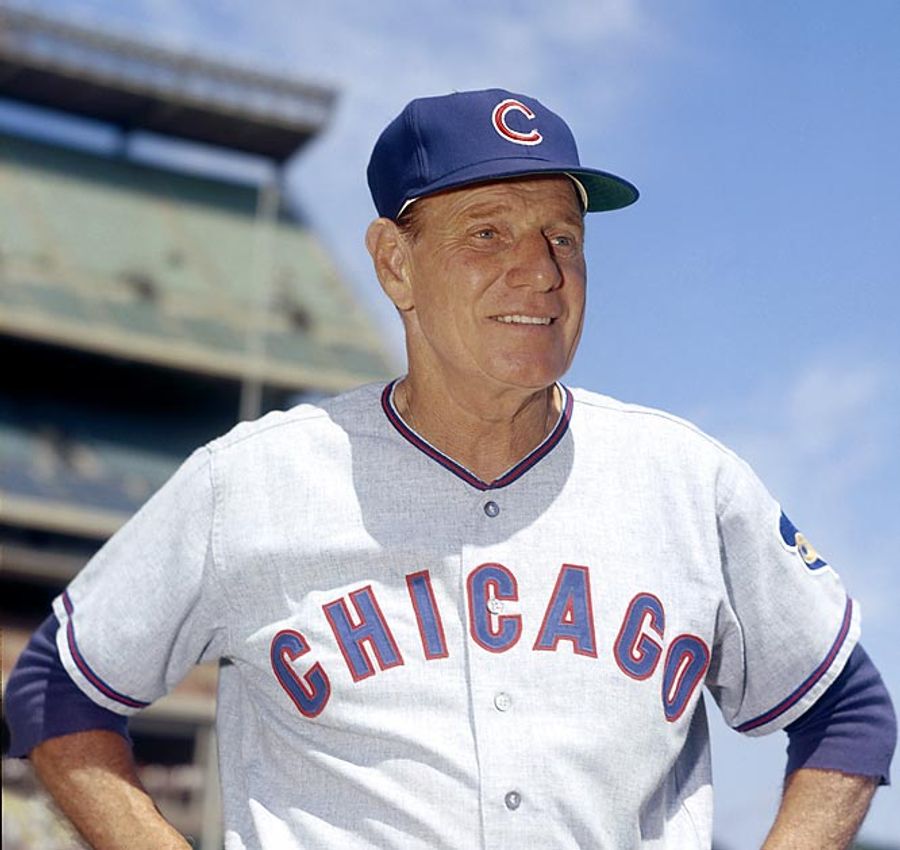
So there I was, late in the summer of 1969, sitting next to the Chicago Cubs' manager, Leo Durocher. I am intensely engaged because the Mets are chipping away at the Cubs' league lead. As a young reporter in 1962, I had covered the Mets' first year of existence, and now, seven years later as a young columnist, I was covering their first serious pennant run.

So I press Durocher, once a Yankee shortstop, later manager of the Giants and Willie Mays, for words of wisdom about winning and losing. He offers me perspective.

I follow the tilt of his head toward an attractive woman in the stands as he says, "Kid, show me a man who doesn't go down on his wife and I'll show you a man whose wife I can sleep with, tonight."

The Mets went on to sweep the Cubs series. They beat the Atlanta Braves for the National League title. They beat the Baltimore Orioles in the World Series. I didn't share the best advice I've ever gotten in baseball.

Again, any sports journalist out there with a story to tell — print, online, broadcast — should send it along to darkside@deadspin.com. You know you've got a million of them.

]]>
http://deadspin.com/index.php?op=postcommentfeed&postId=5316309&view=rss&microfeed=true
<![CDATA[Dark Side Of The Locker Room: Stephon Marbury Is Puzzled By My Godlessness]]> Being a sports reporter is, at times, an absolutely horrible job. Sure you get to watch games, travel and interact with athletes, but there is a horrendous downside. (Which is pretty much everything else.) And this is never more disturbingly clear than when a reporter has their first (or 50th) awful experience with a half-naked, exhausted athlete. Sometimes they'll be openly dismissive, sometimes they'll yell, and sometimes, well, they'll fart in your face. Most of these stories never end up in the newspaper the next day. So now, Deadspin proudly presents "The Dark Side of the Locker Room" where current and former sports writers can share some of their most distressing interactions. If you've got your own story to share, please send it along to ajd@deadspin.com.

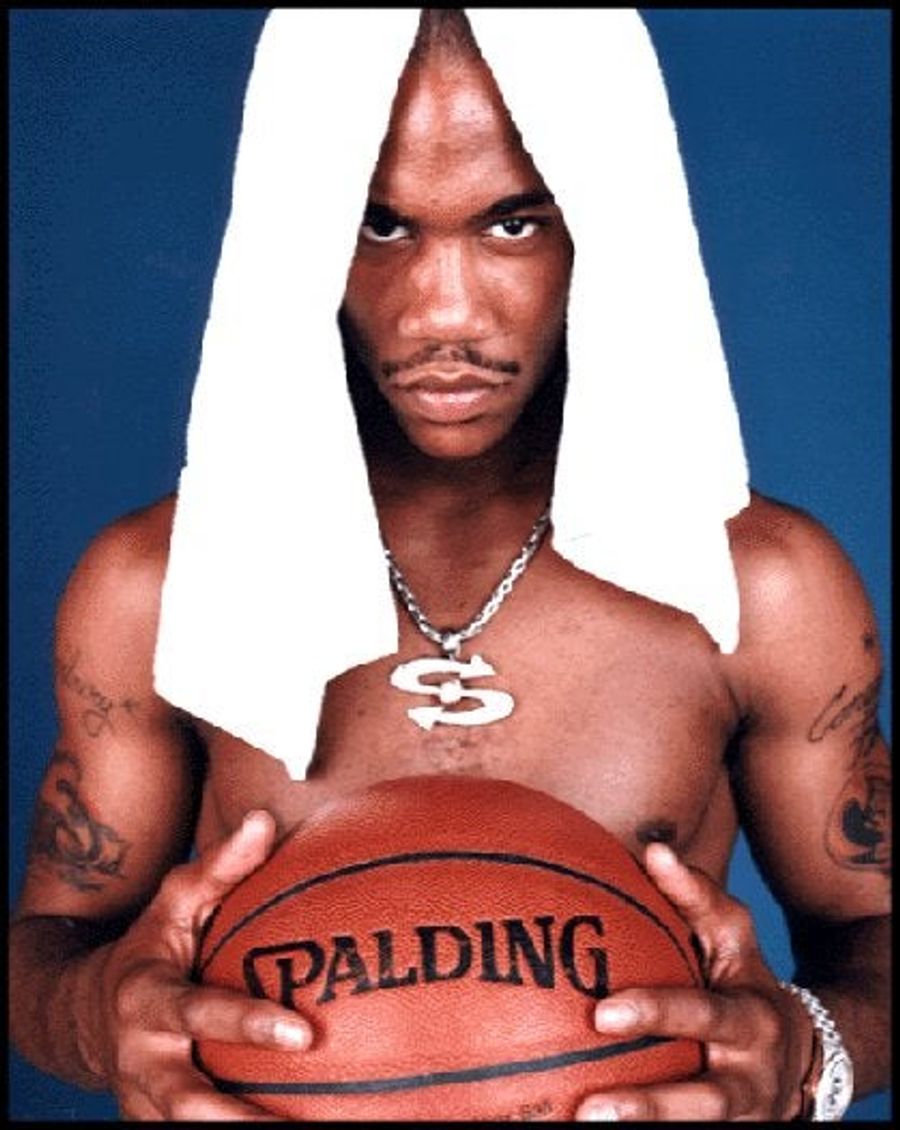
Tommy Craggs is a writer for Play and Slate and other magazines. Tommy Craggs spent an enlightening period of time with the Knicks' Stephon Marbury for a New York magazine profile. Here's one part that didn't make the story.

We were sitting in a Charleston, S.C., hotel room, Stephon Marbury and I, debating the finer points of Holy Scripture. Specifically, we were talking about Noah's Ark and spaceships, but let's not get ahead of ourselves. This was a little less than a year ago, the night before training camp and in retrospect probably the last good night any Knick would have that season. I was in Charleston on assignment for New York Magazine, working on a profile of Marbury, who in the preceding six months had given an excellent impression of a man gone completely and very publicly round the bend. There were the rambling interviews. There was the cameo in the Anucha Browne Sanders lawsuit, from which we learned that Marbury was doing full-gainers into the Knicks' intern pool. And there were the weird pronouncements: "I drink life's happy water which is bottled at the divine source," he blogged for the New York Post at one point, a sentiment that falls roughly halfway between Lourdes and Jonestown.

It was getting late, and Marbury was tucked snugly into bed, and all I could see of him was his large bald dome, lolling about just above the covers. A personal assistant, a fellow named Gaylord, was snoring softly from a nearby couch. We were on the sixth floor of the Charleston Place hotel, where earlier in the day Marbury had checked in under the initials "JCIMS." In the past, he told me, he would travel under a series of different names — usually "Star-something," he recalled. But perhaps he found it a touch grandiose, naming himself for the firmament. So "JCIMS" it was. Jesus Christ Is My Savior.

We talked about many things that night. About the Knicks. About his shoe line and his philanthropy. About the business of basketball. (It was here that he declared memorably: "If I didn't play the way how I played, I wouldn't have gotten no max contract. ... Don't get mad at me, because I'm telling you what's real. One plus one is two, all day long, and it's never gonna change. And that's factorial.") He spoke wistfully of the family time he'd sacrificed for the game. "Like my son going to the bathroom for the first," he told me. "Those are monumental moments."

Mostly, though, Marbury seemed bored. He had played basketball's boogeyman for so long — since the start of high school, really (reading The Last Shot now, you're struck not by young Marbury's ambition and cynicism, with which we're very familiar, but by the lucidity of his thoughts, with which we most definitely are not). By now Marbury was well-accustomed to explaining himself to journalists, and before long his answers started to drift from their moorings and more and more seemed to be directed at the Monday Night Football game unfolding on his television.

It was about this time that I said I don't believe in God.

Let me say here that I generally found Marbury to be an accessible, fairly genial subject, or at least I did right up until he proved himself to be neither, just a few weeks later. (This had something to do with my contacting Gaylord, his assistant, without Marbury's permission, after which I was denied any future access. This still seems backward to me, but as the Good Book tells us, "The wind blows where it wishes.") Marbury liked to communicate via text message, and I can report to you that even Stephon Marbury, on occasion, says "LOL." So believe me when I tell you that, while what follows may at times sound like a pointed exchange between a believer and a skeptic, it was not, as these things go, altogether unpleasant. It was just so unexpected: an epistemological inquiry with Stephon Marbury

It began when I spotted a Bible on the end table and asked if he had read any of it today.

"I'm in Genesis," he explained. "I'm reading from the front to the back."

"The good stuff's up front," I offered.

Marbury agreed. "Genesis is hot."

He turned to me. I knew where this was going. "What's your religion?" he asked.

I told him I had none.

"At the end of the day, it's all about you and your relationship with — you believe in God, right?"

I don't.

"You don't believe in God?"

I don't.

Marbury chewed on this for a moment. "Everybody's different," he said. "You don't believe in God. So ... are you an atheist?"

Yes, I would say so.

Some bad Abbott and Costello dialogue ensued. Marbury began poking at the edges of my non-belief. He was trying to take its measure.

"So that's like you not believing — like, if I said to you, somebody could jump from the free-throw line, you automatically don't believe it?"

It's nothing like that.

"So you don't believe there was a Jesus Christ?"

I do. He was a great carpenter.

Marbury laughed. "That's cool. That's what you believe."

We went on in this vein for awhile. I expressed the standard skepticism about Noah and the 300-cubit-long boat that could somehow accommodate the rough equivalent of the San Diego Zoo, at which point Marbury dropped the following thought on my head that we now pick up midstream:

"... Why does green mean that's the color green? Why can't you say another word for green being green? Know what I'm saying?"

I did not.

"If your mind can transform thoughts to create rockets to go into space, who is to say if an Ark was built? Like, if you could build spaceships to go from off this ground, to go up into the sky, and go land on the moon — you're saying, these things can't happen? So everything gets challenged, you understand what I'm saying?"

I did not, but he was rolling now.

"So at that time, they probably would say, 'Nobody can make a rocket to go up into space.' You know what I'm saying? Who's gonna build it, how they gonna built it to go all the way up?"

It soon emerged that Marbury had never met an atheist. And so, for a half-hour, he turned the questions onto me. He asked if I felt lost. He asked if I felt confused. He asked what I wanted out of life. He invited me to church. (Marbury goes to Christian Cultural Center, a megachurch at the far edge of Brooklyn. It's the sort of church that has ATMs. A few weeks after this interview, I texted Marbury and asked if his offer was still good, joking stupidly that God might strike me down at the door. He responded: "GOD will never strike you down. GOD is love and love is love. You don't get it, and that's ok. In time.") Atheism seemed to confound him. I ventured that in fact he probably had met an atheist before, and that many, if not all, of the journalists covering him are very likely atheists (not that I had any evidence). "For real?" Marbury replied. He thought that over for what seemed like a long time.

The next day, after practice, I was milling around the sideline with the rest of the media. I heard someone call out.

"Hey, Tommy! Tommy!"

It was Marbury, splayed lengthwise and propped on an elbow. He was rolling back and forth on some sort of padded cylinder. I went over to him. The beat guys, none of whom knew me from Adam, turned to look at me. "All?" Marbury asked, gesturing to the press. "All of them?" Embarrassed, I explained the matter to my colleagues. Howard Beck, from the New York Times, just shook his head and smiled thinly and began to walk away. "I'm not even going to touch that."

Amen.

]]>
http://deadspin.com/index.php?op=postcommentfeed&postId=5046837&view=rss&microfeed=true
<![CDATA[It's The Weightlifting, Stupid]]> Being a sports reporter is, at times, an absolutely horrible job. Sure you get to watch games, travel and interact with athletes, but there is a horrendous downside. (Which is pretty much everything else.) And this is never more disturbingly clear than when a reporter has their first (or 50th) awful experience with a half-naked, exhausted athlete. Sometimes they'll be openly dismissive, sometimes they'll yell, and sometimes, well, they'll fart in your face. Most of these stories never end up in the newspaper the next day. So now, Deadspin proudly presents "The Dark Side of the Locker Room" where current and former sports writers can share some of their most distressing interactions. If you've got your own story to share, please send it along to ajd@deadspin.com.

Today's entry comes from Stefan Fatsis, who became an actual member of the Denver Broncos-well, a placekicker-to write his new book, A Few Seconds of Panic: A 5-foot-8, 170-pound, 43-year-old Sportswriter Plays in the NFL, which will be released next month. A decade earlier, on assignment for The Wall Street Journal, he got a tour of the Oakland Athletics' weight room.

In the short story that follows, no athlete will overdose in front of me. The main characters took their medicine in private.

With just a few weeks left in the 1996 regular season, I pitched a story about what I brilliantly deduced was the overlooked reason for the record number of home runs soaring beyond big-league fences that year: weightlifting. Players for decades had eschewed weights because of an institutional conviction that big muscles hindered flexibility; "Built like Tarzan, throw like Jane," the baseball man's cliché went. Now, however, the newly bulked were mashing the ball. Sweetheart, get me copy!

My 1,691-word article led with an anecdote about a boyish Athletics leftfielder named Jason Giambi. Under the watchful eye of one Mark McGwire-who was wrapping up the first of four straight 50-plus-homer seasons-young Jason had added 25 pounds since reaching the majors a year earlier. Giambi had never hit more than 12 dingers in a season in the minors. In his first full season in the bigs, he had 20. "I attribute the year I'm having to the weightlifting," he told me.

I happened to show up at the Oakland Coliseum on Jason Giambi Growth Chart Day. Kids got a life-size poster of the budding star to measure their progress growing up. I joked that the chart didn't measure how much "Mr. Giambi" per Journal style was growing out. The piece got worse from there. It's filled with quotes and details that make me look, in hindsight, like a complete idiot. After citing the contemporaneous conventional wisdom about the homer explosion-smaller ballparks, juiced ball, lousy pitching, etc.-I opined in the nut graph that "the missing component may be as obvious as Mr. Giambi's biceps: Baseball players are pumped up and worked out as never before."

Yup, the weights-and the "protein-enriched shakes"-must have been why Brady Anderson had smacked 46 homers so far and Todd Hundley had 41. I noted that McGwire, asked once to explain his home-run prowess, had cited bad pitching "and this"-his forearms. I did note a downside to the weight mania, however. All that lifting may have been why Jose Canseco repeatedly landed on the DL, why Juan Gonzalez suffered recurring back problems, why Dean Palmer ruptured a biceps tendon while swinging a bat.

Anyway, the locker room. Right after the game against the Baltimore Orioles, the Athletics filed into their small weight room. My chaperone was Bob Alejo, the team's strength coach. Alejo, I recall, was well-built himself, the way some trainers are, and he had a swagger common among people who spend a lot of time with athletes and often confuse the players' abilities with their own. We stood in front of a rack of dumbbells. McGwire-"who says he might open a bodybuilding gym after he retires," I wrote-worked on legs and shoulder and talked real estate with B.J. Surhoff. Cal Ripken Jr. sprinted on a treadmill and did biceps curls. Giambi bench-pressed 185 pounds.

Alejo volunteered a piece of advice:

"You might want to back away from there," he said.

"From where?" I replied, genuinely confused.

"From the weight rack. You don't want to get hurt."


I don't want to get hurt?
How exactly would that happen? Would I injure myself in a foolhardy attempt to use these, what did you call them? Dumb-bells? Would a 55-pound weight leap off the rack and knock me unconscious? Would I dissolve into a pile of sawdust if my elbow brushed against the heavy metals that these finely calibrated professional athletes employ to sculpt their mighty physiques? Or, seeing these big, hard bodies lifting all these heavy, heavy objects, would I swoon like Scarlett O'Hara and impale myself on a particularly pointy corner of the rack? I do declare! Such manly men! Fetch me a fan and a glass of iced tea!

Predictably, I didn't respond. If a smirk and a chuckle passed my lips, I don't remember; probably not. I didn't tell Alejo that regular people also lifted weights. Or that I had spent the past three months maniacally rehabbing an ACL torn playing a sport that actually involves contact. I took a couple of steps away from the weights and continued asking the wrong questions, just like everyone else who covered baseball in the 1990s-until, that is, Steve Wilstein changed the conversation forever.

A decade later, as McGwire dissembled in front of Congress and Giambi made his non-admission admission and George Mitchell issued his Report, I thought fondly of the life-saving safety tip I'd received in Oakland. Finally, the rest of my fellow weakling reporters were in on the secret. We all knew as much about "weightlifting" as the strength coach of the team I described as "baseball's most dedicated lifters."

]]>
http://deadspin.com/index.php?op=postcommentfeed&postId=5015028&view=rss&microfeed=true
<![CDATA[The Sadness Of Concrete Charlie]]> Being a sports reporter is, at times, an absolutely horrible job. Sure you get to watch games, travel and interact with athletes, but there is a horrendous downside. (Which is pretty much everything else.) And this is never more disturbingly clear than when a reporter has their first (or 50th) awful experience with a half-naked, exhausted athlete. Sometimes they'll be openly dismissive, sometimes they'll yell, and sometimes, well, they'll fart in your face. Most of these stories never end up in the newspaper the next day. So now, Deadspin proudly presents "The Dark Side of the Locker Room" where current and former sports writers can share some of their most distressing interactions. If you've got your own story to share, please send it along to ajd@deadspin.com.

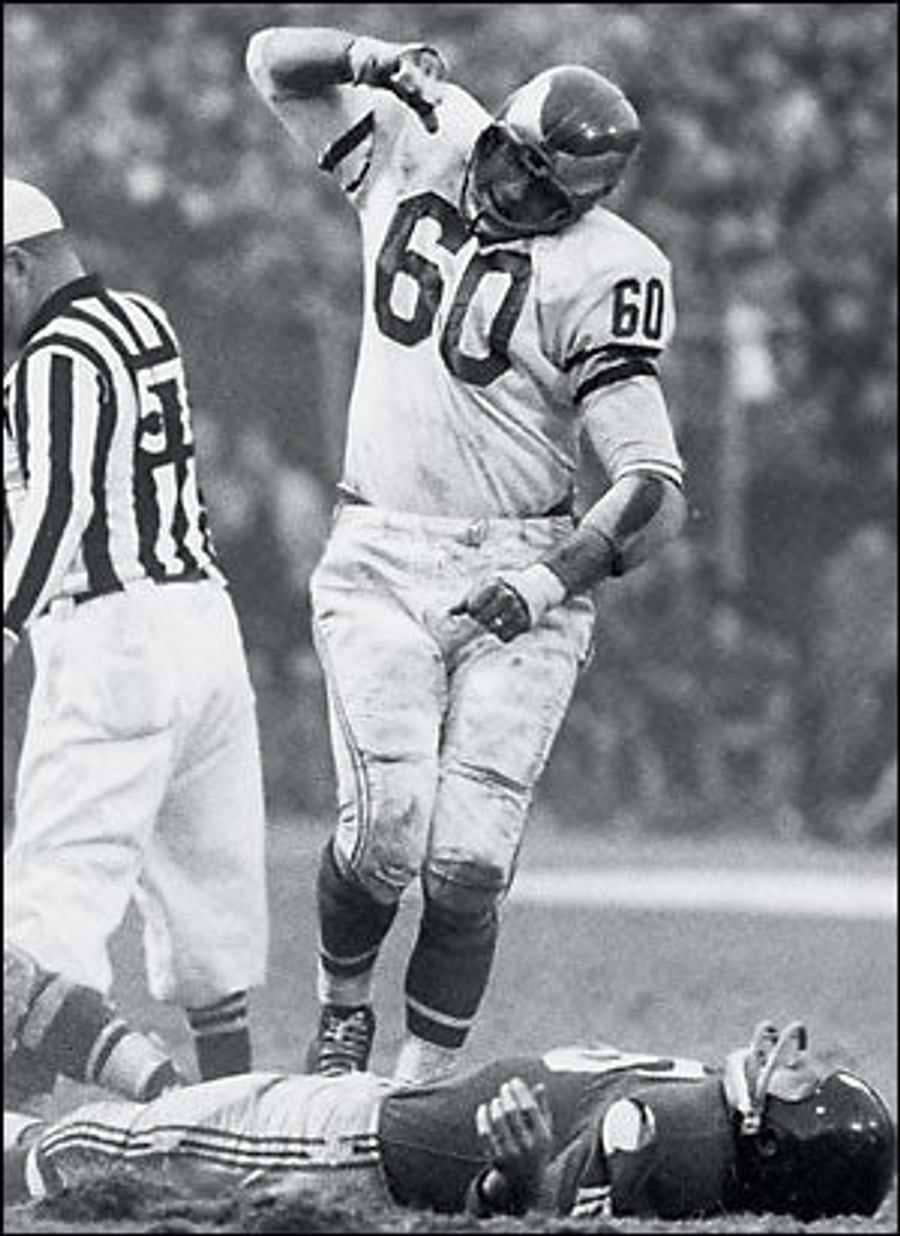
Mike Sielski is the sports columnist for Calkins Media, a chain of daily newspapers in suburban Philadelphia, and the co-author of "How to Be Like Jackie Robinson: Life Lessons from Baseball's Greatest Hero." The Newspaper Association of America has named him one of the 20 best newspaper people under age 40 in the nation. Today, Mike shares a revealing interview with Philadelphia Eagles' legend Chuck Bednarik.

I was sitting in Chuck Bednarik's living room, stunned into silence, listening to a legend tell me who he really was.

It was January 2003. I was working for the Morning Call in Allentown, Pa., in a hybrid position as Philadelphia Eagles beat writer/columnist, and the Birds were in the midst of their most enchanted season since they had reached Super Bowl XV. Despite being without quarterback Donovan McNabb for the final six games of the regular season — McNabb had broken his ankle — the Eagles had gone 12-4 and were prepared to host the Atlanta Falcons in the NFC divisional round. The "last of the 60-minute men," an Eagle for all of his 14 seasons in the NFL, Bednarik remained a franchise icon, a black-and-white image of him from his playing days looming on one of the walls inside the team's practice facility. He was born in Bethlehem, Pa., and was still living in the Lehigh Valley. I called him and asked if I could come over to chat about McNabb and Andy Reid and the 2002 Eagles.

Three times during our phone conversation, Bednarik called Jeff Lurie, the team's owner, a "son of a bitch." He agreed to meet with me two days later. Needless to say, I was curious.

The walls of Bednarik's living room were festooned with photographs and plaques, remembrances of the 1960 season — the last time the Eagles won an NFL championship, the year Bednarik played center and linebacker and became a hero to a generation of Philadelphia sports fans. The room was impressive. I turned on my tape recorder, and Bednarik started to talk. He was not impressive.

He was rooting for the Eagles to lose to the Falcons, he said. He had been in a dispute with Lurie, and he wanted nothing more to do with the franchise. Years earlier, Lurie had refused to buy several copies of Bednarik's memoir and distribute them to the current players because the purchase would have violated the NFL's salary-cap rules, and Bednarik was furious at the perceived slight. "Hey, f—- it," he said. "It would have been a gift from me!" Concrete Charlie, bitter and angry, wishing the Eagles ill? No, this was not impressive, but this was a story.

Then Bednarik offered an unsolicited segue, saying, "And you know what really ticks me off? Put this in headlines. …"

With that intro, Bednarik began to rant, for five to 10 minutes, about the "n—--r bull—-t" in present-day pro football. Deion Sanders, end-zone dances, guys who weren't tough enough to play both ways — he took a blowtorch to all of them.

He knew my tape recorder was running. I asked him if he really wanted those words in the story. He said he didn't care. Other writers had quoted Bednarik on these topics before, on his resentment over the million-dollar salaries that players now made and the way that they acted on the field, but in none of those stories had Bednarik used the sort of language he was wielding now. It was one of those moments you rarely encounter these days as a sportswriter, in which the people you cover show you how different they can be from their public images, how self-centered and removed from reality they really are — and really always have been. It was thrilling and horrifying at the very same time.

Bednarik used that language, but in the end, I didn't. I didn't print a word of the rant in my column. For one thing, it wasn't relevant to the primary thrust of the piece: Bednarik's dispute with the Eagles. For another, I felt sorry for him. Here was an old man trapped in his sad, antiquated way of looking at the world, and I didn't want to embarrass him more than he already had embarrassed himself. One terrible sound bite can drown out the music of a man's life.

Understand, though: As irresponsible as it can be to judge someone's full character based on a single word or phrase, it's just as reprehensible to tolerate a superstar's bad behavior out of adulation, to excuse Bednarik's loutishness because he once damn near decapitated Frank Gifford on a crossing route. For no athlete, then or now, is pure as our visions of his triumphs suggest he is. People loved Bednarik for how he played football, for his Concrete Charlie persona, but what I learned in that interview was that Concrete Charlie had given Chuck Bednarik a lifetime pass to be a boor. I had seen the hero in his home, heard what he had said, and he wasn't worthy of worship. He wasn't close to being the man I thought, or hoped, he would be.

After the Morning Call published the column, Bednarik called me to say that he had sent a letter of apology to Lurie. The gesture seemed sincere — maybe there was still a soft heart beneath that bitterness — and I felt better about Bednarik … for a while. Then, in January 2005, Bednarik announced in an interview with the Associated Press that he was rooting for the New England Patriots to beat the Eagles in Super Bowl XXXIX. He was telling the same how-dare-Lurie-not-buy-my-book story all over again, with the same outrage, as if the apology had never happened. A year and a half after that, in August 2006, he showed up at Eagles training camp one day and said of Reggie White, who had died the previous year: "There was something about him I just despised." Later, he appeared on a radio station and claimed he was talking about Terrell Owens, not White.

Me, I just shook my head at what Chuck Bednarik had said and kept saying. I didn't feel sorry for him anymore. There comes a time in this business when you realize that the legends of yesterday are as flawed and fallible as the mercenaries of today, and the pity runs out.

]]>
http://deadspin.com/index.php?op=postcommentfeed&postId=5012968&view=rss&microfeed=true
<![CDATA[Ryan Howard And His Dancing Turkey Neck]]>

Being a sports reporter is, at times, an absolutely horrible job. Sure you get to watch games, travel and interact with athletes, but there is a horrendous downside. (Which is pretty much everything else.) And this is never more disturbingly clear than when a reporter has their first (or 50th) awful experience with a half-naked, exhausted athlete. Sometimes they'll be openly dismissive, sometimes they'll yell, and sometimes, well, they'll fart in your face. Most of these stories never end up in the newspaper the next day. So now, Deadspin proudly presents "The Dark Side of the Locker Room" where current and former sports writers can share some of their most distressing interactions. If you've got your own story to share, please send it along to ajd@deadspin.com.

Today's story comes courtesy of Barry Petchesky, a young buck freelancer who gives us this wonderful little diddy about his first experience with the mesmerizing, intimidating largeness of Phillies first baseman Ryan Howard.

They say players never forget their first major league game. The same goes for reporters because, believe it or not, we were fans before watching baseball became a job. It was 2005, and I was a senior at Temple University, interning at the sports section of the Philadelphia Metro, which you may recognize as the newspaper that closes so early it doesn't have time to run anything other than the AP story for night games. But it was the Sunday afternoon before the All-Star break, the Phillies beat reporter was out of town, and the editor decided it would be nice to send the intern to cover the game as a way to make up for the fact that they weren't paying me.

I pretty much shat myself with excitement. I didn't know the dress code for the press box, so I went with a long-sleeve button down, slacks and dress shoes. On a hundred-degree day. I wanted to be respectable, and I suppose it worked, since the Daily News reporter asked me if I was coming from a wedding. It was when I noticed that he was wearing jorts and a t-shirt with an ice cream stain that I first felt out of place.

It was a great game: extra innings, a win for the home team. But the real story was Ryan Howard's game-tying home run. Jim Thome had gone down with a season-ending injury the week before, and heir apparent Howard had stepped into the starting lineup with the overblown expectations of a hope-starved city on his shoulders. If you don't remember the hype from his rookie season, picture Jesus walking across the Schuylkill.

I had only one thought in my mind: I was so focused on being a professional reporter and not seeming star-struck, I got lost making my way from the press box to the locker room. When I finally made it the press was already surrounding Howard's locker, so I elbowed my way to the front. That's when I had an entirely new thought dominating my mind: oh, look, it's Ryan Howard's cock.

The locker room at Citizen's Bank Park is right off the showers, so most players were milling about in towels, or changing into street clothes. Not Howard. He was chatting with the press, smiling that man-child smile that makes him so endearing, and – oh yeah, waving his Louisville Slugger around like he was in the batting cage.

I'd like to tell you I kept a veneer of professionalism. I'd like to tell you I looked him in the eye and asked the hard-hitting questions. But I was channeling Boon from Animal House: "Is he bigger than me?"

I didn't have it that bad. I'm tall enough to be almost eye level with him, but the poor WIP reporter must've been about 5'2". If he had been a vampire, Howard could have impaled his heart with a quick pelvic thrust.

I don't want you to think I was being homophobic, or prude, or maybe a little turned on. This was more than casual nudity. This was flaunting. For every question, Howard would rotate his body to face the reporter, as if calling on them with his baby arm.

I stammered some stupid question about how he felt to hit his first big homer (note to aspiring journalists: "how does it feel?" is the laziest, least interesting question you can ask someone. So go ahead and ask it, you'll fit right in with the rest of the press). That's when he turned his weapon to bear on me. When you're looking down the barrel of something like that, you're damn straight there's going to be no follow-up question.

The press circle broke up, and, shaken, I went to do a sidebar on the players' All-Star break plans. I, being a goofy, unathletic-looking white guy, naturally sought out the two goofy, unathletic-looking white guys on the team, pitchers Billy Wagner (flying to Detroit for the game) and Jon Lieber (going fishing at home in Mobile).

I had noticed them watching Howard's interview with interest, so I decided to do my first real investigative journalism of the day.

"Is he allergic to towels or something?" I asked.

They cracked up laughing. "You noticed that?" Lieber asked. "You press guys really make this an uncomfortable environment for the team."

That hurt. There I was thinking I was going to be a sportswriter, and my first time in the Big Show I ruined it by not knowing how things were apparently done. If I was going to be thrown off my game by something so insubstantial as a giant black penis, how could I ever make it in this business?

That's when Wagner threw his arm around my shoulders.

"Sorry about that," he said. "He made a bet with Jimmy [Rollins] in Spring Training. Ryan said if he didn't hit 10 home runs by the All-Star break, he'd go naked for the media. Sorry you had to see that."

I've seen athlete dong since then. But you always remember your first.

]]>
http://deadspin.com/index.php?op=postcommentfeed&postId=5011055&view=rss&microfeed=true
<![CDATA[There Goes My Hero: Golden Richards Won't Wake Up]]> Being a sports reporter is, at times, an absolutely horrible job. Sure you get to watch games, travel and interact with athletes, but there is a horrendous downside. (Which is pretty much everything else.) And this is never more disturbingly clear than when a reporter has their first (or 50th) awful experience with a half-naked, exhausted athlete. Sometimes they'll be openly dismissive, sometimes they'll yell, and sometimes, well, they'll fart in your face. Most of these stories never end up in the newspaper the next day. So now, Deadspin proudly presents "The Dark Side of the Locker Room" where current and former sports writers can share some of their most distressing interactions. If you've got your own story to share, please send it along to ajd@deadspin.com.

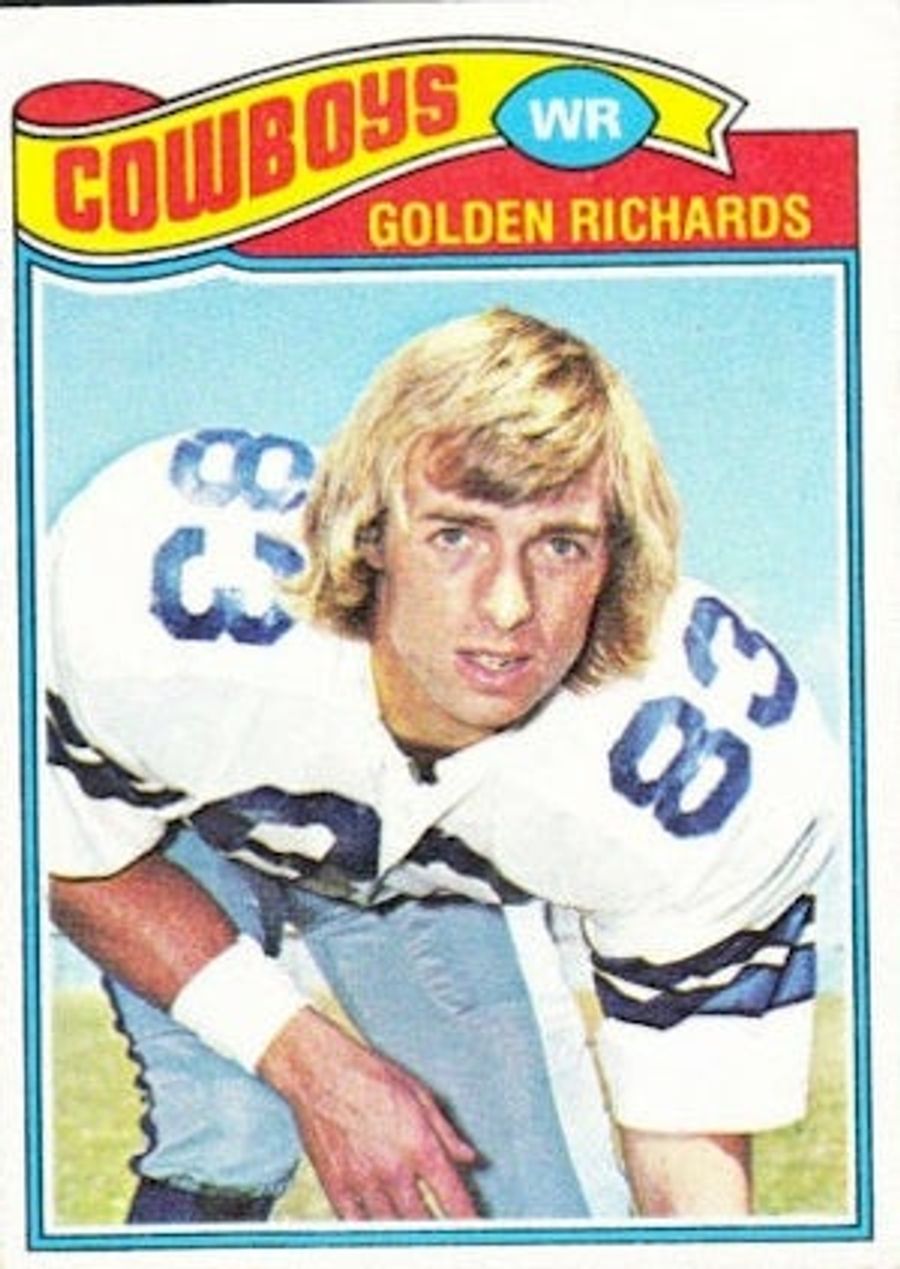
Today's story comes from Joel Reese, a Chicago-based freelance writer who's impressive body of work can be found at Joelcreese.com. Joel shares his harrowing tale of watching former Cowboys' fan favorite Golden Richards fall apart.

I wasn't a sportswriter when I met former Dallas Cowboy Golden Richards. I wasn't really a writer at all. I was a naïve grad student from the University of Montana who drove to Salt Lake City to profile the former wide receiver-who happened to be my childhood idol. I wanted to do my master's thesis about how he'd pulled his life together after being arrested for drugs.

Instead, I watched as he overdosed in front of me.

The story begins on a Sunday morning, December 1992, in a rented house in Missoula, Montana. I'm a grad student in journalism and I'm reading the Missoulian's Sports section when I see a one-paragraph blurb with the headline: "Former Dallas Cowboy Arrested." Who could that be? I wonder.

I start the story, and my heart just about stops: Former Cowboys wide receiver Golden Richards has been arrested in Salt Lake City for trying to buy pills with checks he stole from his dad. He has no money, no job, and has been in and out of rehab several times. This simple one paragraph story absolutely floors me.

When I was growing up in the mid-'70s, Golden Richards had been my idol. My adolescent bedroom was covered with his pictures and articles about him. I had his birthday memorized (Dec. 31, 1950) and I owned every one of his football cards. I'm not sure why-undoubtedly, there were some homoerotic stirrings in my prepubescent loins that I'd rather leave alone. I knew he wasn't exactly a star-it would be akin to worshipping, say… Steve Kerr. Both had blond hair, both had their moments, but both were hardly Michael Jordan.

But Golden did have one play for the ages: In Super Bowl XII, he caught the first running-back-option pass completed for a touchdown in Super Bowl history, thrown by fullback Robert Newhouse. The score sealed the Cowboys win over the Denver Broncos, 27-10. It was my favorite sports moment.

I'd had no idea what happened to him since he retired-I figured he owned a fishing-tackle business in rural Utah (I knew he was an outdoorsman) and was doing just fine. Not this.

A few months later, my advisor approved a profile of Golden for my master's thesis, so I start making phone calls to find him (remember, this is pre-google). I finally track him down via his brother Doug, who was assistant Attorney General of Utah. Golden and I finally connect a few days later, and after a putting me off a few different weekends-once to go skiing with Mike Ditka, he tells me-I make the eight-hour drive from Missoula to Salt Lake City to interview him.

I arrive at his unassuming home in Murray, a southern suburb of Salt Lake City, and I nervously knock on the door. A few seconds later, the door opens, and there he is. Golden Richards. Holy shit.

He's wearing a white button-down shirt and Wrangler blue jeans, and he stands under six feet. He's still got the long blond hair (rocking a slight mullet, I hesitantly realize), and he looks weathered and tired. But he's friendly and he extends his hand. "Glad to meet you, Joel-I'm Golden Richards." He invites me in.

We talk for three hours, and he's totally normal, cool, and down-to-earth. He chuckles at "the crazy days of the NFL… I tell you what." We drink Pepsi and look out onto the Wasatch Mountains as he goes over his career. He talks about his greatest moments in the league: "Everyone assumes my most memorable moment was the Super Bowl, but it wasn't," he says. "It was every time it was 3rd and six and I caught an eight-yard out to keep the drive going. The camaraderie in the huddle."

After three hours of golden memories, I get into my car and start driving back to Sean's place-the friend of an ex-girlfriend who was letting me sleep on his couch. I'm absolutely euphoric. I'd hung out with Golden Richards. And he was the coolest guy! And we were going to hang out more the next day!

Sure, things might get a little more difficult-the understanding was, we were going to talk about his career highlights on the first night, then the more difficult stuff the next day. (i.e., "What was it like to be picking through your own vomit, looking for traces of painkiller?")

But it would be fine, I was sure. He was totally cured now-he'd told me himself. "I was at the bottom of the valley, but now I'm at the top of the mountain," he'd said. Then, I swear to God, David Bowie's song "Heroes" came on my radio. This is just too good to be true, I thought.

I was right, because the next day was really fucked-up.

I get to his house at about 10 in the morning, and I can tell something is amiss. He's edgy, tense. We drive around Salt Lake City-him behind the wheel, me in the passenger seat, tape-recording our conversation. He pulls into a gas station, saying he needs to check his antifreeze.

He opens the hood, checks his coolant, says everything is fine. He won't look me in the eye. We're standing in front of his car, next to a pay phone (remember, this is 1994). Then he asks me a question.

"Say, listen, my teeth are killing me," he says. "My dentist said it's from being knocked around so much on Sundays. I took some Tylenol this morning, but it's not working. Do you have any painkillers, Tylenol 3, or anything like that?"

Whoa-say what? Painkillers? From someone who served jail time for trying to buy pills with checks he stole from his dad? This seems very wrong. "No, sorry," I say. "I don't have anything like that."

"Does the guy you're staying with?" he asks me.

"I don't know-I don't know if he's around," I say.

Golden pulls out a quarter and holds it out in front of me. "Can you call him to see?"

This seems to be happening in slow-motion. Golden wants me to take the quarter and call the guy I'm staying with-who I barely know-and ask him if he has any pills. I know I should say, "Look, this is fucked up, I'm not going to ask him if he has any drugs for you." But I've never written anything like this in my life. This is my first big "story."

And hell, he's Golden Richards. He's my childhood idol.

So I take the quarter and dial Sean. I try to think of some savvy way to get around this-maybe I can hang up and talk to the dial tone, or dial a wrong number or something-but Golden stands so close that I can smell the leather of his brown bomber jacket.

Sean answers. I tell him Golden has a toothache and hesitantly ask if he has any pills. Sean puts the phone down, checks in his bathroom, and finds some old pills from a prescription that was never finished. Demerol. Golden takes the phone from me and starts schmoozing him. He hangs up and we drive to Sean's place.

He's not home when we get there, but there's an orange bottle of pills on the dining-room table with a note that reads, "Hey Golden-hope these help! Sean." I don't get a close look at the bottle, but when he picks it up the chikka-chikka of the pills inside makes it sound about half full. Golden looks at the bottle's label, then asks, "Do you think he has anything else?" Jesus. "I don't know," I say.

Golden then goes to the bathroom and starts rummaging through Sean's medicine cabinet.

I feel sick. Clearly, the day is getting away from me-this is most definitely not what I had planned. There is silence, then Golden comes back into the room, saying there was nothing else in the bathroom. We leave and get back into his car.

We drive around Salt Lake, and he takes me past his parents' large pink house, the high school where he starred in just about every sport. Ok, I think. His teeth were hurting, but now he's ok. Everything is cool.

But no, everything is not cool. Slowly, Golden starts to act… weird. His stories start trailing off, becoming rambling tales that make no sense. His voice gets whispery, and I can't really hear him. He keeps licking his lips. He gets us lost, pulling into cul-de-sacs and stalling the car. "Why don't you let me drive," I say. "No, I'm ok," Golden says.

But he's not. The car is weaving and slowly crossing the center line. He pulls into a parking lot and we sit in silence. Finally, I say, "Are you feeling ok?" Stupidly, I still can't figure out what's happening, because I've been with him for the entire time that I can remember and I didn't see anything weird.

"I'm just kind of like, I don't know," he said. "The rest of my head."

Then it dawns on me: The pills. Sean's bathroom. He must have taken them there. "Golden, how many of those pills . . ." I say.

"Say, do you want a cold drink?" he says.

That was a coherent sentence, I think. Maybe he's ok. "No thanks," I say.

The car starts rolling toward the restaurant. I look over at him. Golden's eyes are shut, his head lolling backward. He's blacking out.

"Golden, better hit the brakes-you're about to hit that wall," I say. "Oh, shit," he says, slamming on the brake pedal.

"Say, how many of those pills . . . How many did you take, a bunch of 'em?" I ask.

"I just, I don't know," he says. "I felt crazy, like jumping right through that window . . ." His head tilts back again.

"Why don't I drive?" I say.

". . . blinding in my eye, can't function," he says. "Ok."

I walk over to the driver's side and help him out of the car. Then I lead him around to the passenger's side, and help him into the seat. He is no longer a man; he is a drowsy, disoriented child.

He fades in and out of consciousness but remains lucid enough to give me directions to his place. I help him up the stairs and into his apartment. I hang his leather jacket on the back off a dining room chair and help him sit down on the couch. I go back to his jacket and rifle through the pockets and find the pill bottle. It is empty.

I go back to the living room and Golden is crawling on all fours in front of the couch. I duck into Golden's bedroom, call information, and ask for an emergency drug hotline. I blurt out what's going on: "I'm with someone who's been addicted to pills for a long time and seems to have downed half a bottle of Demerol," I say. "Where is he now?" the woman on the other end of the line asks. I run back into the living room, and Golden is passed out on the rug. "He's on the floor," I say. "Ok, go see if he's still breathing," she says.

In other words, go see if he's dead.

"Ok," I say and run back to the living room, lean over him, and hear breath rasping out of his mouth. His hair hangs around his purplish face and his eyes are closed. I run back to the phone.

"Yes, he's still breathing," I say.

"Ok, call 911 immediately," she says.

I hang up and dial 911, and the paramedics arrive a few minutes later. They take his blood pressure, check his pupils, and lift him onto the stretcher. They wheel him out, tubes snaking up to his face, his eyes wild and uncomprehending.

A round-faced policeman appears in front of me and starts grilling me, asking me how Golden got the pills.

"I got them for him," I say.

"You got them for him?" he asks. "Why? Did he pay you? Who are you?"

He's going to arrest me, I think. He thinks I'm Golden's dealer.

"Look, I got them for him because he said his teeth hurt," I say. "I didn't know. I'm his biggest fan." The cop shakes his head and walks away.

The ambulance takes Golden to a nearby hospital, where they pump his stomach and keep him overnight. Later, he tells me the whole thing was caused by a grand mal seizure or an allergic reaction. "It wasn't the pills," he swears. I drive back to Missoula the next morning.

I write about the experience for my master's thesis. After some time passes, I send the story around to various magazines. I get nibbles from Esquire and Playboy, but Texas Monthly is enthusiastic about it and runs the story in their December 1995 issue. (By the way, Mike Ditka told me he hadn't talked to Golden in ages. "See, he lies," Ditka says. "I can't ski-I've got two artificial hips.")

I don't speak to Golden again after the story comes out, but Greg Garber of ESPN calls me later to find Golden for a video piece about him and Joe Gilliam of the Steelers. Greg and I keep in touch, and after he's done with his story I ask him what Golden thought about my story.

"He hated it, and feels like you betrayed him," Greg says.

"Oooh, that kind of hurts," I say. "What did you tell him?"

"I said, ‘You should be grateful-that guy saved your damn life,'" Greg says.

"Yeah, but… well, I guess," I say. "What did he say to that?"

"He agreed," Greg says.

And that's the last I've heard of Golden Richards.

(To read the original version of this story, go here.)

]]>
http://deadspin.com/index.php?op=postcommentfeed&postId=5009887&view=rss&microfeed=true
<![CDATA[And Toward Me He Charged: Charles Haley's Bananas]]> haley.jpgBeing a sports reporter is, at times, an absolutely horrible job. Sure you get to watch games, travel and interact with athletes, but there is a horrendous downside. (Which is pretty much everything else.) And this is never more disturbingly clear than when a reporter has their first (or 50th) awful experience with a half-naked, exhausted athlete. Sometimes they'll be openly dismissive, sometimes they'll yell, and sometimes, well, they'll fart in your face. Most of these stories never end up in the newspaper the next day. So now, Deadspin proudly presents "The Dark Side of the Locker Room" where current and former sports writers can share some of their most distressing interactions. If you've got your own story to share, please send it along to ajd@deadspin.com.

Today's submission comes courtesy of Mike Fisher, who writes about the Mavericks, the Cowboys, the Dallas sports scene and whatever he damn-well pleases at DallasBasketball.com.

—-—-—-—-—-—-—-—-—-—-—-—-—

Charles Haley spent a decade trying to kill me, in spirit and ultimately in body, which is more than I can say for all these other "Dark Side'' sportswriting pussies' encounters. I first encountered Haley in 1988, when I was new on the San Francisco 49ers beat. First day: I saw him grab his manhood with his fist, shake his Dark Sith in the direction of a hapless young female reporter (her crime? Femaleness, and maybe haplessness) and scream/bellow, like Brando up the stairs, that the "fuckin' bitch was staring at my cock! Get that bitch outta here! She's a fuckin' perv! She wants my fuckin' cock!''

Ensuing Chapters of Charles: I saw the first-hand evidence of the All-Pro pass-rusher using his Lil' Haley to water the hand-crafted wood floors in the office belonging to team president Carmen Policy. (A versatile body part, that thingee.) I learned that Charles attempted to strangle coach George Seifert during a film session. I learned that one of the great Ronnie Lott's official jobs was to keep Charles tamed. And I learned something that still disturbs me: On my final 49ers experience with Haley at the Pro Bowl in Honolulu, when I was on a team bus one seat ahead of his, eavesdropping as he plotted to arrange from the 49ers' front seven to be a "Soul Patrol.'' Meaning, he wanted to orchestrate the departure of his white teammates. (Joking, you say? OK. But will you at least trade me bus seats next time?)

In 1990, I moved to Dallas to cover the Cowboys. Haley would be nothing but a nightmarish memory, somebody else's problem, a guy I was pretty sure skipped taking his medicine. (For two full years!) I would be free to empathize ... from a distance.

And then, in '92, Charles Haley came to Dallas.I was the first and only reporter to greet him at his locker.

We were one-on-one. The tension built. No media members wanted any part of it. Charles got revved up, opening by braying something about what an asshole I was in San Francisco (he was/is right. ... but how'd he know?), and he was hooting something about how Aikman couldn't carry Montana's jockstrap and I was writing it all down.

And Haley barks, "Hey, motherfucker, I didn't say you could write this down, motherfucker! DO YOU HEAR ME, MOTHERFUCKER?''

The verbal barrage continued. I kept writing. A notepad full of "motherfuckers.''

I did not opt to reason with a man who would, a few weeks later, find a huge bushel of bananas in his locker, a jokey gift from defensive-line mates who admired his ... um ... Neanderthalic approach to life. I absorbed the MFs, and somehow located, deep in my fashionable cargo pants, the resolve to say:

"Charles, you keep talking. Please. Say anything you want to me. Call me anything you want. And you know what? I'm going to write down every word. And if my editors allow it, this interview, word-for-word, is going to be in the gah-damn newspaper tomorrow morning. Go.''

He kept motherfuckering me. I kept writing. Now, I was nervous ... but it wasn't that hard to take notes: How hard is it to simply scribble "MF'' over and over?

It is a credit to my employer at the time, the Fort Worth Star-Telegram, that the piece really did run. As a straight news story, with no embellishment and no judgment. Just my questions and his answers, jagged but pure, all serving as Charles Haley's introduction to his new community. Welcome to Dallas, motherfucker.

Why did I go through with it? Three reasons:

1) The result was a revealing story that offered great insight into the star the Cowboys had just acquired.

2) Hey, I promised him!

3) Critics of the media often come at us because we "buy ink by the barrel,'' and all that shit. But actually, in any battle between "the jocks vs. the media,'' the geeks with pencils don't usually win. So when truth is on our side — plus, you mentioned my mom, you prick! — we can't be blamed for swinging that truth like it's a medieval flail.

Chucky & Me spent the rest of his playing career in an unholy truce. Meaning, I think I went seven years without every even venturing near another Cowboy D-linemen. But then, around 2000 or so, I inadvertently encountered Charles Haley ... and it was a near-death experience.

I was at a local saloon called Humperdink's on a "date'' (probable sportswriter translation: She Was A Prostitute) when Charles and I exchanged icy glances from across the room.

And toward me he charged.

What was in my mind? "Soul Patrol'' ... "bananas.'' ... "no meds.'' ... "bananas.'' ... "motherfucker.'' ... "bananas.'' ... I knew that people had died in a puddle of their own urine, but reflecting on Carmen Policy's floor, I pondered whether I would be a victim of a first: "Death-by-drowning-in-somebody-else's urine.'' ...

And toward me he charged. ...

What was in his mind (besides dementia)? In a literal flash — bright lights and beer pitchers and prostitute screams and a mushroom cloud of four huge bodies swooping over my booth — I and the entire saloon found out what a Grinch is capable of when he has a heart two sizes too small and the benefit of NFL weight-training.

The menacing Haley, fueled by liquor and anger at being pestered for 10 years by some pencil-wielding motherfucker, had lunged toward me, up and into my booth, only to be intercepted by his evening escorts, Leon Lett, Erik Williams and Michael Irvin.

Lett (6-7, 280) and Williams (6-5, 330) are two of the largest athletes in Dallas Cowboys history. Irvin is the franchise's all-time sweetest talker. Good for me. Leon and Erik wrestled Charles away, while Michael, I assume, sang him a lullaby while plucking a thorn from his paw.

I lived.

This is the art form at which I've bumbled around for 28 years and which has afforded me the ability to put no children through college. Newspapers, books, radio, TV and now the internet. I'm a hack-of-all-trades. Writing can be blogging and blogging can be writing and the only big difference is locker-room access. Which has its less-than-omnipotent value.

Is it an "absolutely horrible job''? Nah. Is it one big Axe commercial that makes horned-up vixens take off their wet blouses when in the alluring midst of me 'cause they mistake me for a drunken NFL quarterback? Nah.

But when I'm old(er) and gray(er), one of the skillion tales I'll be able to tell the kids that I'm "The Man Who Shot Liberty Valance.'' Or at least I'll inform them that I persuaded the apologetic saloon manager to put my charges on Haley's tab.

]]>
http://deadspin.com/index.php?op=postcommentfeed&postId=389840&view=rss&microfeed=true
<![CDATA[Even Joe Posnanski Gets Yelled At]]> Being a sports reporter is, at times, an absolutely horrible job. Sure you get to watch games, travel and interact with athletes, but there is a horrendous downside. (Which is pretty much everything else.) And this is never more disturbingly clear than when a reporter has their first (or 50th) awful experience with a half-naked, exhausted athlete. Sometimes they'll be openly dismissive, sometimes they'll yell, and sometimes, well, they'll fart in your face. Most of these stories never end up in the newspaper the next day. So now, Deadspin proudly presents "The Dark Side of the Locker Room" where current and former sports writers can share some of their most distressing interactions. If you've got your own story to share, please send it along to ajd@deadspin.com.

Today's story comes from venerable Kansas City Star sports columnist Joe Posnanski, who shares this tale of turbulence with former Royals' relief pitcher Jeff Montgomery. Posnanski's online musings can be found here.

—-—-—-—-—-—-—-

Man, I've been on the dark side of the locker room a few times. And I'm supposedly one of the nice guys. Here's one, had to be like 10 or 11 years ago, and I wrote a column ripping Jeff Montgomery, the old Royals relief pitcher. I don't recall all the details, but Jeff had been quoted ripping the manager, and he was also pitching lousy, and those two didn't seem to blend too well in my mind. So I ripped him pretty good. I couldn't tell you now if it was "fair." Maybe it wasn't. It was a long time ago. It probably was fair.

I'd had a pretty decent relationship with Jeff. I respected him and all that and I knew he was a competitive son of a gun, so I thought he might have something to say the next day. Of course, I had to be there to take it. That's part of the deal. So I start driving to the stadium, and I turn on the radio, and they're interviewing Jeff, and he's just ripping me. So I have a pretty good idea what was coming.

I go to the locker room to find him. He's not around. I wait by his locker for a while, and a few guys are telling me, "Man, Jeff's going to kill you," and I'm smiling and nodding, "Yep, he's going to kill me," like a complete jackass.

I'm not much good in those sorts of settings. But the job is the job.

Finally, Jeff shows up and he gets right up in my face, and he says, "I've been looking for you." And I say, "Yeah, Jeff, I've heard. That's why I'm here."

Then he grabs the Royals PR guy, and says, "Follow me." And we go back to the stairwell that was behind the clubhouse. It's just us three now, and Jeff starts wrapping a towel around his hand, like he's going to hit me with it. And then, all of a sudden, he jumps forward, raises his fist, and looks like he's about to hit me, only he stops and he shouts, "I should KILL you, man."

And then he starts screaming. I don't know how long we were in there, but it felt like quite a long time. He's screaming, and he's pacing around, and every so often he gets close to me and raises his hand like he's going to hit me, and then starts pacing around again.

Now, I'm not going to tell you I'm the bravest guy around, because I'm not. I'm a bald, chubby-to-fat sportswriter. At first, I had that, "Damn, I'm going to have a fight with Jeff Montgomery and he's going to pound on me like Sonny pounded Carlo," feeling in my stomach. But after a couple of minutes, I realize he really isn't going to hit me, there isn't going to be a one-sided fight, and then it's like I have one of those out of body experiences. Suddenly it's like I'm looking down on the scene, and I'm thinking, "WOW, this guy is mad. Look at him. He's really, really mad. He's like crazy mad. Look at this guy, pacing around, stomping around, that towel wrapped around his hand, he's really mad. I mean, this guy is mad."

And then, it becomes sort of a mini-struggle not to laugh. Well, I don't know that I was every close to laughing, but he WAS mad.

My favorite part was when the thing ended, and Jeff says, "Do we understand each other?" and he stomps off. The PR guy turned to me and in a shaken voice whispers: "I just want to thank you for allowing me to be a part of that."

Now, as mentioned before, I had a lot of respect for Jeff. And I still do. When the screaming ended, I went outside and there were like five TV cameras around and reporters and they were all like, "What happened?" I walked by, and then went over to Jeff. And he said: "That was between me and Joe, man to man, and I'm not going to talk about it," which I thought was cool. At least he called me a man.

A couple of months later, he retired. And I wrote a pretty positive retirement column: he deserved that. I wrote a little bit about the incident and talked about how Jeff was really good pitcher who succeeded because he was a battler. He never backed down. He seemed to appreciate that.

A few years later, I ended up competing in the Royals fantasy camp, which Jeff happened to run. He was going around the room asking people which number they wanted. He turned to me and said something like, "Hey, Posnanski, what number does Mr. Sportswriter want?"

I said, "What number did you wear, Jeff?"

He said: "Twenty-one."

I said: "Yep. That's the one I want. You know you're my hero." Nobody around the room got it, but Jeff smiled, and nodded, and we understood each other.

** It's a good thing, looking back, that Paul O'Neill had not been in the fantasy camp seven years earlier.

]]>
http://deadspin.com/index.php?op=postcommentfeed&postId=387537&view=rss&microfeed=true
<![CDATA[Lou Piniella's Balls Are Not Taking Questions Tonight]]> Being a sports reporter is, at times, an absolutely horrible job. Sure you get to watch games, travel and interact with athletes, but there is a horrendous downside. (Which is pretty much everything else.) And this is never more disturbingly clear than when a reporter has their first (or 50th) awful experience with a half-naked, exhausted athlete. Sometimes they'll be openly dismissive, sometimes they'll yell, and sometimes, well, they'll fart in your face. Most of these stories never end up in the newspaper the next day. So now, Deadspin proudly presents "The Dark Side of the Locker Room" where current and former sports writers can share some of their most distressing interactions. If you've got your own story to share, please send it along to ajd@deadspin.com.

Today, Luke Burbank, the host of "Too Beautiful To Live" on 710 KIRO in Seattle, tells the tale of his career-changing run-in with Lou Piniella and the 1996 Seattle Mariners.

I was a really nervous, still-pimply 20 year-old trying to pretend I was some kind of real sports reporter.

My internship at the college NPR station was enough to get me press access to the Mariners' locker room, but that non-laminated day pass with "NBR" written on it wasn't exactly blowing Lou Piniella's mind-grapes the way I'd thought it would. It was August 1996, and the M's were locked in a tight division race with The Rangers. They'd come home for a make-or-break nine game stand. Somehow, I'd conned my way into an assignment doing a story about the insane breakout year A-Rod was having. This was going to be easy, just get some quotes from Piniella, and Griffey and Buhner and A-Rod and be on my way. Why wouldn't they want to talk about his awesome season? Well, because theirs was about to go to complete shit, that's why.

During the home stand, the M's managed to go 1-8 and fall completely and utterly out of the race. Every day I would go to the locker room hoping that they would not be in a super-pissed mood, and every day it would get worse. Baseball players (more than any other athletes, in my opinion) are total fucking babies when they lose.

Finally the last game arrived. The clubhouse was like a morgue. I was determined to get that goddamn tape no matter what. Here is a minute by minute account of that night:

6:02 pm (Pregame): In the trainer's office I can see A-Rod getting a rubdown or something. This is great. The clubhouse is totally empty and I am going to get my quote as soon as he emerges. There's only one problem. For some reason, my peeking into that room infuriates Mike Jackson. He runs up to me and starts screaming at the top of his lungs, 'WHAT THE HELL DO YOU THINK YOU'RE DOING!!!?' 'THE MAN IS GETTING TREATMENT!!' "I'm I'm just trying to to get my my quote" I stammer (literally holding back tears). 'GET YOUR ASS BACK HERE AFTER THE GAME LIKE EVERYONE ELSE!!"

Never mind that MLB requires teams to open their locker rooms before games so that reporters can get quotes. Apparently Mike Jackson takes a dim view of this rule. One other problem, it wasn't even A-Rod in there. It was Rafael Carmona. His back was to me and they look like the same guy. I'm racist and I don't have a quote and Mike Jackson wants to rape me. Awesome.

7:15 (Game time): Terrified by my encounter with MJ, I figure I'll just lay low and hope to Jobu that they win. Then they'll have to be in a better mood. I leave a bucket of KFC in front of my Jobu shrine. It totally works. They win.

10:13 (Post Game): The Seattle Mariners are more pissed than ever. Pissed like Blazer fans in 1986 realizing Jordan was going to be Jordan just as Sam Bowie picks up another three in the key. I still don't know why this was. Probably residual anger from the previous eight games or something.

10:14: Ken Griffey Jr. is sitting, fully reclined, in a barca lounger in front of his locker. This is a bad spot for this huge-ass chair, because his locker is also right next to the only narrow hall out to the field. This means everyone trying to go play in the baseball game has to hug the wall to try to get around his chair. He is playing Nintendo on a flat screen TV (very, very fancy for 1996) and eating a chocolate bar. Five different times I try to ask him a few questions. Not only does he not respond, he is totally unaware that another human being is trying to talk to him. I am basically Bill Murray during the ghosty part of Scrooged. I finally give up.

10:16: Still terrified of a "Mike Jacksoning," I cower behind a huge empty couch. Apparently I also accidentally lean on it, because from across the room Chris Bosio starts hollering. "WHO THE FUCK DO YOU THINK YOU ARE?!!" "GET OFF THAT COUCH!!" I stumble, dazed, towards a completely naked Jay Buhner.

10:18: During his time as a Mariner, Jay Buhner was known as quite the prankster. Of course, as me and my friend Bill often discussed the line between "prankster" and "total asshole who purposefully vomits into your work hat" is kind of a fuzzy one. So anyway, Buhner is completely completely naked. No towel. No undies. Nothing. And that's not even the creepy part. He agrees to talk to me (jackpot!) but during the entire interview he refuses to look at me. Instead, he goes to work on, and is completely fixated with, an ingrown hair literally ONE MICRON from his dong. If I want to interview Jay Buhner, I will also be interviewing his dong. That is just how he rolls. Desperate, I do the interview. It actually goes OK.

10:23: Wonder of Wonders! A-Rod is clean, showered, not Rafael Carmona, and walking out of the locker room by himself. I run out to talk to him. He is totally polite, and professional, and cardboard. But he's not yelling at me, or ignoring me, or naked, so I consider the interview a big success.

10:37: I'm just one interview away from having my story: Sweet Lou.

10:48 : All hyperbole aside, Lou Piniella is the most terrifying man ever in history ever. And he really needs to buy some new underwear. He's sitting in his office behind his desk. No shirt (what is this with the nakedness?), just some tattered tighty whities, smoking a cigarette and drinking a beer. The office is very small. The beat reporters (these dudes are plenty grizzled themselves and have interviewed him a thousand times) seem terrified of him. They stand with their backs up against the wall and nervously call him 'Skip.' He's like a tiger that you raised from when it was a little cub. You feel mostly certain he remembers that you two are cool, but on the other hand, he might bite your face off out of sheer boredom.

After everyone else has asked their questions, I finally summon the nerve to squeak mine out.

"Um Skip?" I say meekly. "Could you um, talk about the amazing season Alex is having?"

'Huh?' Piniella asks, his head cocked, perfectly angled for a face-biting.

"Um, could you talk about how well Alex Rodriguez has been playing this season?"

Piniella gets up slowly, and comes around from behind the desk. The rest of the reporters scramble to get out of his way. He's heading right for me. He gets up right next to me, I can see his balls through a hole in his underwear. He puts his arm around my shoulders, pulls me in so close I can count each individual whisker, and says... "Not tonight kid, not tonight."

"Perfect," I think. "That's the final memory of my sportswriting career: Lou Piniella's balls."

I never went back there again.

]]>
http://deadspin.com/index.php?op=postcommentfeed&postId=385210&view=rss&microfeed=true
<![CDATA[Terry Pettis And The Infinite Madness]]> Being a sports reporter is, at times, an absolutely horrible job. Sure you get to watch games, travel and interact with athletes, but there is a horrendous downside. (Which is pretty much everything else.) And this is never more disturbingly clear than when a reporter has their first (or 50th) awful experience with a half-naked, exhausted athlete. Sometimes they'll be openly dismissive, sometimes they'll yell, and sometimes, well, they'll fart in your face. Most of these stories never end up in the newspaper the next day. So now, Deadspin proudly presents "The Dark Side of the Locker Room" where current and former sports writers can share some of their most distressing interactions. If you've got your own story to share, please send it along to ajd@deadspin.com.

Today, Yahoo! Sports' Jeff Passan gives us a first-hand account of what it was like cover Fresno State's failed phenom (and convicted murderer) Terry Pettis during one of his scary and unpredictable moments. Passan is the baseball writer for Yahoo! Sports, and an award-winning reporter who previously was the national baseball writer for The Kansas City Star.

—-—-—-—-—-—-—-—-—

I punched 911 into my cell phone, stuck it in my pocket and primed my thumb on the send button. Next to rows of prefab college apartments in Fresno , Calif. , I thought I was going to die at the hands of a man who later put a bullet through an innocent girl's head.

Sorry. This one doesn't take place in the locker room. Most of Fresno State basketball's memorable moments don't. There was Avondre Jones with his samurai sword, Chris Herren with his nose candy, Rafer Alston with his fists, all legends of the country's most corrupt program. And all looked like altar boys next to Terry Pettis, who was ignoring a restraining order and pacing around the apartment complex, robotic, determined, cold.

I was there to talk with Melissa Cenci, Terry's former girlfriend. She had broken up with him two weeks earlier. He did not think that was a good idea, so he punched out a window at her apartment, traipsed over to her car, jumped on the roof, snapped off a side-view mirror and sent her a text message:

"Take that."

Because I was covering Fresno State basketball, I pulled duty on Terry's arrest for vandalism and battery. One of the follow-up stories necessitated talking with Melissa. It took some time before she finally agreed to meet me. I said I'd pick her up at her apartment.

When I saw Terry there, I didn't believe it was him. I circled around the parking lot to get a better look. Yep. Him, all right. Six-foot-2, 190 pounds, jacked to the gills. Or: 5 inches taller, 25 pounds heavier and filled with plenty more anger than me.

Two more laps around the lot quelled my nerves. I couldn't wuss out. I needed this story. So I readied my 911 call and walked toward the apartment. Terry emerged from around the corner. I put my head down. He walked faster. I was scared. He was 10 feet away.

"Terry," I said, nodding my head, unsure what else to say or do or think.

He kept walking.

I knocked on Melissa's door and she let me in. I asked if she knew Terry was outside. She said she didn't. I asked if I should worry. She said not to, and that she was thirsty for some coffee, so let's go.

When the door opened, a familiar voice barked.

"What the fuck are you doing with him?" Terry said.

He wasn't done.

"Bitch, get over here!" he yelled. "Move on, Jeff. Move on. Move on. Move the fuck on!"

I looked at Melissa. She motioned me away and walked over to Terry. He started screaming. I thought he might hit her. She kept shooing me away. I peeled around the corner, out of sight, and called an editor to ask what, exactly, I needed to do. Trust your common sense: If he hits her, step in, take the punches and hope someone calls the cops.

Thankfully, he didn't. By the time I got off the minute-long call and peeked back at them, Terry was down on his knees, his fingers interlocked, trying to make puppy eyes through his tears, begging Melissa not to let him go, apologizing for all he had done to her, promising never, ever again.

"I love you," he said.

We left him on the ground. At the coffee shop, Melissa told me Terry "really needs help. Seriously." No one seemed too concerned. Further charges for violating the restraining order weren't pressed. Terry pleaded out and was supposed to enter a batterer's-intervention program that he never attended. Fresno State let him back onto the basketball team anyway and won its first seven games with Terry in the lineup. During the winning streak, he told me: "No more mistakes for me. Straight and narrow."

Less than a month later, he was kicked off the team after a heated argument with the coach. In early April, I left Fresno to start covering baseball in Kansas City and figured I would never hear his name again.

I remember the day. May 11, 2004.

"Hey, Jeff," the voice said, "it's Jeff Shelman."

He was an acquaintance who covered colleges in Minneapolis , where Terry went to high school.

"Guess what your boy Terry Pettis did?"

I figured it was benign. Terry was probably the smartest kid on the Fresno State basketball team. He had a great dad who tried to raise him well. With the right people surrounding him, Terry could have been a lawyer. He was that engaging and charming. He had two problems: bad friends and a bad temper. Those couldn't get him in too much trouble, could they?

"Murder," Jeff said.

According to police, Terry had tried to rob a drug deal. He walked up to a car where a guy was buying about an ounce of weed for $280. Terry asked for the money. The dealer told his girlfriend, in the driver's seat, to gun it. Terry pulled the trigger on his Glock. The bullet went in the girl's head and exited the other side.

I didn't know what to say. Murder? Terry? The kid I had talked with almost every day before or after practice? He capped a girl, and left his fingerprints on the top of the car, and ran home to Melissa and told her that he "shot something," and then went back to Minneapolis to hide?

I did know what to think: That could've been me. I didn't verbalize it, of course, wary of sounding too self-absorbed. A girl named Rene Abbott had died. She was 18. I was still alive. I had to forget.

It wasn't that easy. Soon after murder charges were pressed, I received a subpoena to appear at the trial. My old newspaper got it quashed, though I kept up with the case the whole way, from Terry's extradition back to Fresno to his murder conviction and life-without-parole sentence.

Some of the details that surfaced throughout the trial made me shake my head. Terry allegedly wore a red basketball jersey while committing the crime. Fresno State coaches took heat for not cooperating with the investigation. One of Terry's teammates, Chris Adams, told police he had spent the evening with one guy name Dreike and another named Dante, and that he didn't know their last names. Adams went to Fresno State with Dreike Bouldin for almost a year and had spent an entire season at a junior college with Dante Sawyer. The stories at Fresno State , even the grisliest, usually carried some black humor.

But one in particular made me sad. On August 3, about three months after the shooting, Melissa gave birth to a baby girl. The father was Terry Pettis.

]]>
http://deadspin.com/index.php?op=postcommentfeed&postId=382457&view=rss&microfeed=true
<![CDATA[Will Clark Is A Cackling Douche]]> Being a sports reporter is, at times, an absolutely horrible job. Sure you get to watch games, travel, and interact with athletes, but there is a horrendous downside. (Which is pretty much everything else.) And this is never more disturbingly clear than when a reporter has their first (or 50th ) awful experience with a half-naked, exhausted athlete. Sometimes they'll be openly dismissive, sometimes they'll yell, and sometimes, well, they'll fart in your face. Most of these stories never end up in the newspaper the next day. So now, Deadspin proudly presents "The Dark Side of the Locker Room" where current and former sports writers can share some of their most distressing interactions. If you've got your own story to share, please send it along to ajd@deadspin.com.

Today, author Jeff Pearlman shares his tale of contentious triumph over former major leaguer Will Clark. Pearlman is a columnist for ESPN.com and the author of an upcoming biography of the 1990s Dallas Cowboys. The book, being published by Harper Collins, is scheduled for an August 2008 release date. Working title: Boys Will Be Boys.

It was spring training 2000, and Sports Illustrated had me roaming Florida for the upcoming baseball preview issue. On this particular day I was down in Ft. Lauderdale, trying to uncover some insights into the wild, wacky, Pat Rapp-led Baltimore Orioles. While standing by a buffet table in the clubhouse, I was approached by Will Clark, who gazed at my press credential with a curious sort of expression.

"Why's your pass turned over?" he asked.

I looked down. "Oh," I said. "You're right."

When I flipped it to the proper side, Clark leaned toward me and read the small writing.

"Jeff Pearlman?" he asked.

"Yup."

"Jeff Pearlman! Jeff fucking Pearlman!" Clark's voice grew increasingly loud — the famous, cat-choking-on-a-lugnut Will the Thrill cackle in full bloom.

"Uh, yup."

"Jeff fucking Pearlman! Now why the fuck would anyone in here want to talk to you? Why the fuck would we wanna talk to you, after what you did to (John) Rocker? Why?"

I just stood there, feeling sort of naked. I was 27 years old, and had yet to fully grasp that men like Clark were actually schoolyard bullies hiding behind a loud voice and the uniformity of a major league clubhouse. Truth be told, I was also naively unprepared for the backlash that followed the John Rocker profile. Though the story generated a fair share of controversy, all of it had come during the offseason.

Clark continued. "No wonder you have your pass backward, you fucking coward! Nobody here is ever going to talk to you. No fucking way!"

"Did you have a problem with the way I wrote that story?" I asked (dumbly).

"Are you kidding me?" Clark replied. "Are you fucking kidding me?"

With that he huffed off, seemingly satisfied that he had outed me to his peers. My head tucked to my chest, my confidence at an all-time low, I shuffled over to good ol' Delino DeShields, hoping he didn't share Clark's feelings.

"I guess you saw that," I said, referring to the browbeating.

"Yeah," said DeShields, grinning slightly. "But you've gotta consider the source."

A quick epilogue. In the spring of 2006 I was in Tucson to do some reporting for a book I was writing on Barry Bonds. Upon entering the Diamondbacks clubhouse one morning, who was the first person I saw?

Will Clark — a special assistant for the team. This being six years later, I approached Clark, re-introduced myself ("Oh, I remember you.") and asked if I could borrow a few minutes to talk Bonds.

"I guess so," he said.

"OK, well, what was your initial reaction when the Giants signed Bonds as a free agent?"

"Yup."

"What do you mean?" I asked.

"Yup."

"Yup?"

"Yup."

"You're not gonna talk to me, are you?" I asked.

"Nope. I would never talk to you. Look at what you did to Rocker. You think I forgot that? You think you could just walk in here and talk to me? You think ..."

For the record, I'm not saying my reaction here was righteous. Or, for that matter, professional. But I was now 33 years old; married, a father, a locker room veteran. I certainly didn't feel the need to take any more abuse from an obnoxious, beer-gutted has-been (nothing against beer-gutted has-beens).

"You know what," I said, "I don't have to listen to this shit. You don't wanna talk to me, don't talk to me. I don't care. But what you did back with Baltimore was bullshit, and it was cowardly. You obviously had the right not to talk to me, but to call someone out — someone you didn't even know — in front of the entire team was just pathetic ..."

"Screw you," Clark said. "You ..."

I interrupted him. "No, screw you. What are you doing here, anyway?"

We sparred for a few more minutes, and as Clark walked away I realized this was the first time I truly stood up to a ballplayer.

It felt great.

]]>
http://deadspin.com/index.php?op=postcommentfeed&postId=379815&view=rss&microfeed=true
<![CDATA[Sparring With Carl Everett]]> carleverett.jpgBeing a sports reporter is, at times, an absolutely horrible job. Sure you get to watch games, travel, and interact with athletes, but there is a horrendous downside. (Which is pretty much everything else.) And this is never more disturbingly clear than when a reporter has their first (or 50th ) awful experience with a half-naked, exhausted athlete. Sometimes they'll be openly dismissive, sometimes they'll yell, and sometimes, well, they'll fart in your face. Most of these stories never end up in the newspaper the next day. So now, Deadspin proudly presents "The Dark Side of the Locker Room" where current and former sports writers can share some of their most distressing interactions. If you've got your own story to share, please send it along to ajdau1@yahoo.com.

This week's tale comes from former Dallas Observer reporter John Gonzalez, who shares this run-in with former Texas Rangers outfielder Carl Everett.

—-—-—-—-—-—-—-—--

I've never been able to forget what happened to Ryan Leaf when he screamed at that poor slob in San Diego way back when. The reporter tucked-tail and backed down, forever cementing his place among other ignominious, legendary SportsCenter videos.

That's what I was thinking about when Carl Everett squared off, put his fists up and asked if I wanted to box. And that's what I was thinking when I puffed out my chest, squared off and told him he didn't want any part of me. It probably wasn't the brightest idea I've ever had, but I couldn't shake the image of the shamed Chargers reporter, forever doomed to re-watch his impotence like some horrible, ink-stained Bill Buckner. I kept thinking: If you're going to piss yourself, wait until no one is watching.

At the time, Everett was an outfielder with the Texas Rangers, and I was a columnist for the Dallas Observer, a paper owned by Village Voice Media. This was in 2003. My job back then, as with most alt-weekly monkeys, was to merrily fling feces at my targets and maybe eat a banana if there was time. With Everett, though, I was actually trying to play it straight at first. Considering his volatile reputation, and the fact that he had about 65 pounds on me, I approached him gingerly and asked if he might have time to chat. Plus, considering we were at Spring Training in Arizona and most players were more worried about tee times than inquiring journos, I thought things would be fine.

Nope.

Almost immediately, Everett got pissed that I bothered him. In the clubhouse. During media hours.

He claimed to have never heard of my paper. Now, the Observer wasn't the Dallas Morning News, but it wasn't fucking Car Shopper, either. We had been covering the Rangers for years. Plus, we had hooker ads in the back of the paper, which clearly made us better than the Morning News. But Everett wouldn't let it go and made a point of asking the clubhouse attendants if they had ever heard of the paper. Of course, they said no — possibly because, oh I dunno, they were from Arizona and not Texas.

In an attempt to smooth things over, I asked him about Roy Jones Jr. moving up to heavyweight. Everett supposedly loved boxing. That turned out to be another misstep in a day full of them. There's no reaching out to someone that off his nut. So, with that, things went from uncomfortable and testy to flat out heated:

Carl Everett: You don't want to talk boxing. You wanna box me? (Turns to me, squares off, puts fists up by his head.)You don't wanna box me.

Me: (Getting pissed now.) No, you don't wanna box me...now can we talk or not?

CE: Go ahead, man. (Rolls his eyes.)

M: OK...are you ready for the center field duties?

CE: Am I ready for the center field duties? (Long pause...clearly irritated.) Yeah, man, I'm ready for the center field duties, that's my job.

M: Some people have talked about your weight. Is it an issue? Does that bother you?

CE: That's just y'all. That's the media. That's you guys. You don't know me.

M: Well, you don't know me, and you were lumping me with the other media and giving me a hard time about my paper.

CE: I don't like the media. I don't like them. I don't like the media.

M:OK...all right...(Searching...backpedaling.) Have you talked to [manager] Buck [Showalter] much? You know, what's it like playing for him?

CE:We haven't played any games for him yet.

M: (Getting more pissed.) OK, then how is he different from the other managers you've been around?

CE: How's he different? (Very sarcastic.) That's what you're gonna ask me?

M: Yeah.

CE:: Everything's OK.

M: OK...What about last year? Was that tough for you?

CE: Nope.

M: The losing wasn't tough?

CE:Nope.

M:(Had enough now.) Why are you being so standoffish?

CE:I'm not.

M:You're not?

CE:Nope. You're just mad because I don't kiss the media's ass. I won't kiss your ass.

M:That's fine because I don't kiss ballplayers' asses...Now, the losing didn't bother you?

CE:Nope...I play hard anyway...that was the first time I ever lost.

M:So then it must have been different at least, right?

CE:(Huffing again.) Man, I said I play hard anyway.

M:All right...do you think you can contend this year?

CE:Did you watch the games last year?

M:Well, I wasn't in Texas, but, yeah, I watched some games...

CE:(Cuts me off.) No, you didn't. You didn't watch any games last year, 'cause if you watched some games last year, you'd know that we were a tough ticket. We didn't lay down for anyone.

M:How can you say that? You guys were 31 games out [of first place in the division]...

CE:(Really mad now.) First you ask me some fucking ridiculous questions, and then you're gonna ask me why I answered the way I did...

M:(Also really mad now.) Yeah, that's what I'm supposed to do; that's my job.

CE: (Screaming now...people watching.) If you're gonna ask some fucking ridiculous questions, then I'm gonna give you some fucking ridiculous answers...I mean, that's just fucking ridiculous.

M:(Also screaming now.) Why, because you don't like the fucking question?

CE: No, because I don't like the fucking media. That's it. Get up on outta here. (Motions toward the door.)

M: So that's it, huh? You're not gonna talk to me anymore?

CE:Yeah, that's right. That's it. Get the hell outta here. Go on, get out.

M:Well, this was productive. So that's it...that's the end?

CE: That's what I said. (Does shooing motion toward the door. Tries to get me to leave. I don't. He walks to other end of clubhouse. I go to middle of clubhouse and lean against a table.)

CE:(Mocking me now; yelling across clubhouse.) Asking me, how do I like Buck? Asking me, can we contend? (Makes grand sweeping motion, stares at me.) That's some stupid fucking shit. That's some shit your editor told you to come down here and ask.

M: (I yell back across the clubhouse.) My editor didn't tell me to ask anything. Those are my questions...you must be really mad at something.

CE: (Walks back toward me.) That's right. I'm mad because I don't like the fucking media. Keep it up. Go head, keep it up. Keep talking back. I'm gonna have you escorted outta here. And you better get up off that fucking table. You're gonna learn to respect us. This is our house. You're gonna learn. Get up off that table. (I don't move.) I said get up off that table. (I still don't move.) You better get up.

John Blake, Rangers PR chief: (Nods at me.) John, please get up. (I stand up, but I don't leave.)

CE: That's right. This is our house. You're gonna learn.

The truly weird part was that, a few weeks later, back in Dallas, I was in the clubhouse when I walked by Everett's locker and he started a spontaneous conversation with me. It was completely cordial. At the time, I had long, shaggy hair, and eventually Everett offered to shave my head — just like his. I wasn't sure if that was his way of making amends, or if he didn't remember me. I'm still not sure.

In the end, I didn't let him cut my hair. Something about letting a guy who doesn't believe in dinosaurs take a razor to the back of my head felt like a bad idea. That's probably just me, though.

]]>
http://deadspin.com/index.php?op=postcommentfeed&postId=377219&view=rss&microfeed=true
<![CDATA[Hugh Douglas Wants To Kill Me]]> Being a sports reporter is, at times, an absolutely horrible job. Sure you get to watch games, travel, and interact with athletes, but there is a horrendous downside. (Which is pretty much everything else.) And this is never more disturbingly clear than when a reporter has their first (or 50th ) awful experience with a half-naked, exhausted athlete. Sometimes they'll be openly dismissive, sometimes they'll yell, and sometimes, well, they'll fart in your face. Most of these stories never end up in the newspaper the next day. So now, Deadspin proudly presents "The Dark Side of the Locker Room" where current and former sports writers can share some of their most distressing interactions. If you've got your own story to share, please send it along to ajdau1@yahoo.com.

First up, current Boston Daily editor Paul Flannery, who was an Eagles beat reporter with the Delaware County Times, and had this unfortunate run-in with former Eagles defensive end Hugh Douglas.

—-—-—-—-—-—-—-—-—--

Hugh Douglas just called me a motherfucking asshole. Not just an asshole. Or a motherfucker. A motherfucking asshole. Now, Hugh Douglas is a large man. That's a given, but it's hard to comprehend just how big NFL defensive ends actually are until you are being called a motherfucking asshole by one.

On most days, Hugh was a great quote. He's smart and very funny, and he also completely understood that you were going to ask him some dumb-ass questions, and he was going to give you something good. And when he did give you something less than his A+ material, he'd laugh to let you know that he knows that it's crap, but that's all you're getting, probably because Andy Reid had told him to stop being so damn funny and smart.

Not on this day, though. Hugh is pissed, and I'm the one who pissed him off. The Eagles had just lost on a last-second field goal. Maybe that's why he was mad. I don't really know, but I also don't have time to figure it out, because he picked me out of the pack and now I have a bigger problem. Again: How does one respond to a 270-pound man calling you a motherfucking asshole? I ran through the various scenarios until I settled on Hold your ground. Yeah. He'll respect that.

But I didn't. Instead I said, "What?"

There are a million different comebacks I could have come up with, but "What?" probably wasn't my best option, because now Hugh is really screaming at me and everyone left in the locker room is now staring at us. Meanwhile, I'm still frozen. They didn't offer this class in journalism school.

Finally, a friend yanked me out of the way, and a couple of the veteran beat guys got between us, but Hugh still yelled over to me, "You're telling your friends that I'm an asshole now, aren't you? You're the asshole." I was really in no position to argue that point. Finally, he left and I went back upstairs to bang out a few stories.

I still don't know why I pissed Hugh off, but I know that I did because this story has a coda. A couple of months later, I see Hugh and Hollis Thomas whispering and looking in my general direction, which I figure is probably bad news. I decide to lay low and continue with my busy schedule of standing around and waiting for Koy Detmer. Still, I know something's coming, and when it finally does, I'm not entirely surprised.

What happened was this: Hollis snuck up behind me and let loose with a blood-curdling scream mere inches from my right ear. Then Hollis laughed. Then Hugh laughed. Surveying the scene, a columnist from the Inquirer just looked at me and said, "Huh."

]]>
http://deadspin.com/index.php?op=postcommentfeed&postId=374571&view=rss&microfeed=true