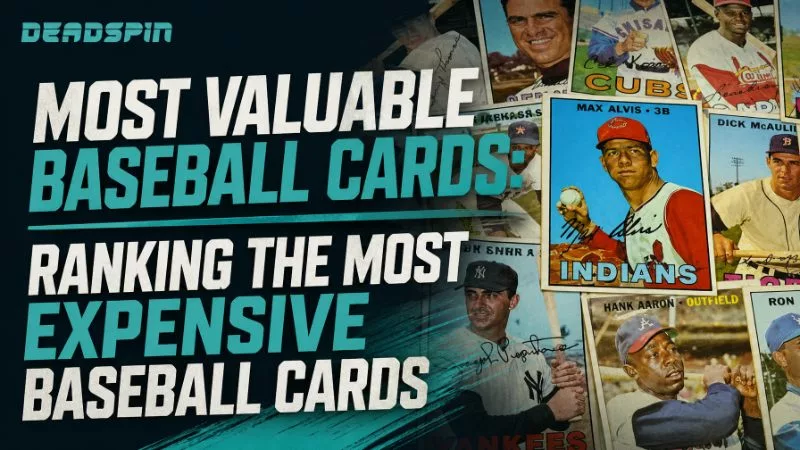
What a task this one has been. Where do you even begin with a shortlist of the best baseball trading cards of all time? Well, after some serious time and effort, we think we have our final selections.
You will quickly notice that market value isn’t the only thing we’ve considered. As true baseball fans, we need to think of the historical and cultural significance of our picks, how these athletes have influenced the game, the overall design of the cards, and what sets they belong to. Let’s get started.
We don’t plan on wasting any time with this one. Here, you will see a quick snapshot of our top picks this month before we break things down a little further and give you our reasons why these cards have made the cut.
| Card | Number # | Set | Market value |
|---|---|---|---|
| Mickey Mantle | 311 | 1952 Topps | $11,414,819.67 (PSA 10) |
| Jackie Robinson | 30 | 1956 Topps | $128,100.00 (PSA 9) |
| Hank Aaron Rookie | 128 | 1954 Topps | $357,594.00 (PSA 10) |
| Ken Griffey Jr Rookie | 1 | 1989 Upper Deck | $5,940.00 (PSA 10) |
| Mike Trout Rookie | US175 | 2011 Topps Update | $925.00 (PSA 10) |
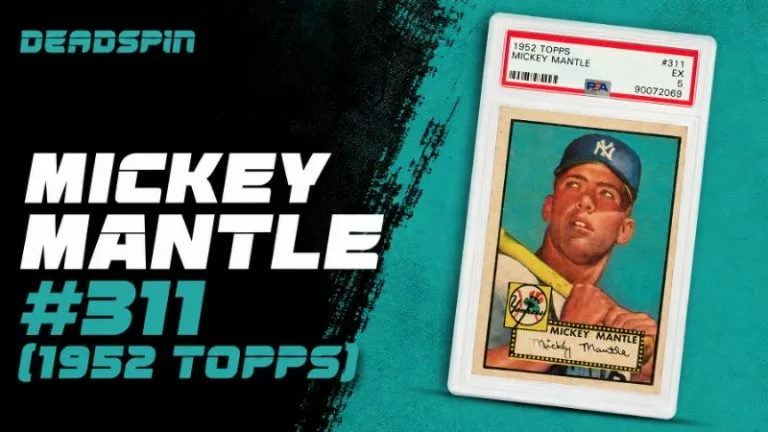
First in line, we have to have the Mickey Mantle #311. Although not technically his rookie card, this is one of the first to feature Mantle, and it is considered one of the most famous trading cards in sporting history. This 1952 Topps card has proven so popular that a reprint was issued in 1983; however, that has done nothing to stop the price of this baseball collector’s grail shooting up. Now, a PSA 10 fetches well over $11 million. The well-documented warehouse dump of additional cards in the Hudson River means availability was low from the off, let alone in 2026.
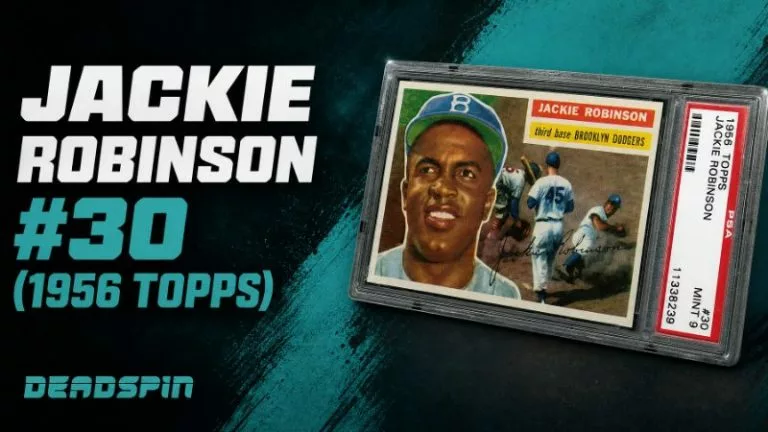
From one icon to another. The 1956 Topps Jackie Robinson #30 card is a collector’s item that closes out his impressive career with the Brooklyn Dodgers. However, it acts as much more than closure. As MLB fans will be well aware, Robinson broke the MLB’s color barrier in 1947, completely changing the game for the better. In truth, we could have chosen any Robinson card to feature in our list because of this, but opted for #30 from the 1956 Topps set because of its looks. This card features a combination of a portrait and an action shot that makes for a visually impressive card before we even consider this incredible backstory.
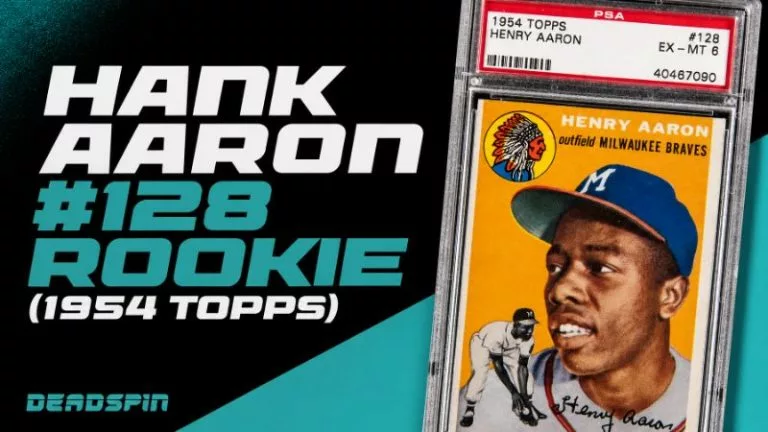
Surpassing Babe Ruth’s long-standing home run record of 714, and finishing with 755 career home runs is what most will remember Aaron for, but he offered so much more on and off the diamond. Supporting underprivileged children through his co-founded Chasing the Dream Foundation, and breaking records for a 25th call-up to the All-Star Game are just a couple we can think of, and it is no surprise that this 1954 Topps rookie card is considered a vintage grail. Again, we could have selected almost any Hank Aaron card for relevance and impact alone, but just look at the value of this one as a PSA 10.
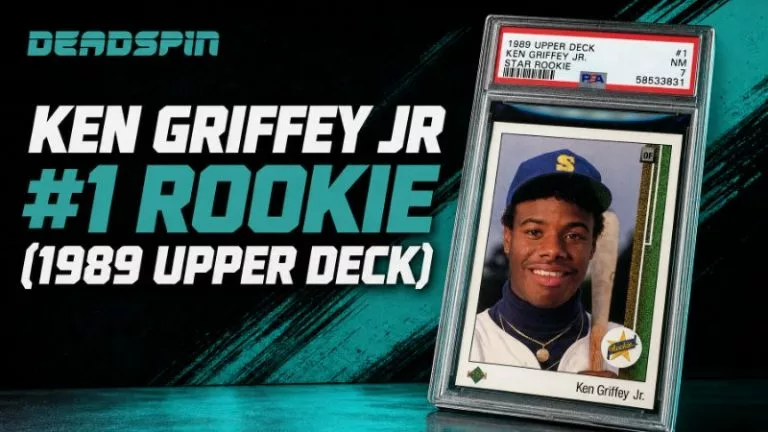
“The Kid” who made baseball “cool”, single-handedly propelled Upper Deck into an industry giant with this card. Who knew at that point that we were about to witness 1x unique swing, 10x Gold Glove Awards, and over 630 career home runs. Upper Deck’s decision to choose the number-one pick for card number one will have altered the value for many, as this positioning had a significant impact on centering. As card number one, it would be positioned in the top left of a sheet, and the slightest misalignment would shift potential PSA 10s down the levels. A raw ungraded copy can now be picked up for just $20, but that soon jumps when you reach the higher grades.
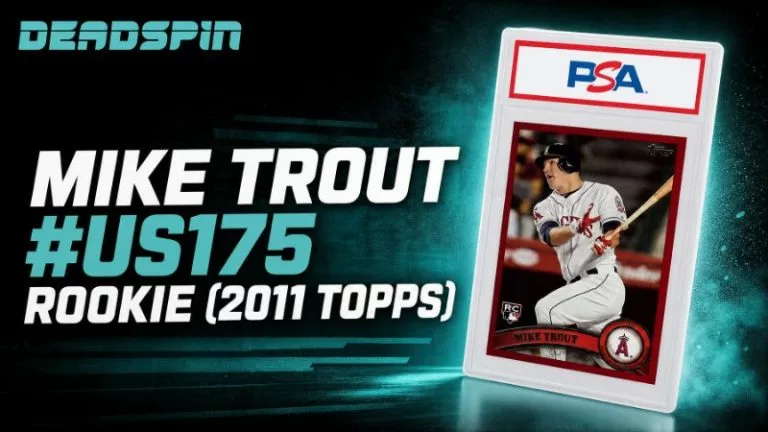
We told you not all cards are going to be out of reach. This 2011 Mike Trout Rookie will set you back just $925 for a PSA 10. This isn’t going to be the biggest addition to most collector’s portfolios, so why did it make our list? This one peaked pre-pandemic, and hit the heights of $9,000+ and is widely considered as Trout’s definitive rookie card. For modern day collectors, this is the benchmark to help judge any other investments. This is all without touching on the Los Angeles Angels lifetimer’s stats, which include Rookie of the Year, 12x all-star and 9x silver slugger nominations, and his captaincy for the US national team in 2023.
As you can see, it isn’t all about the value when it comes to selecting the best baseball trading cards out there. For us, we have to consider what true baseball fans value away from market price, and this is how we have established our rankings.
Now you have an idea of what we look out for, it pays to have an idea of what you want to find. As we keep reiterating, collecting is a really personal thing, and there is no right or wrong way to do so. In fact, here are just four stereotypes of what to expect within the hobby today.
As we all know, those elusive rookie cards (RC) are hard to get hold of after players have proven themselves. However, if you follow the draft tracker and have an idea of who is expected to come firing out the blocks, you may find yourself with an opportunity to grab a rookie card for a long-term investment. You don’t necessarily need to have gotten ahead of the pack with a college baseball card rip, but it is worth paying attention to RCs from the upcoming MLB set.
Whether you’re a Yankee, Red Sox fan, or something in between, you may find that collecting cards of your favorite team players or league players is the route you want to follow. We have seen plenty of binders and graded collections packed with each and every card from a specific team or player.
Some of the cards that have featured in our best baseball trading card list have hefty price tags attached, and there are some of you out there who only deal with grails. As you would expect, this isn’t going to suit all of you, but for some, the rarest and most valuable cards may be the way to go. Remember, you don’t have to buy ungraded; you can also pick up graded slabs of your favorites to keep them preserved.
Speaking of which, the graded collector doesn’t keep binders to keep things protected. Instead, they look at where to purchase graded slabs, sites that offer graded baseball card rips, and head on down to card shows to meet vendors. Their collections strictly revolve around graded slabs, meaning they’ll stay preserved and in the same great condition they pick them up in.
With a better idea of what we consider to be the best baseball trading cards of all time, all that now remains is to decide whether you wish to search for them. If so, you will find local card shows, online stores, and card rip sites provide you with ways to pick up products, but you also need to consider whether these cards fall in line with your current collection.
Although we would suggest these cards to be the very best baseball trading cards, the great beauty of collecting is that you can build a collection around your preferences. Whether that involves the cards in our list or something completely different, we hope you have plenty of fun along the way.
There is a big difference between the best and most valuable baseball trading cards, but that doesn’t mean there isn’t a crossover. Naturally, with any element of collecting, value will play its role, but we have also considered scarcity, fan base, influence, and much more in our final decisions.
The best baseball trading cards can be found at card shows, local stores, in packs, and in MLB trading card rip sites. You’ll find the banners on this page cover the reviews of the latter.
For ungraded baseball cards, the usual approach is to sleeve and topload each card, or sleeve it and put it straight in your binder. For graded collectors, you may choose a display case, carry case, or display box to keep them safe.
Loading …