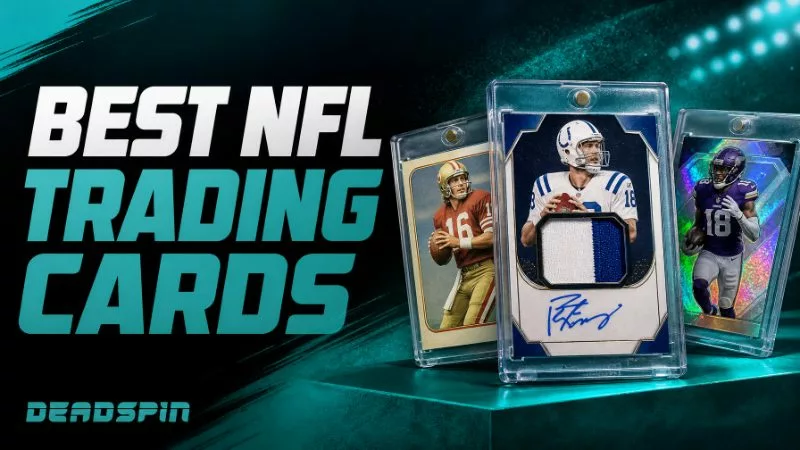
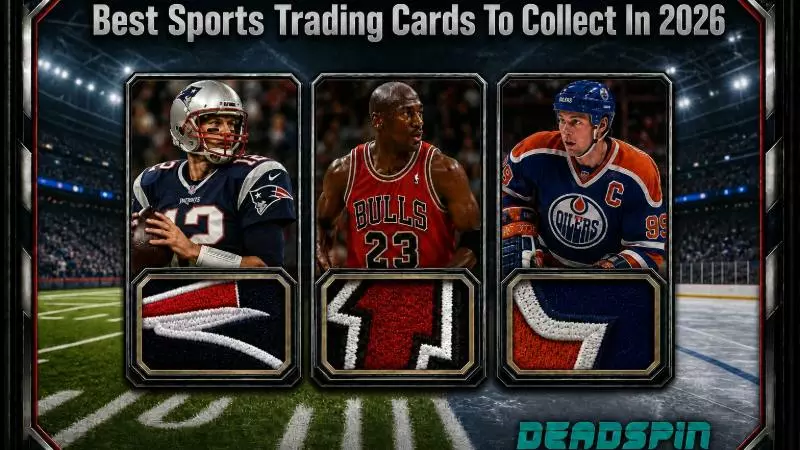
This guide to the best football trading cards showcases some of the most valuable modern and vintage slabs. These babies have sold at auction for six-figure sums in the past, so they certainly won’t show up in everyone’s collections.
The valuation of cards can and does fluctuate. Trends change, new players emerge and older cards become increasingly scarce. And so much of this comes down to personal preferences – a specific card that’s desirable to you, may not be to someone else. Keep reading to discover the underlying factors that shape a card’s worth to collectors.
There are many different ways to judge the value of a collectible, and much of it boils down to individual preferences. However, some football card rips are considered desirable by all collectors, regardless of personal tastes.
Classic cards that have stood the test of time tend to be among the most valuable. Those from the vintage era of football cards – around the 1930s through to the 1970s – invoke a particularly desirable nostalgia and sense of history.
But it’s not just these intangible qualities that place vintage cards among the most highly-prized. In the days before mass production, there were simply fewer cards around. Those which did exist were harder to preserve, and many were lost to Father Time. This scarcity, coupled with the cultural and historical significance, naturally increases their value – both monetarily, and emotionally.
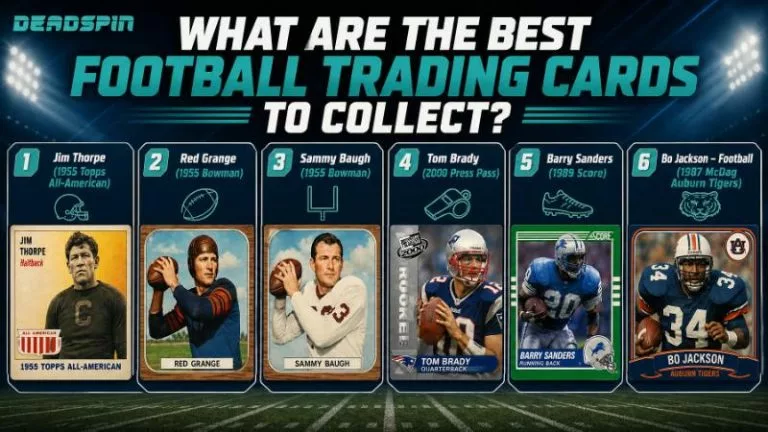
Here are three of the most notable examples, widely considered among the best vintage football cards:
| Card | Number | Significance | Highest Sale |
|---|---|---|---|
| Jim Thorpe (1955 Topps All-American) | #37 | Legendary multi-sport icon; rare 1950s football card with huge historical pull. | $450,000 |
| Red Grange (1955 Bowman) | #10 | NFL’s first true superstar; key 1950s vintage card; Historic player known as “The Galloping Ghost”. | $320,000 |
| Sammy Baugh (1955 Bowman) | #77 | Hall of Fame QB; revolutionized the forward pass; iconic 1950s design. | $280,000 |
If you regularly rip NFL trading cards, you’ll know the modern era is defined differently according to who you ask. We’re going with the mid-1980s onward. This period changed the game, with premium inserts, autographs and other desirable features. In the 1990s, the introduction of high-end brands, such as Playoff Contenders, and special limited edition cards created a new category of collectibles.
Unlike vintage cards, whose value often comes from survival rates, some modern pulls rely on manufactured scarcity, with intentionally limited print runs. Markets are also driven by grading companies, whose reputation and population reports influence buyer confidence and pricing.
Let’s take a look at three of the most valuable modern football trading cards:
| Card | Number | Significance | Highest Sale |
|---|---|---|---|
| Tom Brady (2000 Press Pass) | #37 | One of Brady’s earliest rookie cards; popular 2000s modern issue | $220,000 |
| Barry Sanders (1989 Score) | #257 | True rookie of the Hall of Fame RB; key late‑1980s modern card. | $185,000 |
| Bo Jackson – Football (1987 McDag Auburn Tigers) | – | Pre‑pro football card capturing Bo’s college stardom; rare offshore issue | $120,000 |
Choosing the best football trading cards to buy is a complicated process, as there are so many factors in play. Here’s a summary of the most important considerations.
For many collectors, a card’s monetary value is the most obvious driver. But several things shape how much a slab is worth. Its scarcity, historical significance and past sales at verified auctions all play a role. With modern cards, expert pricing tools like Card Ladder even factor in the player’s recent performances.
Different card sets carry different levels of prestige. Big-names like Topps, Panini Prizm, Contenders and Donruss are generally more desirable than less well-known card sets. Look out for premium releases, too, like National Treasures or Flawless.
Three main companies professionally grade trading cards – Professional Sports Authenticator (PSA), Beckett Grading Services (BGS), and Sportscard Guaranty Corporation (SGC). Naturally, cards deemed to be in the best shape are more valuable. But each grading company also reports how many copies of a card exist. If there are just a few copies of a card within a high grade, its value is likely to increase over time.
Star players like Tom Brady obviously attract more attention and are, therefore, easier to sell without hurting the value. These elite players have a wider fanbase, appealing to a broader audience, not just hardcore collectors. Niche cards, like short-print rookies, can still be valuable. But they can be harder to move on, as the buying pools aren’t as deep.
You don’t often see credits for specific artists, so it’s not something collectors always think about. But over the years, some designs have proven iconic. Think Bo Jackson wearing shoulder pads, but swinging a baseball bat – that dual-sport photograph turned it into one of the most recognizable football cards ever. Or the Tom Brady 2000 Playoff Contenders Championship Ticket design, which has since become standard.
With so many other criteria to consider, things change all the time – including the rankings on this page, which are updated as regularly as possible.
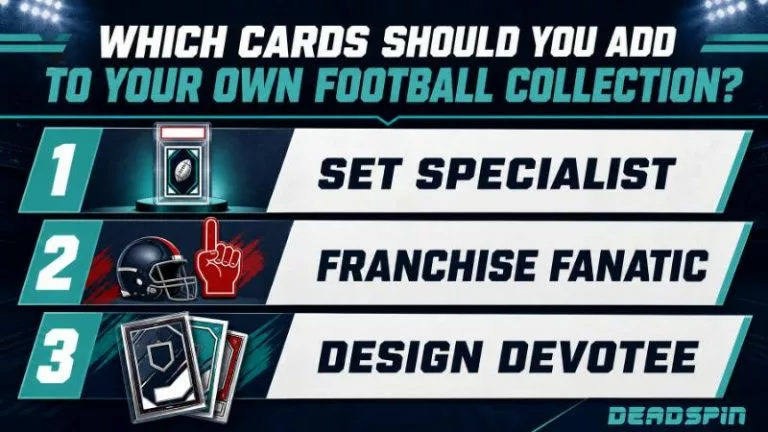
Every collector has their own personal preferences, and you almost certainly do too. While it’s good to know about the most valuable football trading cards, your own collection will undoubtedly contain slabs that don’t fit the standard mold. It all depends on the type of collector you want to be.
Ever the completist, your aim is to collect everything in a specific set, no matter what. For you, it’s about the thrill of the chase – tracking down every last card, no exceptions.
Purchasing advice: Buy entire cases of a target set to get started.
Cut you open and you bleed the color of your favorite team. You only care about your franchise and its players, so you prioritize its legends, rookies and key inserts.
Purchasing advice: Focus on team-specific modern rookies and vintage veterans.
Less about the substance and more about the style, you’re into bold foils and unique designs. Limited-print artwork or quirky photography appeal more than a player’s star qualities or the scarcity of a pull.
Purchasing advice: Look for premium parallels like Prizm Color Blast and Chrome Refractors.
Our ranking system illustrates the best football cards based on a wide range of factors. But nothing and nobody can dictate which are the best for your own personal collection. Although they can be extremely valuable, it’s important to remember that collecting cards is just a hobby – and a personal one, at that.
Yes, there are serious enthusiasts who’ve compiled collections worth millions of dollars. But at the heart of it all, there are emotions – nostalgia, the thrill of the chase and good, clean fun.
If you want to expand your own collection with football card ripping websites, check the banners on this page for trustworthy examples.
It depends on your personal preferences. Vintage cards like Jim Thorpe tend to be extremely expensive. Maybe focus on the rookie cards of elite modern players like Patrick Mahomes in high grades. These will likely become more valuable over time.
For individual cards, stick to licensed retailers with established reputations in order to stay safe. Good examples include Cherry Collectables, Check Out My Cards, and Steel City Collectibles. Sites like Dave & Adam’s sell sealed cases with reliable shipping.
Yes. Grading by PSA, BGS, or SGC boosts the authenticity of a card and helps protect its condition. Graded cards usually command significant price premiums – especially PSA 10s and BGS Black Labels.
Loading …