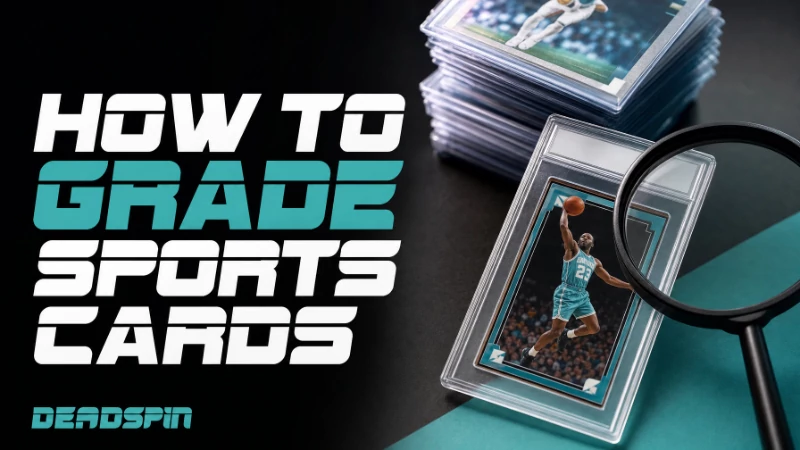
You don’t need the latest equipment or AI services to grade your own collection, but a basic understanding of how to grade cards is key to successful submissions. That is exactly what we plan to cover here today.
To begin, we touch on the reasons why you would wish to grade cards yourself, including the potential for an increase in value and the chance to preserve their quality. From here, we focus on the differences between PSA, BGS, and lower-end grading companies, discuss centering, corners, edges, and scratching, and finish by helping you pack and send them off.
There are a number of reasons why you would wish to grade your own collection. The obvious reason revolves around the potential for an increase in value, but you will also find many collectors who wish to have their cards presented in a specific way.
Not only will grading protect your card and potentially add to its overall value, but it will also preserve it in its own capsule for years to come. Nowadays, you will find that companies are expanding on traditional designs, too, meaning you can find some really fun graphic labels to make your favorite cards pop in your displays.
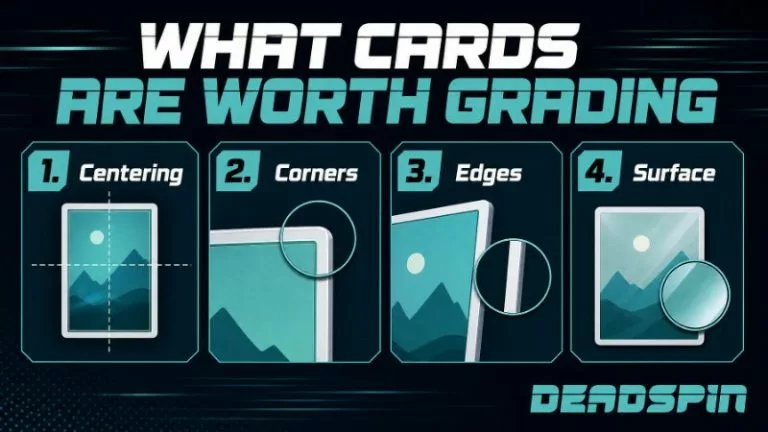
Of course, before you focus on whether your current stash of Pokémon cards is worth grading, you’ll need to complete a few checks. Most grading companies focus on a few key areas – centering, edges, corners, and surface.
As the name suggests, this simple check revolves around the positioning of your cards. If we take things back to the warehouse, you will find sheets upon sheets of cards are printed at a time, and cutting can be slightly off-center. Before you consider sending off your cards, you first want to check how things align. Nowadays, you can find cheap tools online that will assist you, but nothing beats a good eye from a trusted source.
Again, this one is fairly self-explanatory and revolves around the condition of the edges. Due to how cards are packaged, the edges tend to be the first real area of a card that takes on any damage, and a true PSA or BGS 10 will be free from any marks. Some slight whitening can occur, and the heavier that this is, the lower your eventual grade for this section.
Like edges, you’ll find that corners are prone to whitening and scuffs. This is a huge consideration before sending any of your cards off for grading. For BGS, any whitening is an instant setback, and the 0.5 scale they use means you’re almost certainly out of the 10 category.
The surface refers to scratching of the card. We would anticipate that most of you will be sending in full arts, holos, or high-end sports cards, and any scratching found on the card will greatly dent its overall grade. With CCGs like Pokémon, swirls or other important features will also be reviewed and taken into account.
As you can see, there is a fair amount for you to consider before you put a card forward for grading. However, that isn’t all. You will also find that the condition of your card may be disregarded entirely if you can secure a legitimate signature from the sportsperson, artist, or similar.
For high-end athletes, anime legends, or artists, such as LeBron James or Jason Paige, you could see your card become an AUTO-10. This bypasses the usual route, as it is a one-of-a-kind, autographed, and graded version of the card. Just bear in mind that signatures from lower-end influencers can also bypass the usual grading system and score an AUTO-8 or AUTO-9.
As established, one of the main reasons that collectors look at how to grade sports cards, One Piece cards, and alternatives is because of the potential increase in value. However, it isn’t just a case of simply sending off your freshly pulled card for grading – you’ll also need to consider its condition.
Unless you receive a 9 or 10, you may find that your graded card stays at a very similar value to it being ungraded. Not to mention that, alongside meticulously selecting which trading cards are worth grading, you also need to consider the grading company.
For a long time, PSA has been the most popular selection, as value remains and the name is trusted. ACE has introduced graphic labels that match your cards and ensure your graded collection looks impressive. However, the most-valuable grade you can achieve is considered the BGS 10 Pristine. Here is how a couple of top cards compare.
| Card | Ungraded value | PSA 10 | BGS 10 |
|---|---|---|---|
| Charizard 4/102 (Base Set Unlimited) | $675 | $30,100 | $39,160 |
| Elsa Spirit of Winter (Enchanted #217) | $910 | $2,700 | $3,200 |
With your inspection completed and card grading company selected, you now need to pack things up. We advise waiting until you have a number of cards to help cut down on the cost of shipping, and this also helps keep cards compact and tightly packaged during transit. The obvious additions, like bubble wrap and a sturdy box, are an absolute must.
You will also notice that most card grading companies tier grading packages. Naturally, high-end cards and fast-tracking will be most expensive, while the reverse is true of lower-end cards with a longer turnaround time.
When sending things off, you’ll also want to print your list of cards for grading and confirmation of the expected grades. If higher/lower, you could find yourself having to pay a little bit more down the line, as it may take your cards out of the tiered grading service you have paid for.
Finally, we would advise tracking your parcel. Then, sit back and keep your fingers crossed.
Although there is a fair amount that goes into selecting and sending off your cards, you will find that you can also purchase graded cards directly. For this, we would always suggest searching through credible sites and chatting with trustworthy vendors at card shows.
A relatively new way for you to indirectly purchase graded cards is through some of today’s best card rip sites. These sites allow you to buy packs of your favorite cards (or an in-house tiered pack), have a site member open it through a live stream (or find it opens digitally), and either ship or sell the card(s) you unlock.
Learning how to grade your cards is a fun and important part of the collecting process, and is essential for those of you who are specifically looking at building your own graded portfolio.
Generally, we advise that only cards you wish to add to your collection (or resell) are sent to be graded, and you should consider waiting until you have a few cards to help save on the cost of shipping. The grading company is a huge consideration, too. PSA and BGS lead the way; however, ACE has fun graphic labels, and lower-end companies are much cheaper. When all is said and done, grading comes down to your own preferences, but you always need to review centering, edges, corners, and scratches beforehand.
That is, of course, unless you plan to buy graded slabs outright or consider joining a card rip site. You can find some of our latest reviews of the latter in the banners on this page.
No. Realistically, there is no reason for you to grade all of your cards. You could look to have a 100% graded collection, but it would not be cost-effective to start grading commons, uncommons, energies, and other lower-end cards – unless they are a genuine part of your own collection, of course.
There are many things to consider before sending in a card to be graded. However, we would always suggest considering the current price of the card and whether you have plans for it to become part of your collection. Then, check the surface, edges, corners, and centering.
As you would anticipate, the cheapest way to grade cards is through a lesser-known grading company; however, the resale value of these slabs may not be as high as PSA or BGS. You can also opt for a longer turnaround time and send cards in bulk to cut down on postage.
Loading …