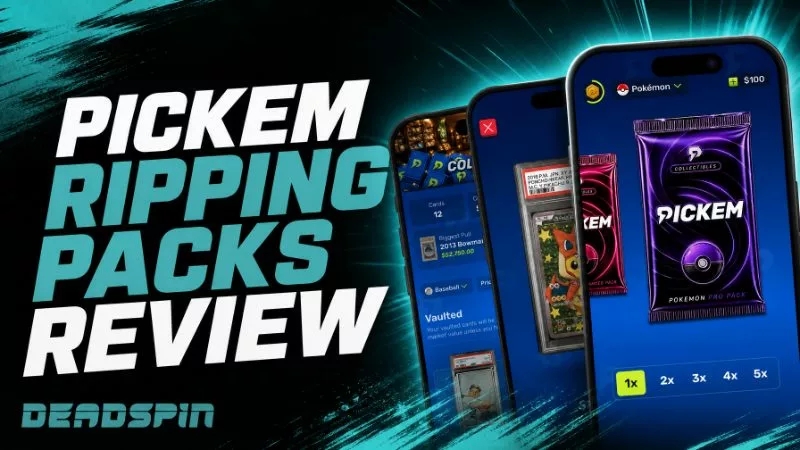
The best card ripping apps make it easy to compare packs, understand the odds, reveal a real physical card, and decide what to do next with minimal hassle. We rank these sites based on mobile access, available packs, ripping mechanics, collection tools, shipping, sell-backs, and overall design, and have identified four clear standouts for you to consider this month.


















Card rip platforms are designed with mobile action in mind, so searching for the best apps has been a mammoth task. That said, we’ve had plenty of fun doing so, and have conjured up the following as this month’s standouts.
| Rank | Card rip app | Mobile access | Best for | Why we rank it here |
|---|---|---|---|---|
| 1 | TiltRips | iPhone app + mobile web | Overall collecting and Pokémon | Vault, marketplace, varied packs, additional tools |
| 2 | Underdog Rips | iPhone + Android apps | Sports cards and Android | Excellent sports selection inside a bigger cross-platform app |
| 3 | Packz.io | iPhone app + mobile web | Beginners | Clean design with a streamlined approach to managing cards |
| 4 | Party Rips | Mobile web | Browser-based ripping | Good mobile functionality without a dedicated app |
In truth, there isn’t a huge gap between the top three, and we wouldn’t automatically recommend TiltRips to every collector just because it finishes first in this month’s rankings. In fact, an NFL card collector could get much more from Underdog, while someone who values a cleaner design and a more streamlined approach to card rips may want to take a closer look at our Packz.io review.
Party Rips is the only card rip platform to feature with no dedicated app available at the moment, but its responsive mobile site still lets you browse packs, alter the way some odds are structured, reveal cards, manage pulls, and deal with shipping or sell-back from your phone, making it one of the best card rip sites for mobile users.
That provides you with a quick snapshot, but what is it that really helps these four stand out from the rest of the card rip apps out there?

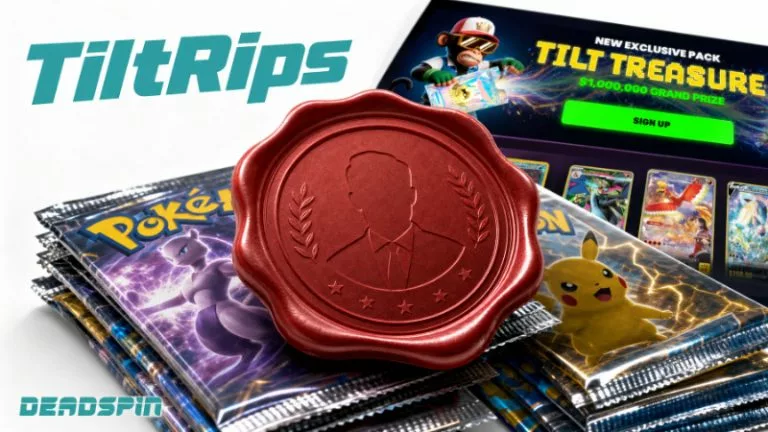
TiltRips takes our Pokémon category because the mobile experience gives collectors far more to work with than a simple reveal. During our latest visit, Pokémon packs ranged from low-cost entry options through premium tiers worth up to $3,000, with raw cards, graded slabs, Japanese releases, older-generation themes, and specialist packs all available.
Once a card is pulled, it can remain in the free vault while you monitor live values, list it on the marketplace, accept the 90% market-value sell-back, or arrange physical shipping later. Multiple rip modes also make repeated openings easier on mobile without stripping out the key pack information. As we touch on further in our TiltRips review, the main drawback is native availability, as the dedicated app currently favors iPhone users while Android collectors need the mobile site.

Underdog Rips is the Android option we would choose first, mainly because everything already sits inside the main Underdog app rather than pushing you into a separate mobile site. That makes the experience feel familiar from the start. Not to mention that the card selection gives sports collectors plenty to work with, including NFL, NBA, and MLB packs.
To get started, you can also use DEAD at the sign-up stage to claim five free packs with a ceiling of $150. This requires you to click on the links in this guide and open your first $5 pack. We found both raw cards and graded slabs, with the available rarity odds shown before you buy and selected Toss Up packs offering a simpler 50/50 format. Once the card is revealed, you can either arrange physical delivery or use the current 100% Fair Market Value buyback if the pull is not one you want to keep. The only real compromise is that Rips shares the app with Underdog’s wider sports products rather than operating as a card-only app, and therefore feels much busier.


Packz.io is our best choice for beginners because the mobile experience keeps the ripping process simple without stripping away the useful details. You browse sports or Pokémon packs, review the available values and odds, complete the purchase, reveal the physical card, then choose between the available return option and physical shipping.
The surrounding account tools stay out of the way until you need them, which makes the platform easier to understand than more feature-heavy alternatives. New users also benefit from our exclusive first-pack bonus, which can add Bonus Funds when an eligible first pull is valued below the pack price. The official app is currently aimed at iPhone users only, but Android collectors can still make use of the mobile website.

Party Rips is our favorite browser-based option because the mobile site covers the full ripping experience without asking you to install anything. You can browse Pokémon, sports, One Piece, and other collectible packs, review probabilities, adjust available Thrill Levels, complete purchases, watch the reveal, and manage the resulting card from the same site.
Your recent pulls can be sold back at 90% of their current value or claimed for physical delivery, although the 24-hour shipping window means you need to decide quickly if you want the card in hand. That shorter deadline makes Party Rips less suitable for collectors who prefer to sit on a pull while weighing their options. A dedicated app would improve repeat access, notifications, and time-sensitive account management, but for mobile ripping, the browser experience is already polished and deserving of its place within our rankings.
Card ripping apps combine the speed of a digital pack opening with the physical ownership of a real collectible. Instead of ordering a mystery box and waiting several days to discover what is inside, you choose a pack through the app or mobile site and see your card almost immediately. The reveal happens digitally, but the card behind it is real and can normally be shipped to you within a matter of days.
Before making the purchase, you should be able to see enough information to understand the pack you are choosing. That may include the price, possible card values, rarity groups, individual chase cards, published odds, or ideally a combination of those details.
Once the purchase has been confirmed, the platform assigns a card from the available pool and runs the reveal. From here, your options depend on the app you select, but you will usually be able to keep the physical card, arrange shipping, accept an available sell-back, or leave the card stored through some form of inventory or vault.
Some apps go even further by adding marketplaces, price tracking, collection tools, multiple opening modes, and ways to manage balances from within your account.
As we have seen with Party Rips, a native app is not automatically superior. If the mobile website is fast, responsive, and gives you access to every important feature, a browser can handle occasional pack openings perfectly well.
The difference appears with repeated use. Native apps can remain signed in more smoothly, send push notifications, create a permanent home-screen presence, and make frequent collection checks feel less like visiting a website each time. That becomes particularly useful when cards are sitting in a vault, marketplace listings are active, or a shipping decision has a deadline attached.
For somebody who opens one pack every few months, Party Rips through Safari or Chrome may be the right choice. However, for somebody who checks card values daily, lists collectibles, opens several packs each week, and wants notifications whenever something changes, a native app starts becoming much more valuable.
Before we rank a card ripping app, there are several areas we look at. We’ve broken this down for you in this convenient table.
| What to check | Why it matters |
|---|---|
| Pack price | Tells you the immediate cost, but not the full value of the pack |
| Odds | Shows how likely the different outcomes are |
| Card pool | Helps you decide whether you actually want the available cards |
| Minimum and maximum values | Gives some context around the floor and ceiling |
| Raw or graded cards | Changes what you may receive and how condition is assessed |
| Storage terms | Determines how quickly you need to act after the reveal |
| Sell-back | Gives you another option when you do not want the card |
| Marketplace | May let you sell to another collector rather than the platform |
| Shipping | Tells you how and when the physical card can reach you |
| Verification | Can affect shipping, account balances, or other features |
| Mobile access | Determines whether you get an app, mobile site, or both |
It sounds obvious, but one of the simplest ways to find the right card rip app is to think about your own collection.
If you mainly want Pokémon, there is little value in joining a service because it has an impressive sports lobby. The same applies if your collection is built around NFL rookies, NBA stars, baseball prospects, One Piece, or professionally graded slabs.
Look at the depth of the category rather than simply checking whether it appears in the menu. A platform can technically offer Pokémon while having only two general packs available. Another may split the category into modern cards, Japanese releases, older sets, graded slabs, and several pack tiers. Those are very different experiences even though both can claim to offer Pokémon.
Sports collectors should take a similar approach. Check which leagues feature regularly, whether the packs contain current players and older cards, and whether you can find graded as well as raw collectibles.
Card packs naturally push their most exciting hits. There is nothing wrong with that, but the card shown in the main image is rarely the main outcome. This is why it is also important to view how the rest of the pack is structured.
Before buying, look at the lowest value range, the middle of the pool, and the number of cards you would genuinely be happy to receive. If the pack contains one card you love and dozens you would immediately sell, that should affect how quick you are to purchase it.
The same approach should be taken when looking at value. A pack costing $50 with a possible $1,000 chase card can sound like a better option than another $50 pack with a $400 maximum, but that tells you very little on its own. The first pack may place most of its probability in much lower-value hits, while the second could have a stronger middle.
Card ripping apps do not all explain probabilities in exactly the same way. Some divide the possible cards into rarity groups, and others show value bands, individual probabilities, or adjustable settings that change the percentage.
Pay particular attention when several cards are grouped together. If a tier has a 5% chance of appearing and contains ten cards, that does not necessarily mean every card inside has a 5% probability. The group may represent the combined chance of receiving anything in that section.
Likewise, the odds may change as cards leave a limited pool. If a particularly valuable card has already been pulled, the remaining selection may look different from the one you saw earlier in the week.
We get it – you want to get straight into it. However, your first rip does not need to be one of the most expensive products on the app. A cheaper pack, bonus pack, or demo option gives you a chance to understand the full process before you start parting with any extra cash.
You can see how the odds are displayed, what the reveal looks like, where the card appears afterward, and what buttons are available for shipping, storing, or selling it. Once the process feels familiar, you can move into the pack prices and categories that better match your collection.
The reveal is one of the reasons people use these apps in the first place. Of course, that does not mean that the animation needs to go on and on… and on.
A well-designed reveal adds some anticipation, shows the card clearly, and then gives you the useful information quickly. You should be able to see exactly what you received, whether it is raw or graded, its stated value, and what you can do next without working through several unnecessary screens.
The right pace can also depend on the type of pack. If you are opening a high-value slab, a slower reveal may suit the occasion. When you are working through several inexpensive packs, having a faster mode or the ability to move directly into the next opening becomes much more useful.
The key is having that control – just as you would with physical packs. An app should let the reveal add to the experience without making it feel like a waiting game.



The most important question after any rip is simple: store, sell, or ship? Some place the physical card into a vault where it can remain until you request delivery. Others use a shorter-term inventory, giving you a limited period to decide whether you want the card shipped or sold.
If you plan to build your collection gradually, a long-term vault can be extremely useful. It lets you hold several cards together, monitor market movement, and decide later which ones deserve physical space at home.
If you usually sell unwanted pulls quickly, long-term storage may matter much less. In that case, a clear (or higher) sell-back offer and a straightforward shipping process may matter more.
A proper vault does more than save you from arranging shipping after every pack. Instead, it can become a digital version of your own physical collection, especially when the app shows useful information alongside each card.
That might include the original pull date, grading company, grade, live value, recent price movement, pack source, or current marketplace status. Free storage is another major advantage because it gives you time to decide what belongs in your long-term collection without creating a new cost every month.
Vaults also make shipping more practical. Instead of paying to send one or two cards after every session, you may be able to build up several hits and request them together.
A sell-back can be one of the most useful features on any card ripping app. If the card does not fit your collection, you can accept the displayed offer rather than paying for shipping and then trying to find a buyer yourself.
Naturally, the percentage is important, but it should not be the only thing you consider. First, find out what value the percentage is based on. A 90% offer only means something if you understand how the platform calculates the market value.
Next, look at how long the quote remains available. Some offers may be tied to the value displayed at reveal, while others can change as the market moves. You should also know what happens to the resulting balance. If it goes straight into your account, you’ll want to know whether it is to be used on further packs or whether it can be withdrawn immediately.
An in-app marketplace can also be useful when you understand the potential of a specific card. Instead of accepting the immediate sell-back offer from the app, you can list the card and wait for a buyer.
Of course, instead of receiving credits instantly, you’ll need to wait until a potential buyer provides you with an offer. On top of that, you have to consider whether any app fees are involved. The biggest bonus to this approach, however, is that you can set the price and you will often receive cash rather than site credits.
For most of us, we plan to join a card rip app with the intention of adding to our own physical collections. With this in mind, it shouldn’t come as too much of a shock to see that shipping is a huge part of our research.
As mentioned, some apps let cards remain stored until you decide what to do, while others expect you to request shipping within a much shorter period. If you miss that deadline, the option of shipping may disappear, and your card may automatically be resold at a percentage of market value.
Shipping can include a carrier charge, handling, insurance, taxes, or other fees depending on the card and destination. A low-value hit can become much less attractive if the delivery charge suddenly becomes several times the value of the card.
Welcome offers are available at top card rip sites. We have come across promotions that give you free packs, a protected first purchase, bonus funds, pack credits, and various other platform-specific perks, but the resulting rewards are not always destined to land in your withdrawable balance
Generally, these all come with a playthrough requirement before they are added to your cash pot. The terms of these offers will help you to soon determine whether they are a worthwhile option for you.
With funds received from a sell-back or marketplace sale, you’ll usually find that they are directly added to your cash balance. Direct deposits, however, still tend to come with a 1x requirement, and this is something to bear in mind before you hit that deposit button.
There is no secret setting that guarantees a better pull, but there are several ways to make the overall experience more useful.
The best option normally comes down to what you collect, how much information you want before a rip, and what you plan to do with the card afterward. Once you have made the most of the banners on this page and found an app that ticks these boxes, you’ll then want to follow these steps to get yourself started.
Click on the links within our dedicated reviews to take you over to the correct site.
Download the mobile app through the on-page link or visit the app store.
Click on the Join Now (or similar) tab.
Share some basic personal details or link one of your social media accounts.
Enter one of our exclusive promo codes (if available).
Read through the fine print and create your new user account.
Verify your details through a one-time link sent via SMS or email.
Return to your chosen card ripping app and fund your account.
Claim any welcome offers available to you.
Filter through available packs and get ripping.
That should have covered everything you need to know about ripping cards through a dedicated app or mobile browser. Naturally, an app makes the experience much more accessible; however, you can save space on your device without denting the experience if you join through your mobile browser.
Regardless of how you opt to join, you’ll want to ensure that you choose a site that ticks all the right boxes for you. We focus our reviews heavily on pack coverage, promotions, usability, shipping, storage, and selling, but you may find that the rip animations, support, and social element are equally as important to you.
With this in mind, we’ve ensured that the banners on this page are updated with some of the best card rip apps available to you. We suggest taking your time to check out these comparisons to ensure that you find the right place to rip.

TiltRips takes our top spot overall, particularly for Pokémon collectors, because it combines free storage, live card values, and marketplace access with several different packs. The best option for you can still depend on the cards you collect and whether you prioritize mobile access via a dedicated app, sports coverage, a free vault, or something in between.
Yes. A legitimate card ripping app connects the digital reveal to a real physical collectible. Once your card has been revealed, the app stores it in a vault and provides you with the options you have. This usually includes shipping, vaulting, selling it back, or placing it on a marketplace.
Naturally, you should start with the pack price. However, do not make your decision on this alone. We suggest looking at each pack in more detail, focusing on floors, ceilings, odds, and the recent hits. You should also understand the sell-back and shipping terms before buying, particularly when an app gives you only a limited time to decide what happens to the card.
That depends on the card and how you collect. A free vault can be useful when you want to review market value, build a larger collection, or combine several cards into one future shipment. Physical delivery makes more sense when you want the card in your binder or display immediately or have pulled something valuable enough that you would rather control it yourself.
No. A responsive mobile site can handle the experience just as well. We have been able to browse packs, make purchases, reveal pulls, and manage cards perfectly well through mobile sites beforehand. A dedicated app just makes the experience a little more accessible and straightforward.
Loading …