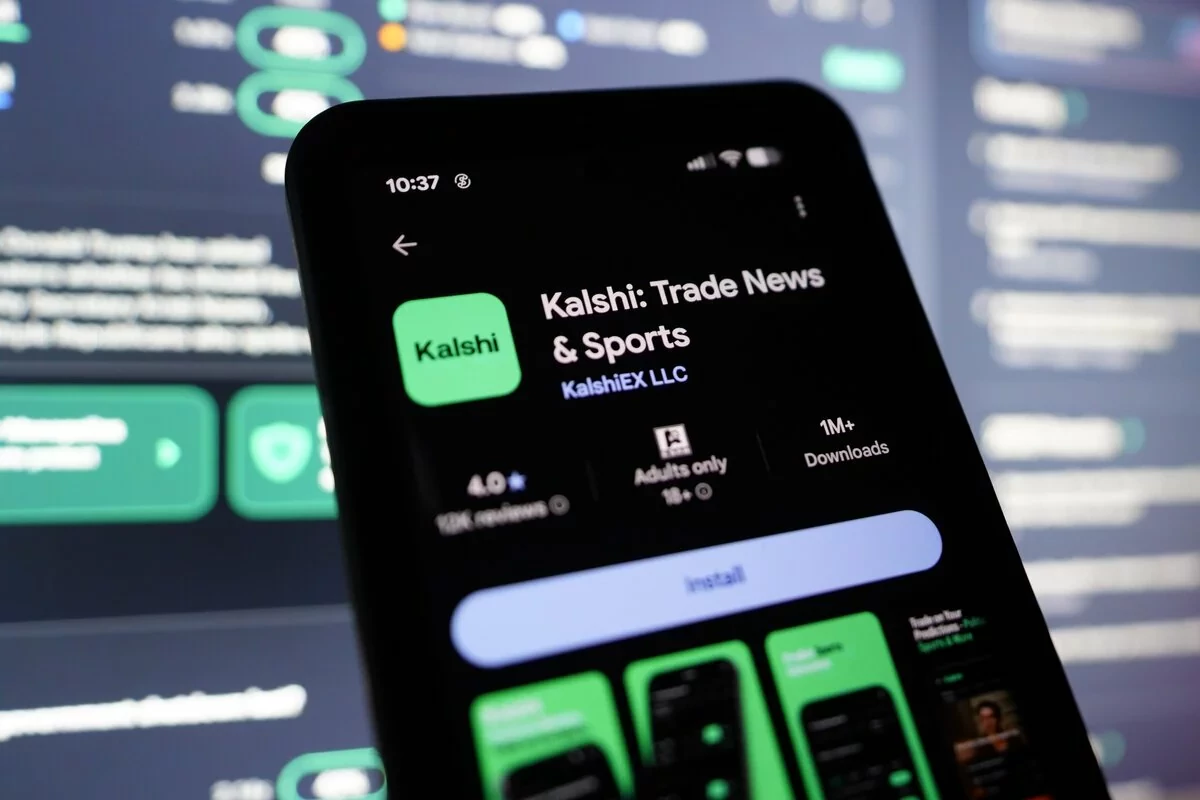
On Wednesday, Kalshi co-founder Luana Lopes Lara announced that “Kalshi is now fully available in Spanish.” In a social media post translated by Google, Kalshi’s COO stated, “This was one of the features our users asked for the most. We spent weeks working with native speakers from our own team to ensure every word was just right.”
The news arrives one week before the kickoff of the 2026-27 NFL regular season at Lumen Field, at a time when both prediction market advocates and naysayers are making headlines.
According to the Brazilian entrepreneur, Kalshi’s Spanish-speaking users have recently grown from just 2% of its overall US-facing customer base to over 12%.
“In Texas, Arizona, Florida, California, and many other states, Kalshi already has millions of Spanish-speaking users, who make up about 12% of the entire platform,” said Lopes Lara on Wednesday. “Most of this growth is quite recent. At the beginning of the year, Spanish-speaking users made up just 2% of the platform.”
Spanish language localizations remain difficult throughout the online realm, despite the emergence of artificial intelligence, chatbots, and readily accessible resources. In the United States alone, the exact terminology used to express the way a Spanish-speaking individual answers the phone, views a television show, or relays approval can vary drastically depending on which “culture” is communicating.
Spanish subtitles on major premium platforms such as Netflix and HBO Max routinely differ, albeit slightly, from spoken audio dubs even when toggled to a specific “Latin American” option. Video games, which have long been at the forefront of language ports, seem to have solved translations into American English, but still struggle to successfully capture on-screen events in the Spanish language.
Games such as Persona 5 Royal (from Japanese), The Witcher 3: Wild Hunt (from Polish), and Clair Obscur: Expedition 33 (adapted from French culture) are prime examples of how a non-English original story can captivate an English-speaking audience through pinpoint translation.
However, while Kalshi’s Spanish availability may leave some room for improvement, there’s no mistaking that the company is aggressively pursuing UI improvements that customers will ultimately appreciate. Much like a single-player video game, each trader’s experience on Kalshi is customizable without interfering with how other account holders experience the app or website. One person’s decision to toggle the Spanish language feature has no impact on another user’s configuration preferences.
At a casual glance, Kalshi faces growing competition in the CFTC-regulated prediction market space, from Polymarket US and Robinhood to newly licensed exchanges Underdog and Novig. Yet a recent CNN report, which focused on Kalshi’s 18-to-20-year-old user base, states that Kalshi trading volume makes up approximately 90% of the entire US market.
Moreover, many industry observers believe that Kalshi’s recent decision to waive market maker fees for uncorrelated NFL combo trades essentially guarantees that it will receive a steady influx of traditional sportsbook users throughout the league’s regular season, which begins on September 9th.
While competitors such as Underdog, recently acquired by IG Group, launch separate “gaming” products that are immediately susceptible to state-based oversight (see Underdog RIPS) and not protected by the CFTC’s “exclusive” prediction market jurisdiction, Kalshi is shoring up its user-friendly features to ensure it retains a stranglehold on sports, politics, entertainment, and global affairs trading.
Loading …