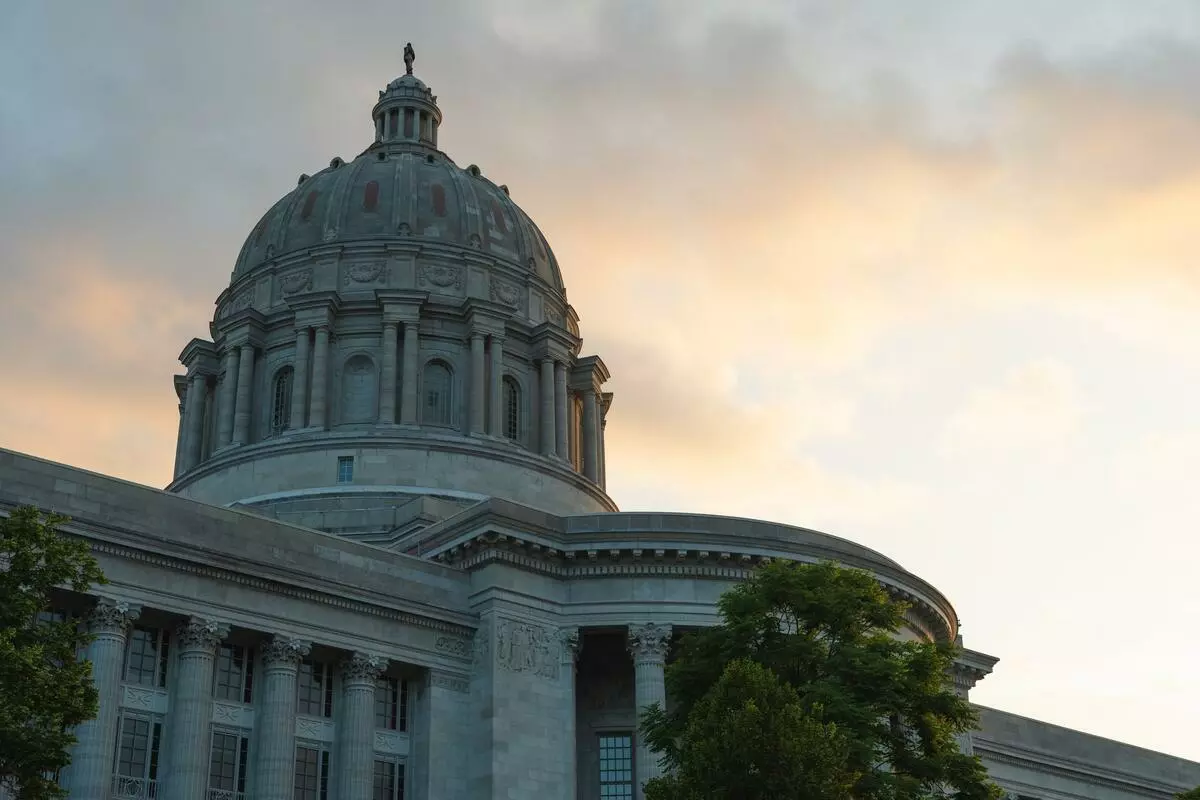
On Monday, prediction market apps Robinhood and Polymarket US filed suit in federal court, challenging the state of Missouri’s enforcement actions against the two companies. The lawsuits are in reaction to multiple cease-and-desist letters that were issued by MO Attorney General Catherine Hanaway in September 2026.
Those letters, sent to Novig, Polymarket US, Robinhood, Kalshi, Underdog, and Crypto.com, threatened enforcement actions against the exchanges if they didn’t immediately stop offering sports event contracts in the state. Although both lawsuits were filed in federal court on Monday, the approaches they take to defend the existence of prediction markets are different.
Similar to the October 2026 legal action that Polymarket took against Ohio, Monday’s lawsuit against Missouri accuses the state of unconstitutional practices under the Commerce Clause. According to the exchange, Missouri’s regulatory and licensing structure for sports-betting operators is restrictive to interstate commerce.
Missouri forces licensed online sportsbooks to geo-restrict all operations within the state’s borders, which means those service providers must pay for (and maintain) in-state data centers and corporate infrastructure. The result is a state-based product that ensures compliance with the Wire Act and leans on a 2018 Supreme Court decision that overturned PASPA.
Robinhood’s complaint against Missouri officials is that prediction market sports contracts are authorized on a nationwide level by the Commodity Futures Trading Commission (CFTC). The federal agency is currently engaged in its own legal battles to protect its “exclusive jurisdiction” over all legal prediction markets in the United States.
Instead of “wagering” or “betting” on a sports outcome, prediction exchanges offer financial derivatives, defined as “swaps,” that can be traded by anyone in the US who is at least 18 years of age. States are challenging the federal government’s interpretation. So far, there is a circuit split on whether sports contracts should be classified as “wagers” or “swaps.”
The legal distinction is supremely important in determining whether states can enforce gambling laws and regulations on prediction markets, or whether the CFTC’s jurisdiction overrides those states.
Last week, DraftKings’ Q3 2026 earnings presentation included a potential sports-contract ban, stemming from a hypothetical Supreme Court ruling, in July 2028. On Monday, legal expert and SCOTUS commentator Steve Vladeck informed his One First Substack readers why a 2027 timeline for the nation’s highest court to hear one or more prediction market cases is more likely.
The prediction market legal battle“…is unfolding against the backdrop of a 2-1 (and growing) circuit split on the central questions these cases present, three pending cert. petitions in two of those circuit cases, and the increasing likelihood that the Supreme Court will (and will have to) step into this hornet’s nest, perhaps as soon as this term,” wrote Vladeck. “And given how much uncertainty the split is creating for states, tribes, and the industry alike, my own view is that there will be real pressure on the Court—not necessarily to expedite its review, but to do whatever it takes to resolve the questions these cases present this term.”
Loading …