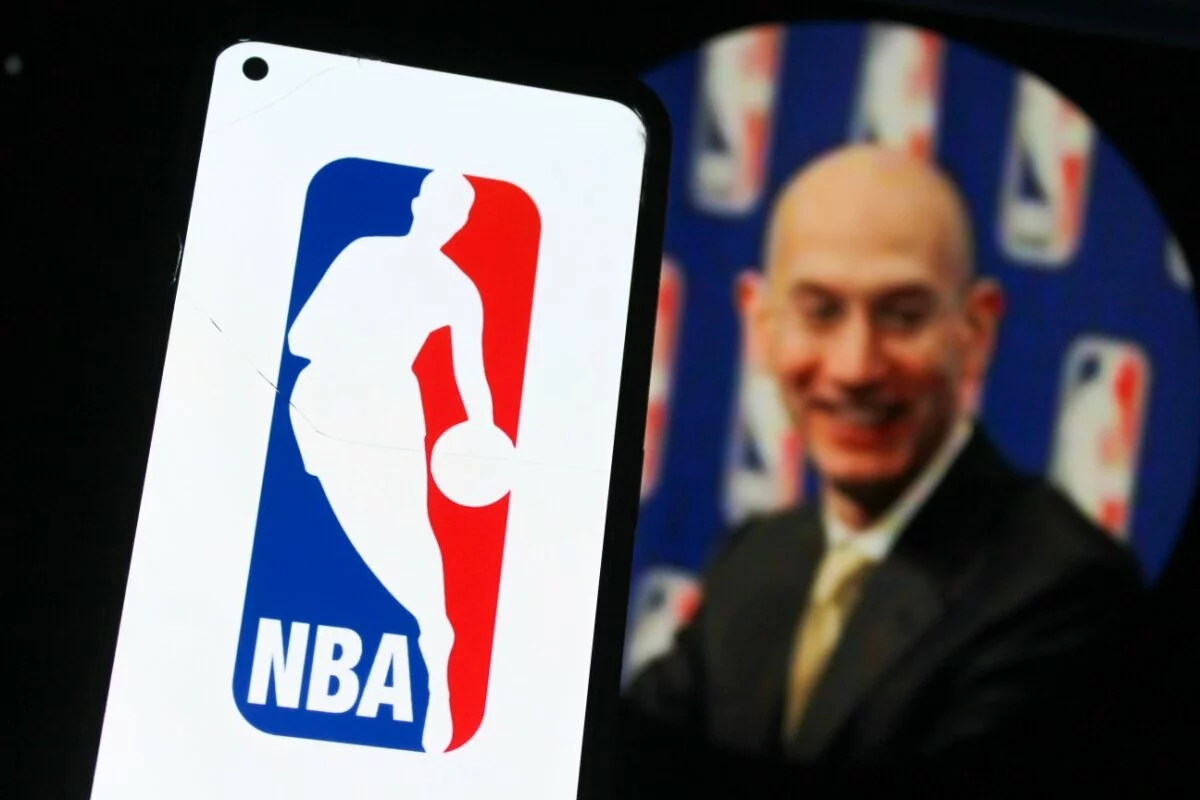
On Friday morning, NBA Commissioner Adam Silver told CNBC that the league needs access to prediction market data to better police game integrity. Silver’s statements were made on Squawk Box in a conversation with host Contessa Brewer.
“Whether it’s called a prediction market, whether it’s sports betting, it’s the same issues for our league and I think for all the leagues, there’s issues around integrity first and foremost,” said the commissioner. “We want access to that data. We also want control of the market.”
Silver’s public appearance came just 24 hours after the NFL filed an amicus brief with the Supreme Court that sides with states on the categorization of prediction markets while calling for a minimum age requirement of 21 to trade NFL event contracts.
Adam Silver’s wording on Friday points to a potential face-off between the NBA and NFL against the “exclusive jurisdiction” that the CFTC claims over legal prediction markets. On the surface, the leagues’ arguments represent a public plea to grant both the NBA and NFL “veto” power over specific sports contracts (like those that may be susceptible to single-player manipulation) along with restricting trading activity on prediction markets for 18-to-20-year-old individuals.
However, outright league “control” of sports contracts could trigger arguments tied to which regulatory and policing agencies truly have a “final say” mandate on issues ranging from trading bans to civil enforcement.
Similar to state-licensed sportsbooks and tribal gaming entities, leagues often partner with active and retired investigative personnel. But the CFTC may be wary of allowing the NBA and the NFL the ability to use prediction market data in a way that places professional leagues in a position to override the federal agency’s regulatory licensing remit.
It is also unknown how far the CFTC might be willing to proceed on cases brought forth as a result of in-house league investigations linked to insider trading that aren’t flagged by prediction platforms. So far, the agency has relied heavily upon insight provided by exchanges when deciding when to ban or fine individuals for prohibited activity on Kalshi.
Neither the NBA nor the NFL has partnered with CFTC-regulated prediction markets. However, NBA players are free to promote platforms such as Kalshi, Underdog, Novig, and Polymarket US.
Last month, Philadelphia 76ers forward and future NBA Hall of Famer LeBron James officially joined forces with Polymarket US in a non-equity marketing deal worth a reported $15 million. The agreement with Polymarket US restricts James from promoting markets tied to outcomes of basketball games. In February of this year, Milwaukee Bucks star Giannis Antetokounmpo became a Kalshi shareholder.
The NBA’s collective bargaining agreement permits players to sign with (and become shareholders of) prediction market platforms. Yet the NFL’s policies outright prohibit the league’s players from doing the same.
Loading …