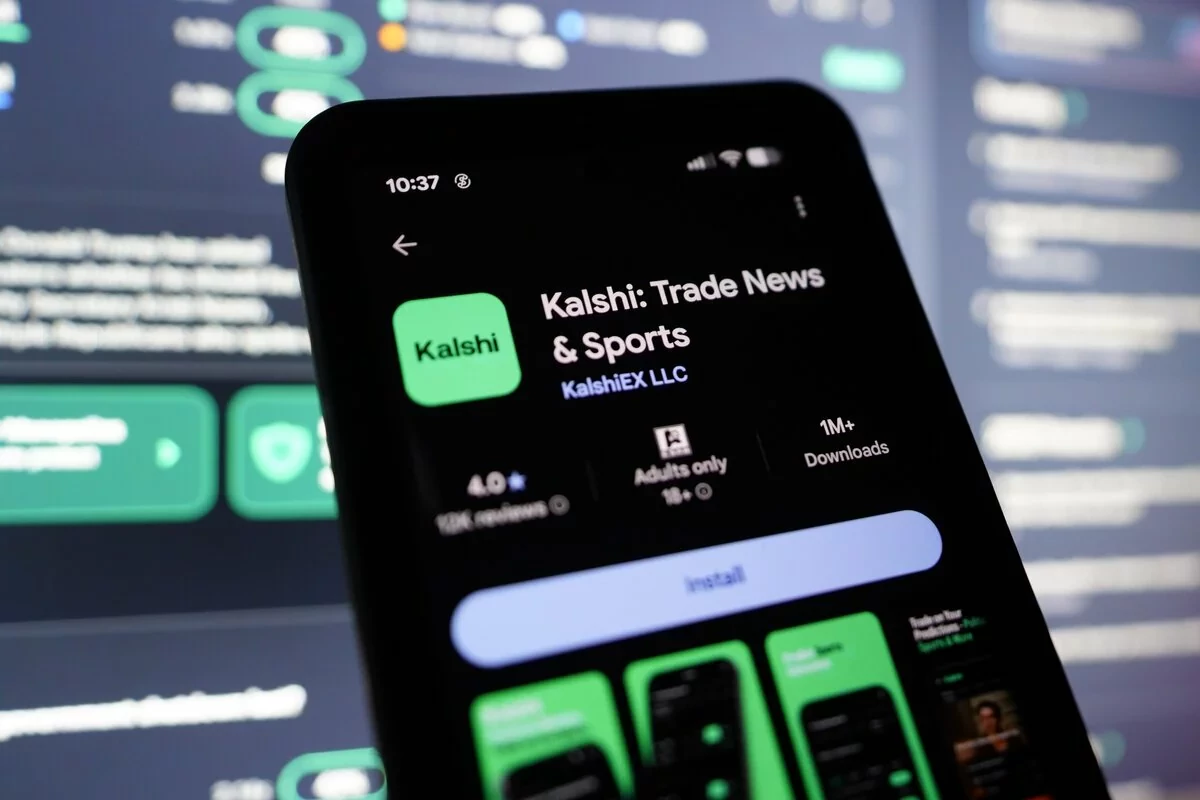
Earlier this week, Kalshi CEO Tarek Mansour sat down with Reason TV host Nick Gillespie in a 50-minute interview that covered a wide range of prediction market topics.
WATCH: Tarek Mansour Interview with Nick Gillespie (Reason TV, October 21st, 2026)
Upon watching the segment, here are three takeaways from Mansour’s conversation with Nick Gillespie. Note that the three topics highlighted in this article do not represent the entirety of the interview or cover all of the prediction market topics that were discussed.
At the 47-minute mark, Mansour referenced two specific prediction markets that have provided individuals and businesses the ability to hedge against disastrous or catastrophic outcomes.
“People in The Keys, around hurricane season, start calling in and buying ‘yes’ on a hurricane hitting their town because insurance companies don’t insure their homes anymore,” revealed the Kalshi co-founder.
A few moments later, Mansour cited a California legislative proposal that significantly altered payout structures for many goat herders located in the state. Kalshi partner CNBC published a related story in August that described how one business was able to work with Kalshi and Susquehanna. The result was the creation of an actual prediction market linked to how much the company would be forced to pay its employees based on whether wage relief was passed in the California legislature.
Hedging markets tied to how many regular-season games will be played during the upcoming 2027 MLB season have also become popular among a handful of small businesses that could see their sales plummet if a deal between players and owners isn’t reached. Hedging remains one of the most convincing arguments for the existence of federally licensed prediction markets, particularly when competition is sparse to nonexistent.
So far in 2026, the two highest profile scandals involving prediction markets have been limited exclusively to Polymarket’s international exchange, which is not regulated by the CFTC. In April, authorities arrested a US Army Special Forces soldier for allegedly using a VPN to access Polymarket’s international exchange and use classified intel to profit more than $409,000 from trades related to US military action in Venezuela.
A month later, a former Google employee was charged for using privileged corporate info to profit over $1.2 million on “Google Trends” prediction markets. Michele Spagnuolo was an Italian citizen living in Switzerland who likewise, according to the DOJ criminal complaint, accessed the Polymarket international exchange to make the alleged trades.
Referring to the media’s coverage of the case involving the Army soldier, Mansour told Nick Gillespie that it was like a “three-month cycle… they wouldn’t say ‘Polymarket [international],’ they would say ‘prediction markets.’ They would lump us in.” The misframing of the two scandals was further witnessed during the inaugural meeting of the CFTC’s Innovation Advisory Committee on prediction markets.
The charges against the US Army soldier were brought up by CME Group CEO Terry Duffy during an exchange with Kalshi co-founder Luana Lopes Lara. The topic was eventually dismissed by CFTC Chairman Mike Selig, who labeled the topic as “fake news” since it didn’t relate to prediction market platforms that are under the federal agency’s regulatory purview.
Prediction market opponents looking for vulnerabilities in how prediction markets can be manipulated (even when they are federally regulated) don’t need to look far.
Earlier this year, Kalshi traders were burned by former US Congressman and current reality TV star George Santos, who received a fine along with a lifetime trading ban for trading activity linked to his own “appearance” market for the 2026 State of the Union address on Kalshi. Ultimately, the platform had to work with impacted traders to resolve contracts that were clearly traded within a manipulated market.
Less than two months ago, former White House teleprompter operator Gabriel Perez settled with the CFTC after he used insider information to scam Kalshi “mention” markets out of more than $100,000. While the fine and financial disgorgement penalized Perez for his actions, industry observers have been quick to note that he was seemingly able to avoid criminal prosecution altogether.
And the potential for Kalshi event-contract vulnerabilities doesn’t end there. Prediction market critics can also turn to enforcement actions against three political candidates whom Kalshi penalized just a few months ago. The fallout has been partially responsible for the apparent rush by state and federal lawmakers to impose restrictions on domestic PEPs (Politically Exposed Persons) through a combination of KYC and AML measures.
The final takeaway from Tarek Mansour’s discussion with Nick Gillespie for Reason TV is associated with how prediction markets will be categorized in the future. In the final minute of the interview, the Kalshi CEO says that:
“Congress explicitly gave the authority to the CFTC to regulate market structure this way, no matter what the topic is.”
Most states, tribes, and sports betting regulators disagree. Mansour’s opinion that the “CFTC can decide what to do with it” in terms of trading activity on sports outcomes represents just one side of the legal argument that continues to play out in state and federal courts nationwide.
Loading …