Report: Top Track & Field Officials Discussed Covering Up Doping Prior To London Olympics

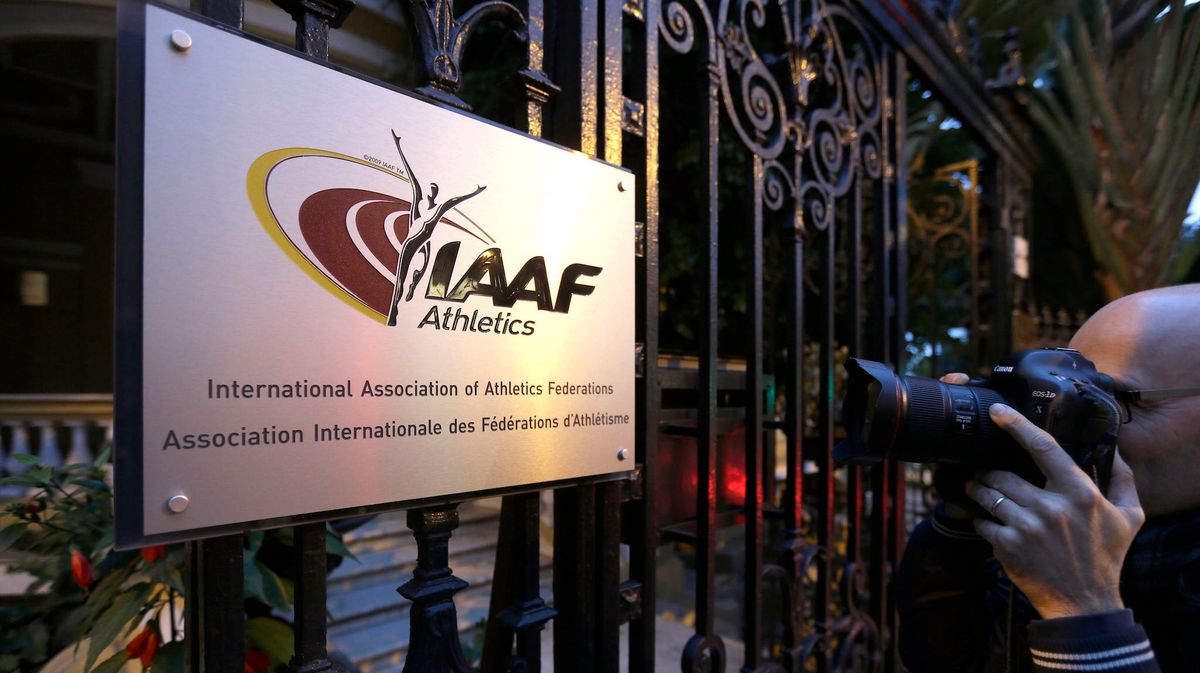
Late last year, the World Anti-Doping Agency released a bombshell report detailing all manner of doping, bribing, and cover-ups by Russian track and field athletes, the Russian federation, and the Russian government. Russia received an indefinite ban from track and field for their wrongdoing, and could miss the 2016 Rio de Janeiro Olympics.
But the Russians weren’t the only guilty party. WADA’s report noted that prior to the 2012 London Olympics, 14 Russian athletes had abnormal blood profiles. While four of them were sanctioned, 10 received “unexplained and highly suspicious delayed notifications” from the International Association of Athletics Federations, allowing them to compete.
The AP has gotten their hands on a cache of six-years worth of IAAF documents and communications, and they paint a pretty grim picture. Already in 2009 the IAAF knew that Russian athletes were doping, with the organization’s general secretary writing to the head of the Russian athletics federation that his athletes were, “seriously risking their health or even their lives at the same time.”
But at the same time the IAAF was trying (not too hard, I might add) to get Russia to clean up its doping problem, they were actively discussing hiding it from plain view. From AP:
Internal IAAF papers before the 2012 London Olympics proposed hiding doping sanctions for less well-known Russian athletes from public view. An April 2012 note said this hush-hush approach couldn’t be granted to Russia’s best athletes because that would allow them to keep “11 world titles and numerous European titles acquired under the influence of doping.” It added: “It is impossible to ‘discreetly’ remove from competition for two years athletes who are multiple world and/or Olympic champions. Their absence from major competitions will inevitably prompt questions and investigations from experts and the media.”
[...]
The notes proposed a two-track approach: strictly by-the-book sanctions for the best-known elite Russians likely to win medals at the London Games, but “rapid and discreet” handling of second-tier cases, working “in close collaboration” with the Russian athletics federation, for less well-known athletes whose sudden and unexplained disappearance from competition would likely pass unnoticed.
For those athletes who agreed to the deal, the IAAF would in turn “undertake not to publish the sanction,” which would be shortened to two years from four, according to a Dec. 5, 2011, brief.
The IAAF was quick to tell AP that the proposal for secret bans was never actually implemented, which only makes having seriously considered it slightly better.
For those hoping that the IAAF and its venal president Lord Seb Coe will get tagged even more in this expanding web of corruption, you may be in luck! On Thursday the commission appointed by WADA is expected to release the second part of their report into bribery and corruption in track and field. This one will focus on top track and field officials—like Lamine Diack, the president of the IAAF until last August—accused of blackmailing athletes who failed doping tests. It should be a fun one.
[ AP]
Photo via AP
E-mail: [email protected] | PGP key + fingerprint | DM: @kevinmdraper
Los Angeles Chargers Shouldn’t Resist Justin Herbert Trade
5 Fights to Make After UFC Vegas 112
Brewers vs. Dodgers Game 3 Predictions, Picks and Odds
The 5-0 49ers Are Finally Getting the Respect They Deserve
Jorge Masvidal Makes $100K Pick to Beat Islam Makhachev
Dana White's Contender Series Week 10 Predictions and Picks
- Bills vs. Rams Odds, Prediction and Best Bet for MNF
- Three Longshot NFL Futures Worth Betting in Week 5
- Falcons vs. Ravens Odds, Prediction and Best Bet for Sunday Night Football
- White Sox vs. Guardians ALDS Game 5 Betting Pick
- UFC Vegas 122 Betting Odds: The Biggest Line Moves Before Allen vs. Duncan
- UFC Vegas 122 Picks and Predictions: Three Bets for Allen vs. Duncan
- College Football Week 6 Bets: Three Picks for Saturday’s Biggest Games