Conference realignment, NIL deals, and the end of loyalty in college sports

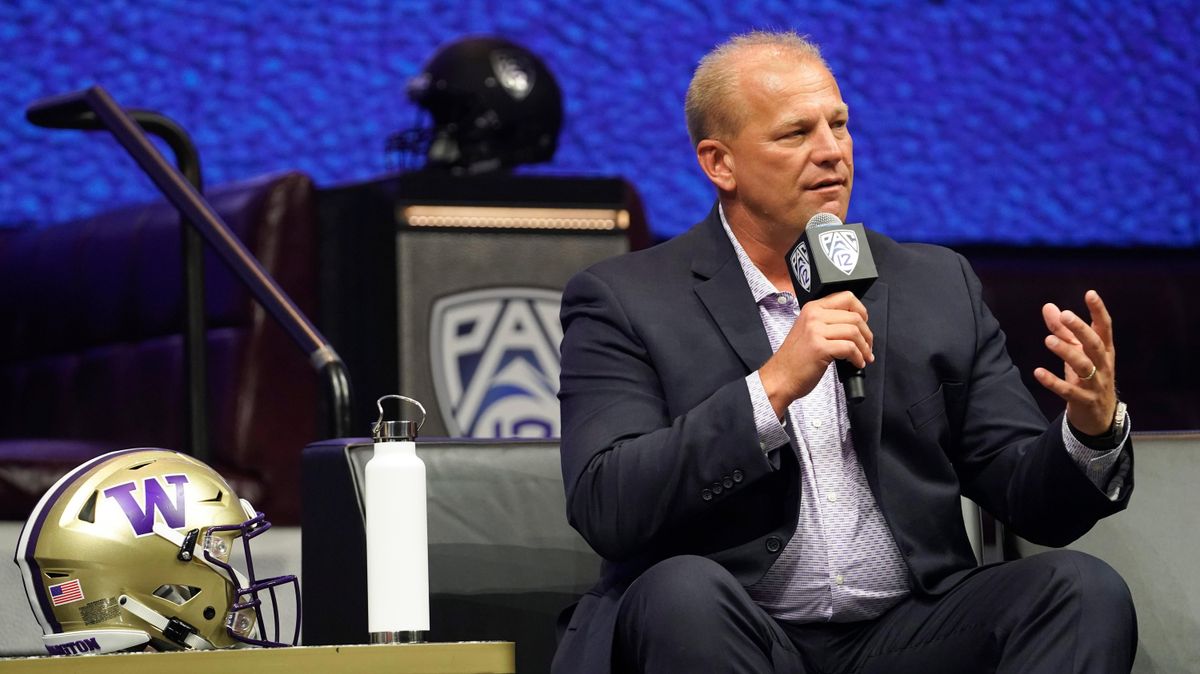 Washington head coach Kalen DeBoer speaks at Pac-12 Media Day. Washington is mulling leaving the conference. credits: Lucas Peltier | source: AP
 The recently prophesied collapse of college athletics is being attributed to the transfer portal, and name, image, and likeness deals. The chaos caused by player movement and an unregulated free market has caught the eye of politicians, quick to offer assistance with a handout for universities that would swing the pendulum back their way. However, to the casual observer, there doesn’t appear to be much of a difference in the way colleges and student-athletes are pursuing paydays.
Whether it’s playing time or NIL money, student-athletes are doing what’s best for their livelihoods and careers. This new era has been described as pseudo free agency, and it’s hard to argue that a different experience would better prepare student-athletes for the next phase, be it the pros or the general workforce.
Assessing one’s value and situation, and then weighing it against the opportunities elsewhere, is perfectly normal behavior, and one college coaches do every year. People should put their self-interests before those of the company, because capitalism has deemed loyalty a frivolous expenditure.
If you want to stick it out for the sake of sentimentality, tradition, and the worth of your word, go for it, but don’t bitch when your fealty isn’t rewarded. The Pac-12’s nine remaining teams, well aware of the existential threat facing the conference, are currently trying to decide whether to settle for a crippling TV rights deal to stream on Apple+, or jump to the Big 12 or Ten, essentially shuttering the Pac-12 as we know it.
Oregon, Washington, Cal, and Stanford are flirting with the Big Ten, trying to convince them that they’re refugees worth taking in. Meanwhile, Utah, Arizona, and Arizona State are looking at the Big 12, and would be a welcome addition to its struggling brand. “What about Oregon State and Washington State?” you ask. “What about them?” seems to be the agreed-upon response.
Florida State, unhappy with the ACC’s revenue sharing model, also is testing the waters to see if one of the super conferences is interested in its devotees, and I fail to see how what they’re doing is any different from Jordan Addison bettering his situation by transferring from Pitt to USC.
“Our goal would be to continue to stay in the ACC, but staying in the ACC under the current situation is hard for us to figure out how we remain competitive unless there were a major change in the revenue distribution within the conference,” FSU president Richard McCullough said Wednesday. “That has not happened. Those discussions are ongoing at all times.
“FSU helps to drive value and will drive value for any partner, but we have spent a year trying to understand how we might fix the issue. There are no easy fixes to this challenge, but a group of us have spent literally a year. We’ve explored every possible option that you can imagine. The issue at hand is what can we do to allow ourselves to be competitive in football and get what I think is the revenue we deserve?”
That last part — “Get what I think is the revenue we deserve” — is key. Regardless of how much money is coming in, or what the athletic departments need the cash for, it’s never enough. They always want more, because it’s what they “deserve.”
The only difference between schools jockeying for a larger financial windfall and student-athletes doing the same is an unpaid workforce actually deserves compensation. They, like Oregon, Washington, or any school in search of a better situation, have been told to fend for themselves, and are doing just that.
The current “pandemonium” engulfing college athletics started with conference realignment over a decade ago, but the people in charge were OK with it then, because they stood to profit. Fans complained about loyalty, honor, and the common good when Colorado bounced the first time, yet no one listened.
Conveniently forgotten by the NCAA and its members was that realignment set a precedent: allegiances can be bought, and are only in place until a better offer presents itself. So the next time an AD, coach, or conference official tries to blame NIL deals or the transfer portal for the current state of college athletics, it’d be a perfect time to explain to them the nuances of “leading by example.”
Related
The Swamp Is Back, and Ole Miss Found Out the Hard Way
One UFC Prospect Just Became a Must-Watch After Vegas 121
Rams vs. Broncos Sunday Night Football Best Betting Pick




- UFC Vegas 121 Predictions: Best Bets for Saturday’s Fight Card
- UFC Vegas 121 Line Movement: Two Betting Favorites Have Completely Flipped
- Indiana vs. Northwestern Prediction: Best Bets To Start Week 4
- UFC Vegas 121 Betting Splits: Where the Sharp Money Is Landing This Weekend
- Diamondbacks vs. Padres Friday Best Betting Picks and Predictions
- MLB Best Bets Today: 3 Picks for Thursday September 24 Slate
- College Football Week 4 Picks: 3 Best Bets for Saturday