MLB Bans Home-Plate Collisions, But Not Really

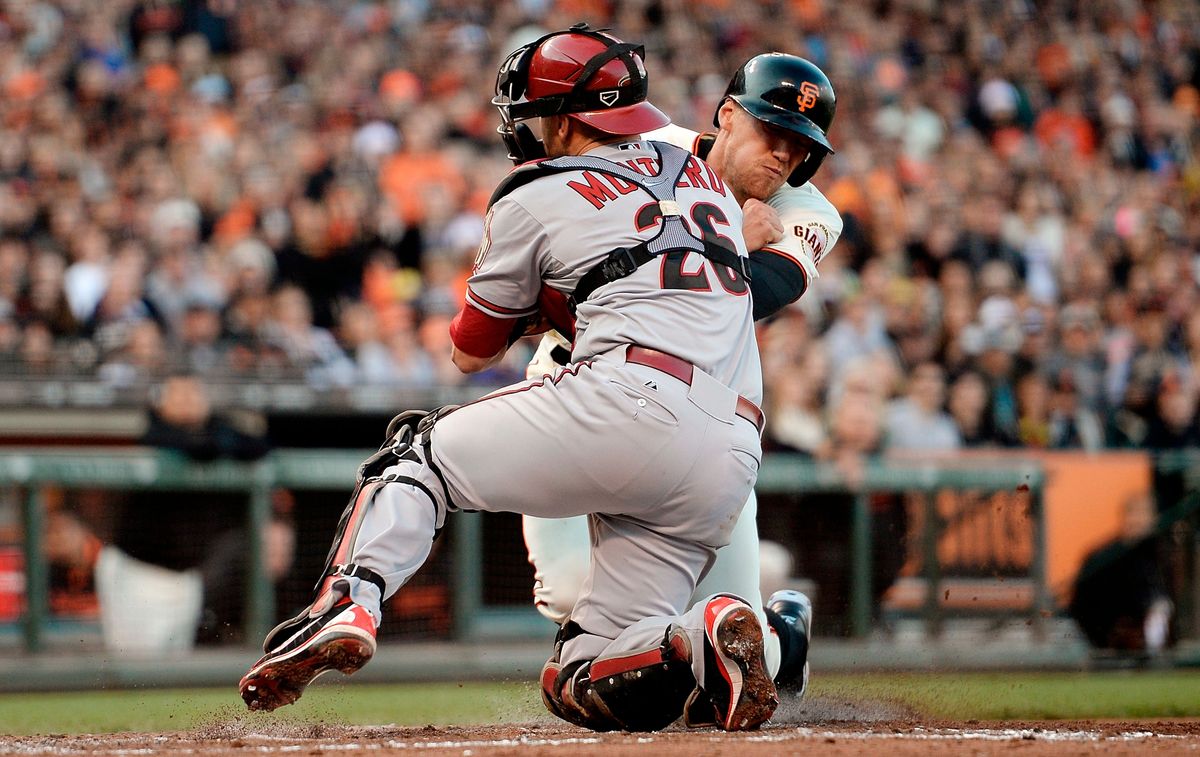
Here is the newly approved (and "experimental" ) Rule 7.13. You need only pay attention to the parts I've bolded.
A runner attempting to score may not deviate from his direct pathway to the plate in order to initiate contact with the catcher (or other player covering home plate). If, in the judgment of the umpire, a runner attempting to score initiates contact with the catcher (or other player covering home plate) in such a manner, the umpire shall declare the runner out (even if the player covering home plate loses possession of the ball). In such circumstances, the umpire shall call the ball dead, and all other baserunners shall return to the last base touched at the time of the collision.
Rule 7.13 comment: The failure by the runner to make an effort to touch the plate, the runner's lowering of the shoulder, or the runner's pushing through with his hands, elbows or arms, would support a determination that the runner deviated from the pathway in order to initiate contact with the catcher in violation of Rule 7.13. If the runner slides into the plate in an appropriate manner, he shall not be adjudged to have violated Rule 7.13. A slide shall be deemed appropriate, in the case of a feet first slide, if the runner's buttocks and legs should hit the ground before contact with the catcher. In the case of a head first slide, a runner shall be deemed to have slid appropriately if his body should hit the ground before contact with the catcher.
Unless the catcher is in possession of the ball, the catcher cannot block the pathway of the runner as he is attempting to score. If, in the judgment of the umpire, the catcher without possession of the ball blocks the pathway of the runner, the umpire shall call or signal the runner safe. Notwithstanding the above, it shall not be considered a violation of this Rule 7.13 if the catcher blocks the pathway of the runner in order to field a throw, and the umpire determines that the catcher could not have fielded the ball without blocking the pathway of the runner and that contact with the runner was unavoidable.
So, the rule doesn't actually ban home-plate collisions. It just bans runners from going out of their way to hit a catcher, and bans catchers from blocking the plate without the ball. This will not affect the 90 percent of collisions that occur when runner and ball get there at the same time.
The enforcement is simple—leave the baseline, you're out. Block the plate empty-handed, he's safe. That seems about right. This rule is about player safety, and discouraging avoidable contact has no drawbacks. ( A.J. Pierznyski hates it, naturally.) Yet the rule doesn't do much to remove "legitimate" home-plate collisions from the game, if that's indeed the goal. But that's why it's "experimental," and will need to be re-approved (and presumably re-worded) next year.



Why the UFC Released Undefeated Bantamweight Farid Basharat
Why the Milwaukee Brewers Are Built to Win the World Series




The Most Shocking WWE Moments Fans Never Saw Coming
- Cowboys vs. Packers Prediction: Best Bet for Sunday Night Football
- UFC Edmonton Best Bets, Predictions and Fight Picks
- Rays vs. Guardians Game 4 Best Player Props Betting Picks
- College Football Week 8 Best Bets: Ohio State, Alabama and More
- Joaquin Buckley Plummets From -300 Favorite to Underdog at UFC Edmonton
- WNBA Finals Picks: Dream, Valkyries and Gabby Williams Best Bets
- UFC Vegas 122: 5 Underdogs Drawing Sharp Money This Weekend