New Study Reveals That CTE May Be Detectable In Living Patients

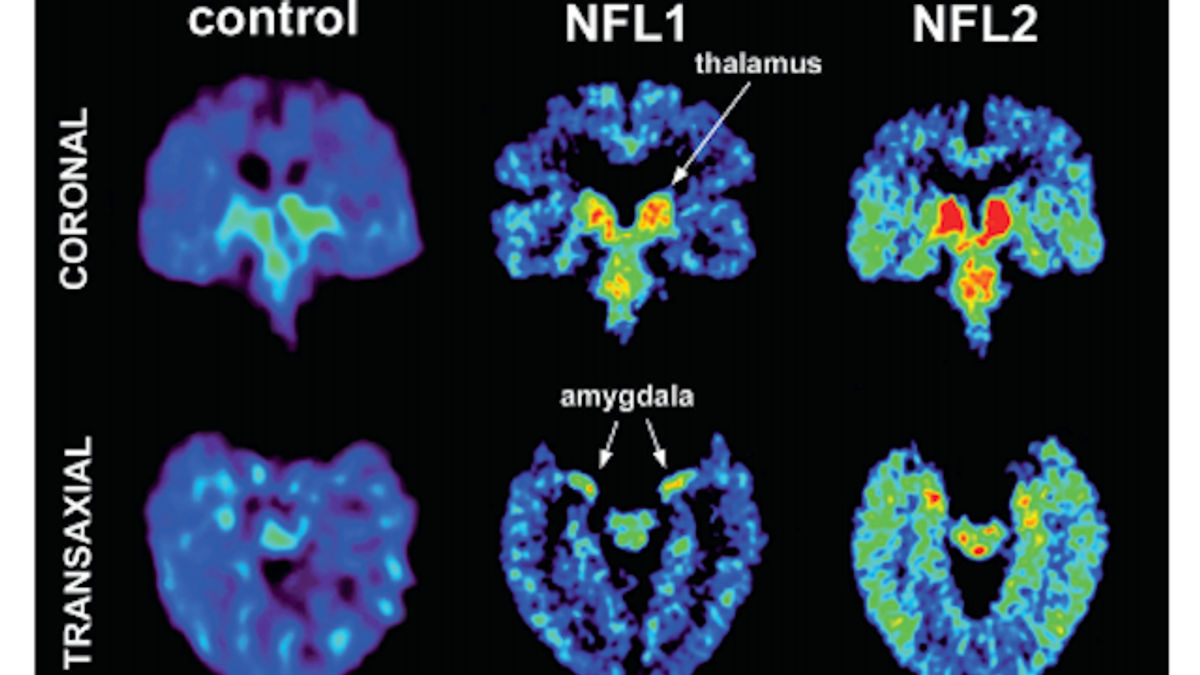
A new study, published by researchers at UCLA in the American Journal of Geriatric Psychiatry, shows evidence that Chronic Traumatic Encephalopathy (CTE) can be detected in living patients via positron emission tomography (PET) scans. CTE is a particular type of brain damage that causes depression, memory loss, and dementia, and has been found to have afflicted a number of former NFL players. It was recently discovered that former NFL linebacker Junior Seau had CTE at the time of his suicide. Until now, CTE could only be detected through post-mortem examinations, making it impossible to predict or manage symptoms.
The UCLA study consisted of an examination of five former NFL players: 59-year-old Fred McNeill, 64-year-old Wayne Clark, and three other unidentified players ages 73, 50, and 45. All five players were given an intravenous injections of a chemical marker that is designed to bind with and illuminate tau protein deposits, a signature of CTE, on a PET scan. All five players were found to have tau buildup in their brains after undergoing a scan.
Because the study was conducted with such a small group of participants, further studies will be necessary to determine whether or not CTE can be consistently identified in living patients.
The entire study can be read below:
On Gizmodo: Study Says It Can Track NFL Brain Injuries with PET Scans
[ NYT]

Marvin Harrison Jr. Trade Mystery Makes Very Little Sense


White Sox vs. Guardians ALDS Game 5 Betting Pick







- College Football Week 6 Bets: Three Picks for Saturday’s Biggest Games
- UFC Fight Night Underdog Pick: Why Kai Kamaka III Is Worth a Bet
- WNBA Playoff Picks: Best Bets for Liberty-Dream and Aces-Valkyries
- Friday College Football Best Bets: Iowa-Washington and BYU-Iowa State
- UFC Vegas 122 Betting Splits: Where the Sharp Money Is Landing This Weekend
- Guardians vs. White Sox Game 4 Bet Picks, Prop Bets
- Buccaneers vs. Cowboys Odds, Prediction and Best Bet for TNF