North And South Korea Want To Co-Host The Olympics, And The IOC Gets To Keep Playing Hero

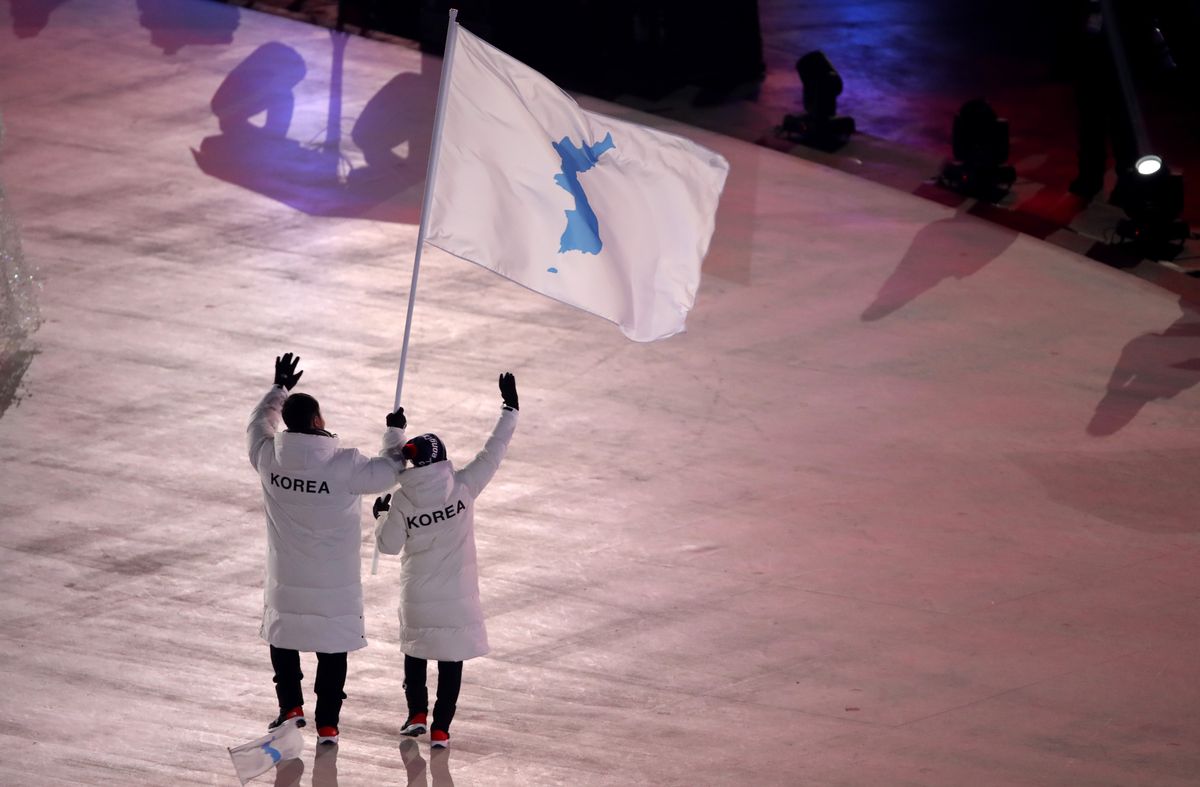 credits: Sean M. Haffey | source: Getty
 In its new year’s letter, one of the key accomplishments the IOC touted was improved relationships on the Korean peninsula, all because in 2018 the North and South Korean delegations marched in the opening ceremonies at the Winter Games together. “With these powerful symbols and gestures in PyeongChang, we have seen how the Olympic Games can open the way to dialogue, how the Olympic values can open the way to a more peaceful future,” Thomas Bach, the president of the IOC, wrote last month.
The climate-change denying head of the International Ski Federation also pointed to the sports’ ability to break the ice, diplomatically speaking. “Sport can also be a door opener. Perhaps we contributed to the opening of North Korea with the unified team in Pyeongchang,” Gian- Franco Kasper said in an interview where he also spoke about his preference for working with dictatorships so he wouldn’t have to be bothered by environmentalists.
It seems that IOC’s and Kasper’s dreams are coming true. Today, the Koreas announced that they will bid to host the Summer Olympics together in 2032, with Seoul hosting again on the South Korean side; the North host city is yet to be determined though it’s probably the capital, Pyongyang, since it’s the only city with sufficiently advanced infrastructure to pull it off.
If the IOC does select this joint bid for the 2032 Olympics, it would dovetail nicely with its already well-documented affinity for working with dictatorships with gross human rights violation.
This bid could prove irresistible to the IOC: The positive PR they’d get from “uniting” the two countries would do a lot to improve the organization’s increasingly poor image, and it doesn’t hurt that one of the bidding countries isn’t a democracy where citizens get to do annoying things like publicly register disapproval. This would fit perfectly with the IOC’s grandiose vision of its role in the world—it’s not merely an international cartel of global one percenters that hosts a city-ruining sports festival every two years; it also promotes world peace!
(Never mind the fact that when Seoul hosted the Summer Olympics in 1988, it didn’t exactly promote peace between the two Koreas. North Korea boycotted the Olympics and the 1986 Asian Games, and they bombed a South Korean airliner in 1987.)
But how would this even work? As noted in the Guardian, a cross-border Games would be a huge challenge to pull off due to the fact that the North is subject to international sanctions because of its refusal to dismantle its nuclear weapons program. In order to host the Olympics, there would have to be some weakening or elimination of those sanctions.
The Olympics is good at symbolism, which is what the 2018 Olympics brought us—North and South playing on the same hockey team, the two Koreas marching into the opening ceremonies under a shared banner. But to pull off a joint North-South Olympic bid, the international community would have to go way beyond symbolism and photo ops. The IOC would have to do the thing that it claims to abhor: get very political.








Brian Flores Is Making Life Miserable for Vikings Opponents

Guardians vs. White Sox Game 4 Bet Picks, Prop Bets
- Friday College Football Best Bets: Iowa-Washington and BYU-Iowa State
- UFC Vegas 122 Betting Splits: Where the Sharp Money Is Landing This Weekend
- Guardians vs. White Sox Game 4 Bet Picks, Prop Bets
- Buccaneers vs. Cowboys Odds, Prediction and Best Bet for TNF
- Milwaukee Brewers vs. San Diego Padres Game 4 Betting Picks
- WNBA Playoff Bet Picks: Aces, Valkyries, Liberty and Dream Predictions
- MLB Playoff Picks for Wednesday: HR Props, ML Picks and More