Soccer legend Thierry Henry quits social media over racism, toxicity

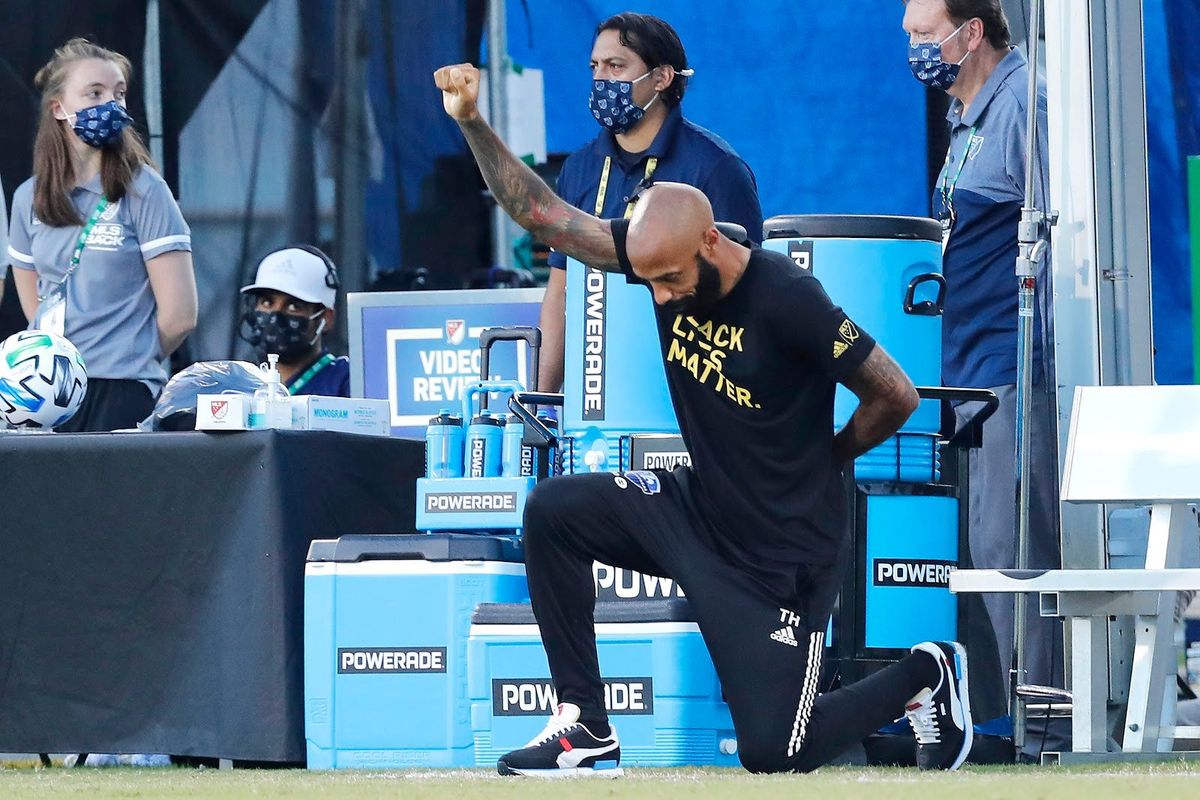 He’s out. source: Getty Images
 Thierry Henry is leaving social media forever.
That’s not exactly what the French soccer legend and recently departed coach of CF Montreal in Major League Soccer said on Friday, but he might as well have.
In a statement posted to his Twitter account, following the lead of Twitter-quitting Chrissy Teigen, Henry wrote, “From tomorrow morning I will be removing myself from social media until the people in power are able to regulate their platforms with the same vigour and ferocity that they currently do when you infringe copyright. The sheer volume of racism, bullying and resulting mental torture to individuals is too toxic to ignore. There HAS to be some accountability. It is far too easy to create an account, use it to bully and harass without consequence and still remain anonymous. Until this changes, I will be disabling my accounts across all social platforms. I’m hoping this happens soon.”
It’s a nice idea about the inherent good in humanity that people feel a need to hide behind a fake username in order to spew their most disgusting venom, but Henry’s view that the problem of online hate is a result of anonymity is misguided. A 2016 study by Swiss researchers showed that not only is there little difference between the aggressive conduct of anonymous and named accounts, but that in fact that non-anonymous users are more likely to participate in the worst online behavior.
That’s not to say Henry doesn’t have a point: social media companies can and should do a much better job of enforcing hate-speech policies across their platforms. The example often given of the ability to do this is Twitter’s blocking of Nazi content in Germany, as opposed to the free flow of Nazi content in America. But even there, Nazi content gets posted and has to be removed as a result of user reports.
The platforms certainly can do better. Belgian soccer player Christian Kabasele told CNN an illuminating story about having his own Instagram post of a picture of himself with a monkey — his own effort to strike back at online racism — being taken down, while the racist posts targeting him, which he reported, were allowed to remain.
“When you write something on Instagram, or on Twitter, you have time to think about what you are doing and it’s worse than something happening in a stadium,” Kabasele said. “It’s quite incredible that somebody can think about doing this. Like this player did this so I will go on my phone and send him a bananas or monkey emoji. It’s quite crazy.”
It is quite crazy, and regrettably, that’s exactly how far too many people really are. In America alone, 74 million people voted for Donald Trump last November, topping his vote total from four years earlier, even after a presidential term marked by openly racist behavior and courting of racists. The rest of the world isn’t as different from America as it might like to believe it is.
Social media reflects who we are, and the ugly picture that comes back isn’t the fault of the platforms. As much as the online companies can do to combat racist content on their sites, it’s nothing more than a symptom of the disease of a society that has far too many racists in it.

Guardians vs. Rays Prediction: Picks, Odds for ALCS Game 1





Brendan Allen Has Earned the Right to Fight for UFC Gold

Bills vs. Rams Odds, Prediction and Best Bet for MNF
Three Longshot NFL Futures Worth Betting in Week 5
- White Sox vs. Guardians ALDS Game 5 Betting Pick
- UFC Vegas 122 Betting Odds: The Biggest Line Moves Before Allen vs. Duncan
- UFC Vegas 122 Picks and Predictions: Three Bets for Allen vs. Duncan
- College Football Week 6 Bets: Three Picks for Saturday’s Biggest Games
- UFC Fight Night Underdog Pick: Why Kai Kamaka III Is Worth a Bet
- WNBA Playoff Picks: Best Bets for Liberty-Dream and Aces-Valkyries
- Friday College Football Best Bets: Iowa-Washington and BYU-Iowa State