At trial, NASCAR prez says CEO France was against new revenue model

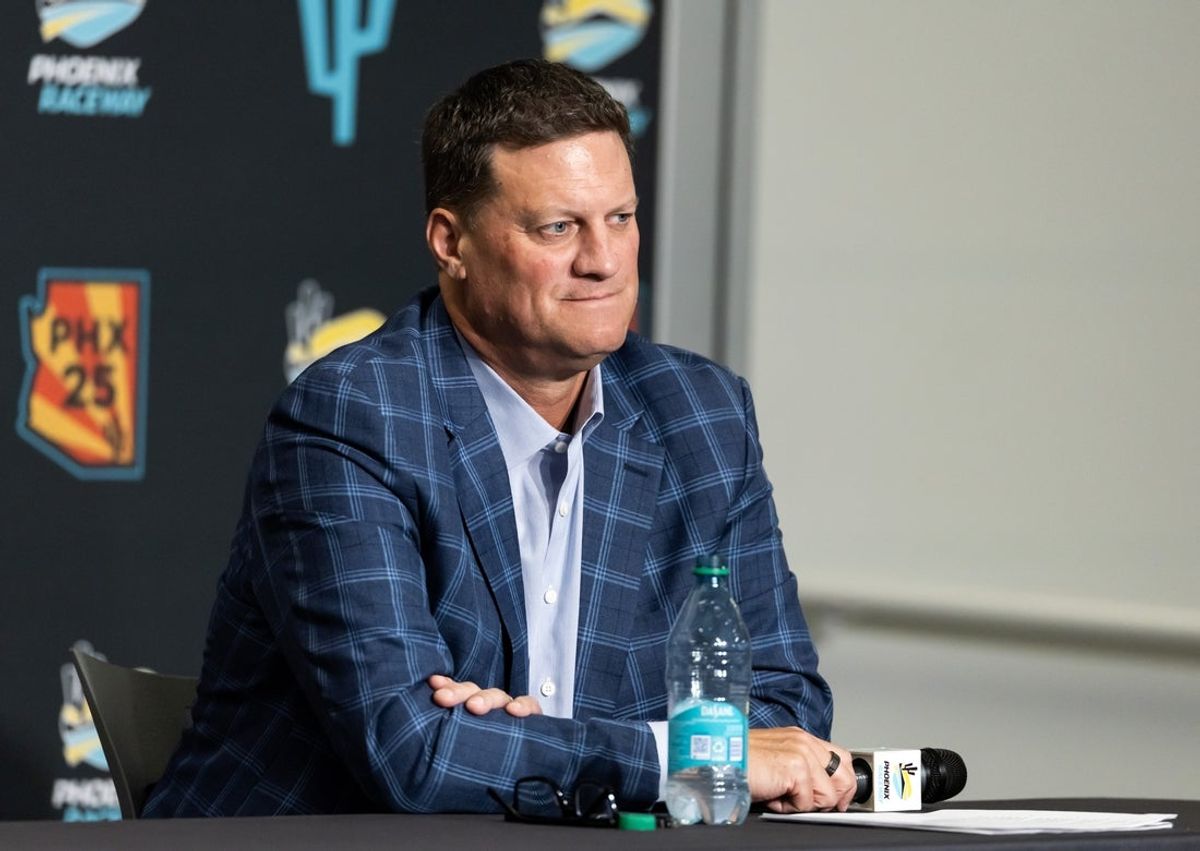 Oct 31, 2025; Avondale, Arizona, USA; NASCAR president Steve O'Donnell speaks to the media during the state of the sport press conference in the media center at Phoenix Raceway. Mandatory Credit: Mark J. Rebilas-Imagn Images
 NASCAR president Steve O'Donnell testified on the fourth day of the NASCAR antitrust trial Thursday in Charlotte and admitted the France family was against a proposed revenue model that would have improved racing teams' viability.
The France family have owned and operated NASCAR since Bill France Sr. founded the league in 1948. Jim France currently serves as the CEO and chairman.
O'Donnell was NASCAR's COO in 2022 when he was weighing a number of options to help car owners following a meeting with racing teams described as "contentious." That same year saw a number of star golfers leave the PGA Tour behind for more money with the upstart LIV Golf, and O'Donnell feared a similar defection in stock-car racing.
Among the people who spoke to O'Donnell at that meeting was Curtis Polk, a co-owner of 23XI Racing, one of two teams that brought this antitrust lawsuit against NASCAR amid a contentious standoff about a take-it-or-leave-it charter agreement. Michael Jordan and Denny Hamlin also co-own 23XI, and Front Row Motorsports joined them in declining the charter for the 2025 season while the other 13 Cup teams opted in.
According to O'Connell's testimony, Polk brought up specific goals in that meeting: "maximized television revenue, the creation of a more competitive landscape, a new cost model and a potential cost cap."
Ben Kennedy, another NASCAR executive -- and member of the France family -- also indicated in that meeting that the Frances would be open to a new revenue model.
"As it turned out, Jim France was not open to a new model, right 1/2" plaintiffs' attorney Jeffrey Kessler asked O'Donnell in court, to which the NASCAR president replied, "No."
Kessler also aimed to build the case that NASCAR was not only a monopoly but a "dictatorship." He asked O'Donnell about a text he sent to other NASCAR executives about one version of the charter agreement, writing that it would send NASCAR back to "1996, f-- the teams, dictatorship, motorsport, redneck, southern, tiny sport."
The attorney asked O'Donnell if he was referring to France as a dictator-like figure, to which O'Donnell said, "It could be anyone."
Kessler also focused on the exclusivity clauses that prevent other stock-car series, including one named SRX, from racing at venues tied to NASCAR.
O'Donnell said NASCAR blocked the now-defunct SRX from racing at a certain track because they were in the middle of negotiating a new media rights deal and wanted to protect their value and revenue for teams, although texts entered into evidence showed O'Donnell saw SRX racing as a copy of NASCAR and implored "legal to take a shot at this."
The plaintiffs called O'Donnell as an adverse witness after the conclusion of Front Row owner Bob Jenkins' testimony earlier in the day. NASCAR's attorneys will be allowed to cross-examine O'Donnell next.
The trial began Monday and was expected to last about two weeks, though Judge Kenneth D. Bell had to urge both sides Thursday to pick up the pace with their arguments.
--Field Level Media
Cavaliers Emerging as Heavy Favorites for LeBron James
MLB Best Bets Today: Top Picks for Monday, July 6
The 25 Greatest Pro Wrestling Moments of the Last 25 Years
- MLB Picks Today: Best Bets for Padres vs. Dodgers, Marlins vs. Athletics, Blue Jays vs. Mariners
- Fourth of July Best MLB Betting Picks and Predictions
- MLB Best Bets: Friday Picks for Cardinals-Cubs and Red Sox-Angels
- WNBA Picks Today: Best Bets for Sky vs. Aces and Lynx vs. Liberty
- MLB Best Bets Today: Reds vs Brewers, White Sox vs Guardians, Rangers vs Tigers Picks
- World Cup Best Bets Today: Top Picks for France and Mexico
- MLB Picks Today: Best Bets for Nationals vs. Red Sox and Dodgers vs. A's