Damn It Feels Profound To Be A Gangster: Killing Them Softly, Reviewed

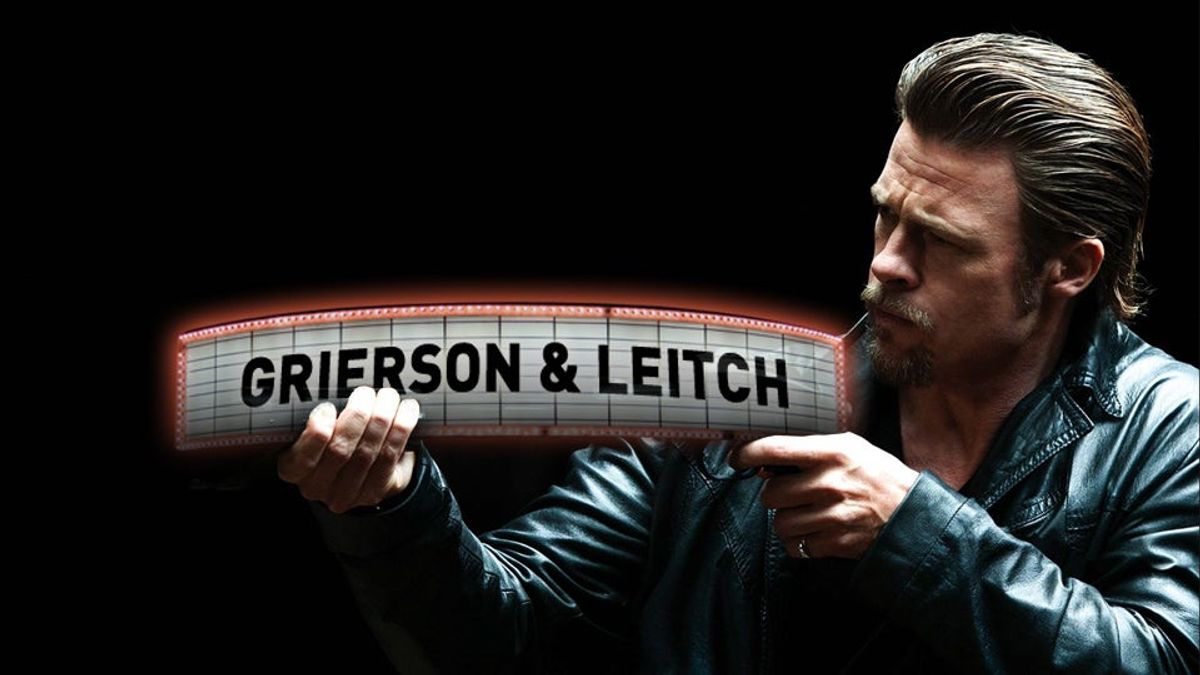
1. Killing Them Softly is a polemic disguised as a thriller, a series of scenes featuring various tiers of low-level gangsters shooting, talking, drinking, and complaining, unaware, somewhat blissfully, that they're all metaphors. (It's hard enough to be a gangster without having to walk around symbolic all the time.) Killing Them Softly is written and directed by Andrew Dominik, who, as in the better-but-still-so-philosophically-heavy The Assassination of Jesse James by the Coward Robert Ford, can't sit back and tell a story without making sure every moment is dripping, in sometimes stultifyingly obvious fashions, with resonance about The Way We Live Today. Jesse James was about celebrity culture; here, Dominik wants to tackle the world economy. That's fine and ambitious enough. It'd just be preferable not to have a film populated with people who spend half their time talking tough movie-gangster-guy language, and the other half spouting college thesis statements.
2. The plot is almost beside the point, which is not exactly the most riveting way to make a gangster movie. Two dumb poor kids rob a mob-protected card game, and madness ensues, from the game's host (Ray Liotta) who had robbed a game before and is framed for robbing this one, to the middle-management mob consultant (Richard Jenkins) just trying to deal with this mess, to the cold-hearted assassin (Brad Pitt, who doesn't show up until about half an hour into the movie) sent in to take care of the failed hit man losing his life to drink (James Gandolfini) and also to, you know, kill everybody left standing. The story never really gets moving in any particular direction, and the ultimate result is so preordained—and is so apparent to everyone involved—that you'll wonder why anyone even bothers going through the motions.
3. But this isn't about gangsters: It's about America. In case you were wondering whether or not Dominik is subtle about his theme, he sets his action during the financial crisis of 2008 and makes certain that all his characters' conversations take place while some important speech from Barack Obama or George W. Bush or Henry Paulson is audible in the background. (In one particularly execrable scene, characters actually talk back to an Obama speech about hope and change, sort of the cinematic equivalent of what goes on on Sarah Palin's Facebook wall.) If you're wondering Dominik's view of American politics and the American economy, don't worry: He has two different characters stare wistfully off-camera saying the exact words, "We're all on our own, aren't we?" Each character represents a supposed failure of the American Dream, with Brad Pitt's assassin as the only honest, no-bullshit man left standing. In case you were curious what he thought about all this, he'll tell you: "What's happening to this country, man?"
4. I have no particular issues with what Dominik is trying to say: As the same sort of armchair amateur full-of-shit social scientist as Dominik, hey, all sounds right to me. But he's so blatant and clumsy about it—don't you get it? We're all just pawns, man!—that you wish he maybe could have made a movie about politics and its effect on normal people that wasn't literally narrated by C-SPAN. It doesn't help that none of these gangsters are interesting in and of themselves; they're all so weighted down by Import that the movie never has a chance to come to life. It's so anchored in Dominik's grim worldview that there are never any stakes. Gandolfini gives a committed performance as a disintegrating killer who realizes just how pathetic his life has been, but Dominik gives us little reason to care; I spent most of his scenes wondering if he was supposed to represent a big financial bank in foreclosure, or the American taxpayer, or maybe George W. Bush.
5. This is all a shame, because Dominik's clearly a skilled filmmaker. His action scenes have bite; the man knows how to film a punch that makes it hurt. Still, his technique is mostly just to film a regular shootout but in super slo-mo, giving it faux-gravitas, fake poetry. This was done better, and even made more sense in context, in freaking Dredd 3-D.
Even his technique is double-underlined: If you're going to show a man doing heroin, you probably need to come up with a more inventive song on the soundtrack than "Heroin." (That scene is well shot too, but serves no purpose other than to show off that Dominik can shoot a scene well.) Dominik thinks he can get away with all this because he's doing Something Important, because he's showing the black heart at the center of the American myth, the awful truth that the world sucks and everyone is cruel and out for themselves. And hey, maybe it's that easy. Or maybe Dominik is using cynicism to stand in for insight. He wears his nihilism as a badge, but that's not what it is at all: It's a crutch, and an awfully flimsy one.
Grade: C-.
Grierson & Leitch is a regular column about the movies. Follow us on Twitter, @griersonleitch.
Related
The Biggest Disappointments of the MLB Playoffs So Far
Three Non-Power College Football Playoff Contenders
Why Doesn’t the NFL Have Full-Time Referees?
Milwaukee Brewers vs. San Diego Padres Game 4 Betting Picks

MLB Playoff Picks for Wednesday: HR Props, ML Picks and More
5 Fights the UFC Should Make After UFC 332
Bijan Robinson Keeps Proving He’s Built for Primetime
TV Networks Have Killed College Football
- Milwaukee Brewers vs. San Diego Padres Game 3 Bet Picks and Predictions
- Dana White’s Contender Series Week 9 Predictions: Picks for Every Fight
- Two MLB Playoff Bets Stand Out on Monday
- Yankees vs. Rays Prediction: Best Bets for ALDS Game 2
- Falcons vs. Saints Prediction: Best Bet for Monday Night Football
- MLB Playoff Picks: Padres vs. Brewers and Braves vs. Dodgers
- Lions vs. Panthers Prediction: Best Bet for Sunday Night Football