Finishing The Hat

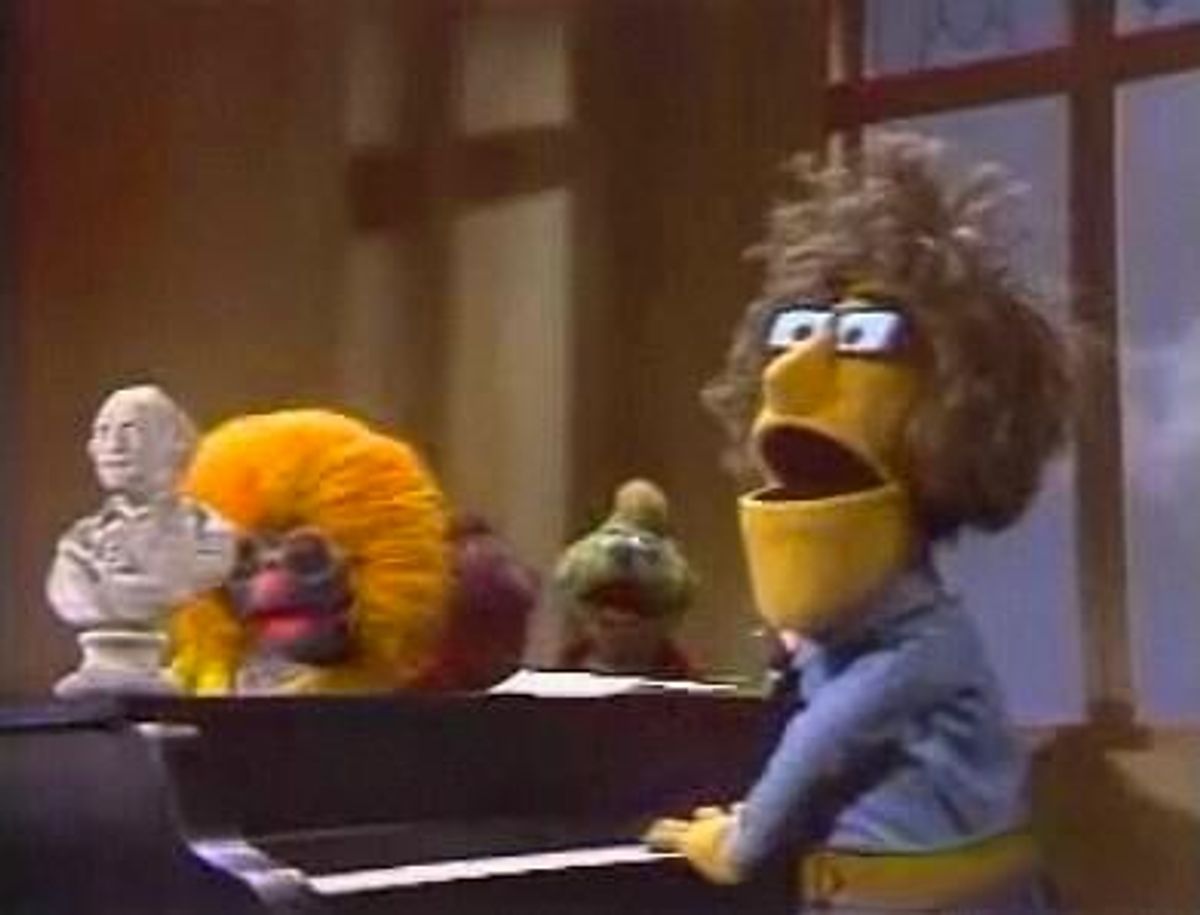
My father didn't own any rock records. He had original cast recordings of Broadway shows. That was his thing, that's what we heard around the house. My twin sister Sam really took to musicals. I liked some but never caught the bug. Eventually, they drove me nuts.
I appreciate and admire the art form but I'm not much of a fan. Still, I read Paul Simon's review of Stephen Sondheim's memoir (the first of two volumes), "Finishing the Hat," with interest because I'm a nerd for guys talking shop.
This caught my eye:
"Finishing the Hat" — a fascinating compilation of lyrics, commentary and anecdotes, covering the years 1954 to 1981 — is essentially about process, the process of writing songs for theater. Performing acts of literary self-criticism can be a tricky business, akin to being one's own dentist, but Sondheim's analysis of his songs and those of others is both stinging and insightful. Nevertheless, he successfully avoids the traps of a self-inflated ego.
…Sondheim quotes the composer-lyricist Craig Carnelia: "True rhyming is a necessity in the theater, as a guide for the ear to know what it has just heard." I have a similar thought regarding attention span and a listener's need for time to digest a complicated line or visualize an unusual image. I try to leave a space after a difficult line — either silence or a lyrical cliché that gives the ear a chance to "catch up" with the song before the next thought arrives and the listener is lost.
Love this comment. It's like knowing how to pace a laugh in a movie, how to let it breathe. Then, there's this:
…I saw "West Side Story" when I was 16 years old, and I have two vivid memories of the show. One, I didn't believe for a minute that the dancers were anything like the teenage hoods I knew from the street corner, and secondly, I was completely overwhelmed by the beauty of the song "Maria." It was a perfect love song. Sondheim was less enamored with the lyric he wrote for Bernstein. He describes it as having a kind of "overall wetness" — "a wetness, I regret to say, which persists throughout all the romantic lyrics in the show." Sondheim's rule, taught to him by his mentor, Oscar Hammerstein II, is that the book and composer are better served by lyrics that are "plainer and flatter." It is the music that is meant to lift words to the level of poetry.
Sondheim's regret about "Maria" reminded me of my own reluctance to add a third verse to "Bridge Over Troubled Water." I thought of the song as a simple two-verse hymn, but our producer argued that the song wanted to be bigger and more dramatic. I reluctantly agreed and wrote the "Sail on silvergirl" verse there in the recording studio. I never felt it truly belonged. Audiences disagreed with both Sondheim and me. "Maria" is beloved, and "Sail on silvergirl" is the well-known and highly anticipated third verse of "Bridge." Sometimes it's good to be "wet."

MLB Best Bets Today: 3 Picks for Wednesday, September 23rd


The Best Heisman Long Shots to Watch Before Week 4

Paulo Costa’s UFC Future Is More Uncertain Than Ever


The Guardians Are in the Drivers Seat in the AL Central
- Chicago White Sox vs. Kansas City Royals Tuesday Best Bets
- WNBA Best Bets for Tuesday: Lynx, Sparks Highlight Two-Play Card
- WNBA Monday Best Bets: Dream, Wings and Mercury
- Blue Jays vs. Orioles Best Bets: MLB Monday Betting Preview
- Giants vs. Rams Week 2 Monday Night Football Top Betting Pick
- 3 MLB Best Bets for Sunday’s Regular-Season Stretch Run
- Saturday MLB Picks: Two AL Playoff Contenders Worth Backing