Former Ohio State QB's lawsuit over lost NIL opportunities dismissed

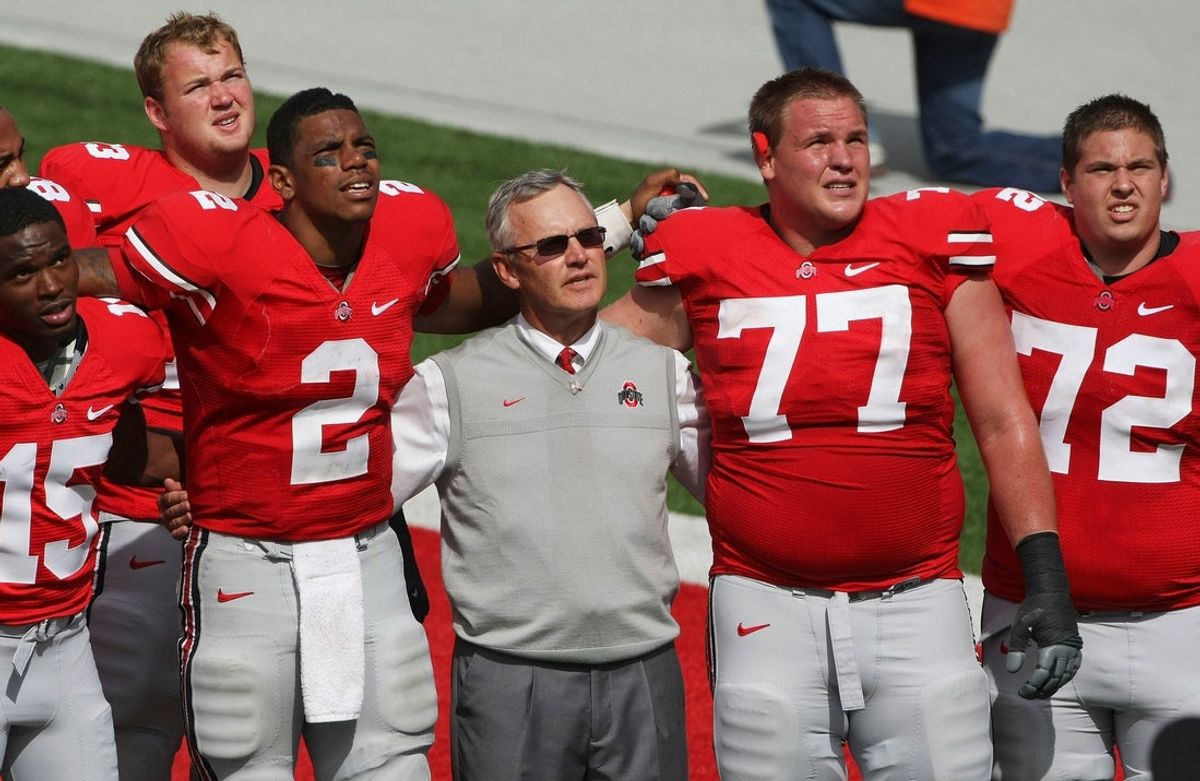 Ohio State football coach Jim Tressel, Ohio State quarterback Terrelle Pryor (2), Ohio State offensive linesman Connor Smith (77) and Ohio State offensive linesman Scott Sika (72) sing Carmen Ohio after beating Ohio University during the second half of their NCAA football game at Ohio Stadium on September 18, 2010. (The Columbus Dispatch photo by Neal C. Lauron)
 A lawsuit seeking compensation from the NCAA for thousands of former Ohio State athletes was dismissed.
The class action suit against the NCAA, Ohio State, the Big Ten and others brought by former Ohio State quarterback Terrelle Pryor was not done in a timely manner, according to Chief U.S. District Judge Sarah Morrison.
Pryor's suit, filed in October, alleged that by not allowing student athletes to profit from the commercial use of their names, images and likenesses, the NCAA and other defendants violated antitrust law.
Pryor argued in the lawsuit that he "would have been one of the highest paid collegiate athletes in the country" if NIL had been legal while he was playing at Ohio State. He also claimed the NCAA and the other defendants continue to make revenue from his name, image and likeness.
Under U.S. antitrust laws, plaintiffs generally have a four-year window to bring a claim. Pryor was the quarterback at Ohio State from 2008-10.
"Mr. Pryor knew the material facts underlying his antitrust claims long before the four-year limitations period had run," Morrison said in her ruling.
Additionally, Morrison ruled that as a public school and arm of the state, Ohio State was immune from the lawsuit.
Similar lawsuits were filed by former Southern California running back Reggie Bush, several former Michigan football players, and basketball players from Kansas and North Carolina State.
Since 2021, and under pressure from states and the courts, the NCAA has allowed student-athletes to profit from their name, image and likeness (NIL). Student-athletes can now be compensated for merely showing up to play and can earn a profit for spokesperson gigs, clothing and autograph sales and more.
Additionally, a legal ruling on June 6 allowed colleges to directly pay players via revenue sharing for the first time. The settlement of House v. NCAA marked the end of the NCAA's previous model of amateurism, in which athletes were not allowed to earn money while in school. Schools can now share up to $20.5 million of their revenues with their athletes.
--Field Level Media
Related
The Biggest Disappointments of the MLB Playoffs So Far
Three Non-Power College Football Playoff Contenders
Why Doesn’t the NFL Have Full-Time Referees?
Milwaukee Brewers vs. San Diego Padres Game 4 Betting Picks
MLB Playoff Picks for Wednesday: HR Props, ML Picks and More
5 Fights the UFC Should Make After UFC 332
Bijan Robinson Keeps Proving He’s Built for Primetime
TV Networks Have Killed College Football
- Milwaukee Brewers vs. San Diego Padres Game 3 Bet Picks and Predictions
- Dana White’s Contender Series Week 9 Predictions: Picks for Every Fight
- Two MLB Playoff Bets Stand Out on Monday
- Yankees vs. Rays Prediction: Best Bets for ALDS Game 2
- Falcons vs. Saints Prediction: Best Bet for Monday Night Football
- MLB Playoff Picks: Padres vs. Brewers and Braves vs. Dodgers
- Lions vs. Panthers Prediction: Best Bet for Sunday Night Football