Here's The Obstruction Rule That Won Game 3 For The Cardinals

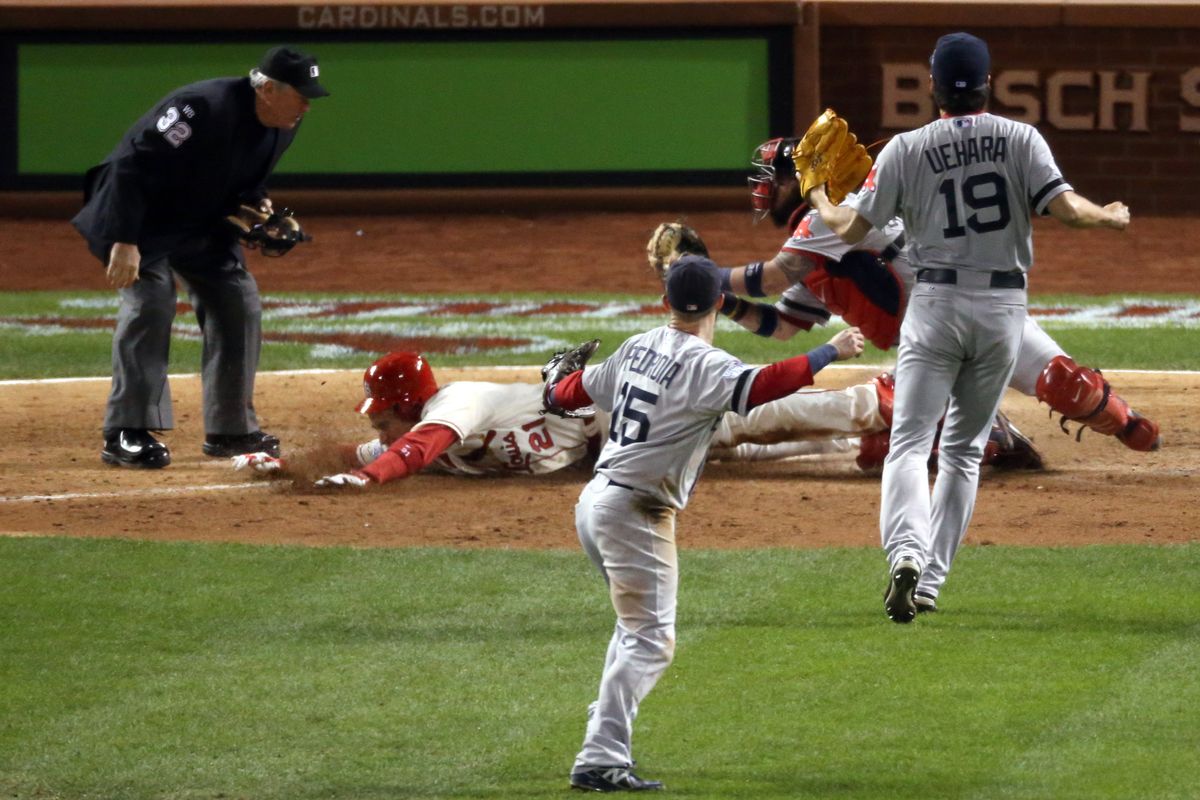
The Cardinals took Game 3 of the World Series on a walkoff obstruction call after Allen Craig tripped over Will Middlebrooks heading to home plate. The umpires all stood by Jim Joyce's call afterward, but what does the rulebook say?
Here's how obstruction is defined:
OBSTRUCTION is the act of a fielder who, while not in possession of the ball and not in the act of fielding the ball, impedes the progress of any runner.Rule 2.00 (Obstruction) Comment: If a fielder is about to receive a thrown ball and if the ball is in flight directly toward and near enough to the fielder so he must occupy his position to receive the ball he may be considered “in the act of fielding a ball.” It is entirely up to the judgment of the umpire as to whether a fielder is in the act of fielding a ball. After a fielder has made an attempt to field a ball and missed, he can no longer be in the “act of fielding” the ball. For example: If an infielder dives at a ground ball and the ball passes him and he continues to lie on the ground and delays the progress of the runner, he very likely has obstructed the runner.
So, according to that comment, Middlebrooks cannot stay on the ground after attempting to catch a throw, or he has obstructed. Got it. Now, here's Rule 7.09 (emphasis mine).
Rule 7.09(i) Comment: When a catcher and batter-runner going to first base have contact when the catcher is fielding the ball, there is generally no violation and nothing should be called. “Obstruction” by a fielder attempting to field a ball should be called only in very flagrant and violent cases because the rules give him the right of way, but of course such “right of way” is not a license to, for example, intentionally trip a runner even though fielding the ball. If the catcher is fielding the ball and the first baseman or pitcher obstructs a runner going to first base “obstruction” shall be called and the base runner awarded first base.
The context is different—Middlebrooks was no longer "attempting" to field the ball—but note the forgiving language, which gives the umps considerable discretion in making an obstruction call. It's not clear what Middlebrooks should've done, in any case. If he lies prone on the dirt, he might be obstructing, according to the rulebook. If he gets up, he might be obstructing, according to the rulebook. In any case, strict proceduralism wins the day, and so do the Cardinals.
Photo: Rob Carr/Getty Images
Guardians vs. White Sox Game 4 Bet Picks, Prop Bets

The Yankees’ 17-Year Title Drought Is on Hal Steinbrenner

Luke Fickell Has Wisconsin Football Rolling Again
Buccaneers vs. Cowboys Odds, Prediction and Best Bet for TNF
The Biggest Disappointments of the MLB Playoffs So Far
Three Non-Power College Football Playoff Contenders
Why Doesn’t the NFL Have Full-Time Referees?
- WNBA Playoff Bet Picks: Aces, Valkyries, Liberty and Dream Predictions
- MLB Playoff Picks for Wednesday: HR Props, ML Picks and More
- Milwaukee Brewers vs. San Diego Padres Game 3 Bet Picks and Predictions
- Dana White’s Contender Series Week 9 Predictions: Picks for Every Fight
- Two MLB Playoff Bets Stand Out on Monday
- Yankees vs. Rays Prediction: Best Bets for ALDS Game 2
- Falcons vs. Saints Prediction: Best Bet for Monday Night Football