How Muhammad Ali Conquered Fear And Changed the World

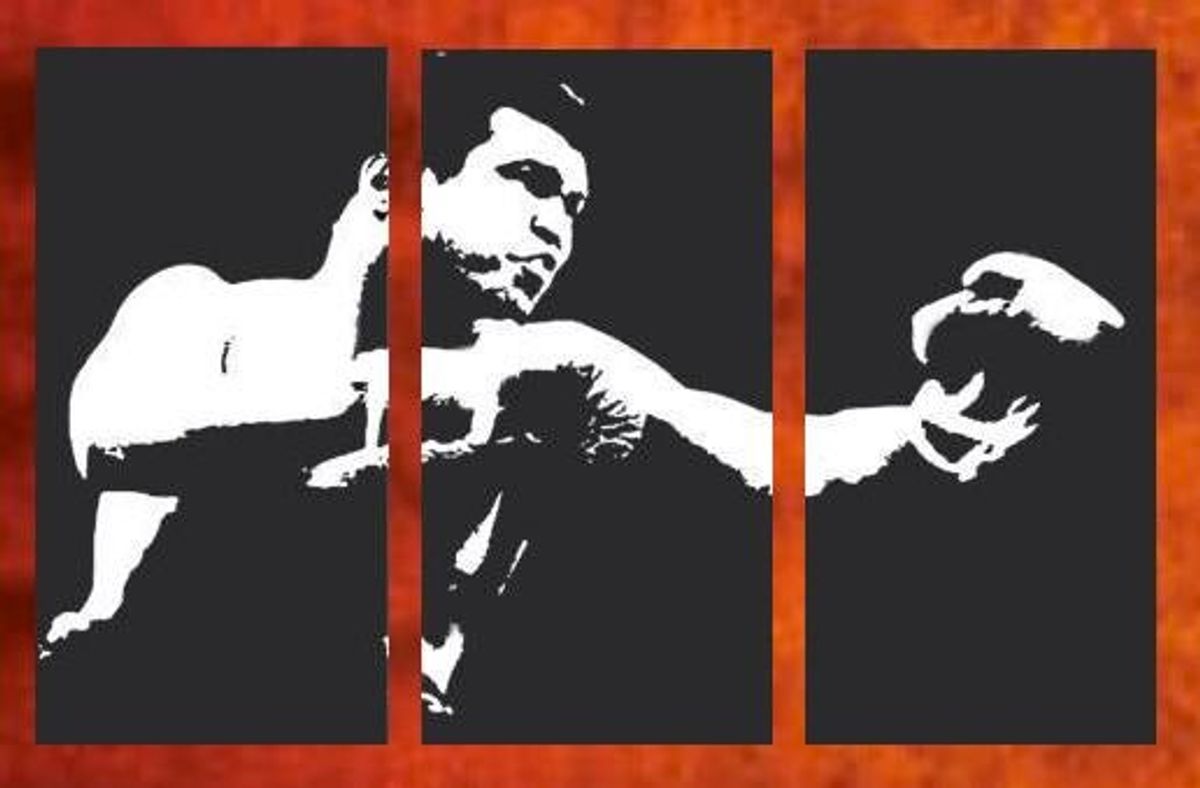
More Ali. This one's from Mikal Gilmore, :
He was, in the beginning, the end of the way of the old. Nobody had moved in a ring like Muhammad Ali – a motile bronze sculpture. "I'm something new," he said. "The game's alive." In 1964, when he still had another name, he was suddenly the world heavyweight champion. Then, just as suddenly, as a man with a new and strange name, he turned that prominence into a political stand, as he aligned himself with the most feared black nationalist movement of the time and went on to resist service in the Vietnam War. "I had to prove you could be a new kind of black man," he told author David Remnick much later. "I had to show that to the world." But part of the world – in particular, America – wasn't ready to accept that example. "I pity Clay and abhor what he represents," wrote one famous sports reporter, Jimmy Cannon. In 1967 the boxing establishment stripped Ali of all claims to his title, and the U.S. sought to imprison him.
But as Ali himself said, "Things changed. Things changed. And I helped that, too." In 1996 he appeared at the Olympic Games in Atlanta, as the world's most universally acknowledged hero, his disrepute long before faded into dust. He had been a 1960 Olympic gold medal winner but claimed he'd discarded the prize in disgust over racism. The story was a parable, but the medal was gone just the same. During a basketball intermission in Atlanta, the president of the International Olympic Committee presented him with a replacement for the lost prize, on a ribbon that draped from his neck. Ali studied the trophy for a moment, smiled, and lifted it to his lips with his right hand – his left hand trembling steadily – and kissed it. He said no words for the occasion. Muhammad Ali no longer spoke in public – he had been too ravaged by the parkinsonism that was a result of his many years in the boxing ring.
Critics, fighters, journalists, and government and boxing authorities had once tried to silence Ali, to avert the changes he was helping bring about. He fought against those efforts, so hard that it contributed to damaging the physical ability that had made him proud and fearsome in the first place. It was a terrible thing to see those effects, but Ali allowed only himself to set his bounds or to undo them. Former heavyweight champion George Foreman, who once famously tried to shatter those bounds, later came to recognize what impelled Ali. "He found something to fight for," said Foreman, "other than money and championship belts. And when that person finds something like that, you can't hardly beat them."
[Painting by Hodgy]
Why the Milwaukee Brewers Are Built to Win the World Series


The Most Shocking WWE Moments Fans Never Saw Coming


- Cowboys vs. Packers Prediction: Best Bet for Sunday Night Football
- UFC Edmonton Best Bets, Predictions and Fight Picks
- Rays vs. Guardians Game 4 Best Player Props Betting Picks
- College Football Week 8 Best Bets: Ohio State, Alabama and More
- Joaquin Buckley Plummets From -300 Favorite to Underdog at UFC Edmonton
- WNBA Finals Picks: Dream, Valkyries and Gabby Williams Best Bets
- UFC Vegas 122: 5 Underdogs Drawing Sharp Money This Weekend