It's What You Do With The Gift That Counts

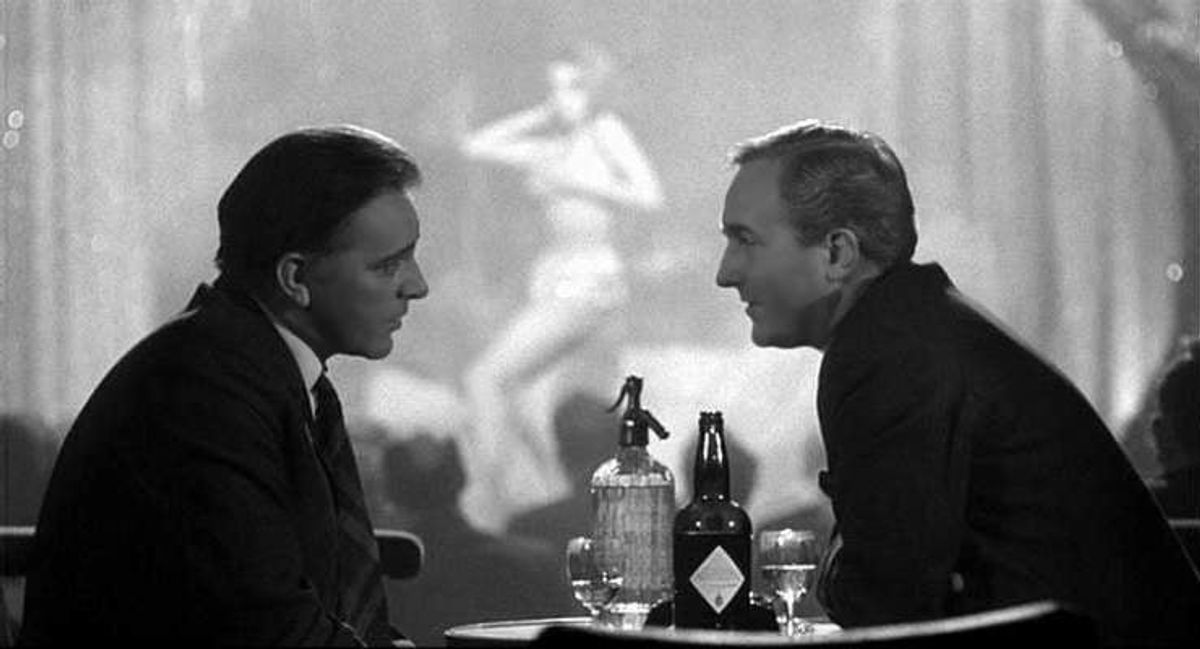
There was a good story by John Le Carre in the earlier this year (subscription required) about the making of his novel The Spy Who Came in From the Cold. The piece centered on the tense relationship between the film’s director, Martin Ritt, a left-wing Jew who’d been blacklisted, and its star, Richard Burton, the larger-than-life Welshman.
My favorite part:
In one of the few conversations of substance that I had with Burton during our short spree together, he almost boasted of how much he despised the showman in himself; how he wished he had “done a Paul Scofield,” by which he meant eschew the big-screen heroics and the big-screen money and acept only acting parts of real artistic substance. And Ritt would have agree with him wholeheartedly.
But that didn’t let Burton off the hook. To the eye of the puritanical, committed, connubial leftist and activist, Burton came too close to everything Ritt instinctively condemned. In a 1986 interview, he has a line that says it all: “I don’t have a lot of respect for talent. Talent is genetic. It’s a gift. It’s what you do with the gift that counts.” It was bad enough to put profit before art, or sex before family, or flaunt your wealth and your woman, or ostentatiously soak yourself in liquor, or strut that world like a god while the masses cry out for justice. But to waste your talent was a sin against gods and men. And the greater the talent–and Burton’s talents were legion and extraordinary–the greater, in Ritt’s view, the sin.
Love Ritt’s take on talent. But Le Carre doesn’t think Burton was a wasted talent. He concludes the article:
Richard Burton was a literate, serious artist, a self-educated polymath with appetites and flaws that in one way or another we all share. If he was the prisoner of his own weaknesses, the dah of rectifying Welsh puritanism in him was not a hundred miles from Ritt’s. He was irreverent, mischievous, generous-hearted but necessarily manipulative. For the very celebrated, being manipulative goes with the territory. I never knew him in his quieter hours, but I wish I had. He was a superb Alex Leamas, and in a different year his performance might have earned him an Oscar, the prize that eluded him all his life. The film was grim and black-and-white. That wasn’t what we we wearing in 1965.
If either the director of his actor had been less, perhaps the film also would have been less. I suppose that, at the time, I felt more protective of the podgy, stalwart, and embittered Ritt than of the flamboyant and unpredictable Burton. A director carries the whole burden of the film on his back, and that includes the idiosyncrasies of his star. Sometimes I had the feeling that Burton was going out of his way to belittle Ritt, but in the end I guess they were pretty evenly matched. And Ritt surely had the last word. He was a brilliant and impassioned director whose righteous anger could never be stilled.
Is Any College Football Team Actually Good This Season?

Five Fights the UFC Needs to Make After UFC 333
Cowboys vs. Eagles Prediction: NFL Week 7 Best Bet and Odds




Ole Miss' CFP Hopes Take a Hit After Loss to Texas

- Seahawks vs. Chiefs Betting Pick: SNF Best Bets
- WNBA Finals Game 4 Picks: Back Atlanta Dream, Angel Reese Rebounds
- Rays vs. Brewers Prediction: Why Tampa Bay Can Steal Game 2 on the Road
- UFC 333 Betting Lines Are Tightening Across a Wide-Open Fight Card
- UFC 333 Betting Splits: Where the Sharp Money Is Landing This Weekend
- NBA Best Bets Today: Pacers, Grizzlies and Trail Blazers Picks
- College Football Week 8 Best Betting Picks, Predictions