MLB Confidential, Part 3: Texas Rangers

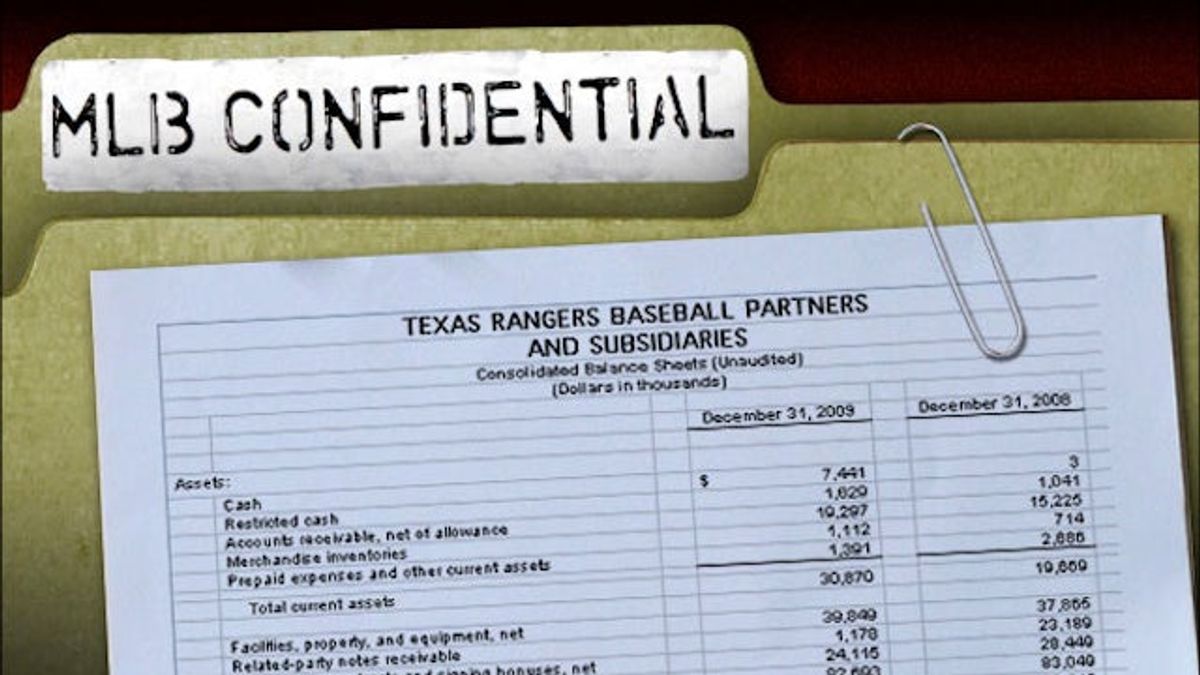
Our final document — at least for now — belongs to the Texas Rangers. Out of all the financial statements we've seen, it offers maybe the fullest picture of owning a team.
The Rangers' financials come via Excel spreadsheet, which you can download below. First, the basics (click to enlarge):
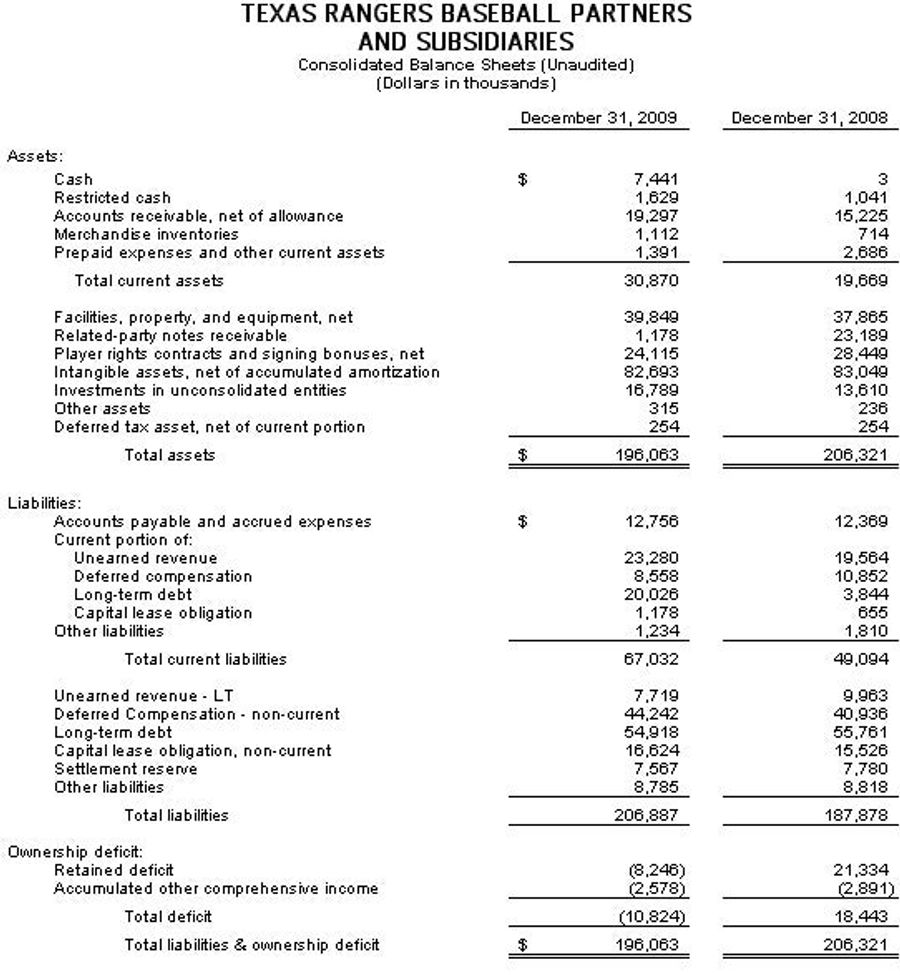
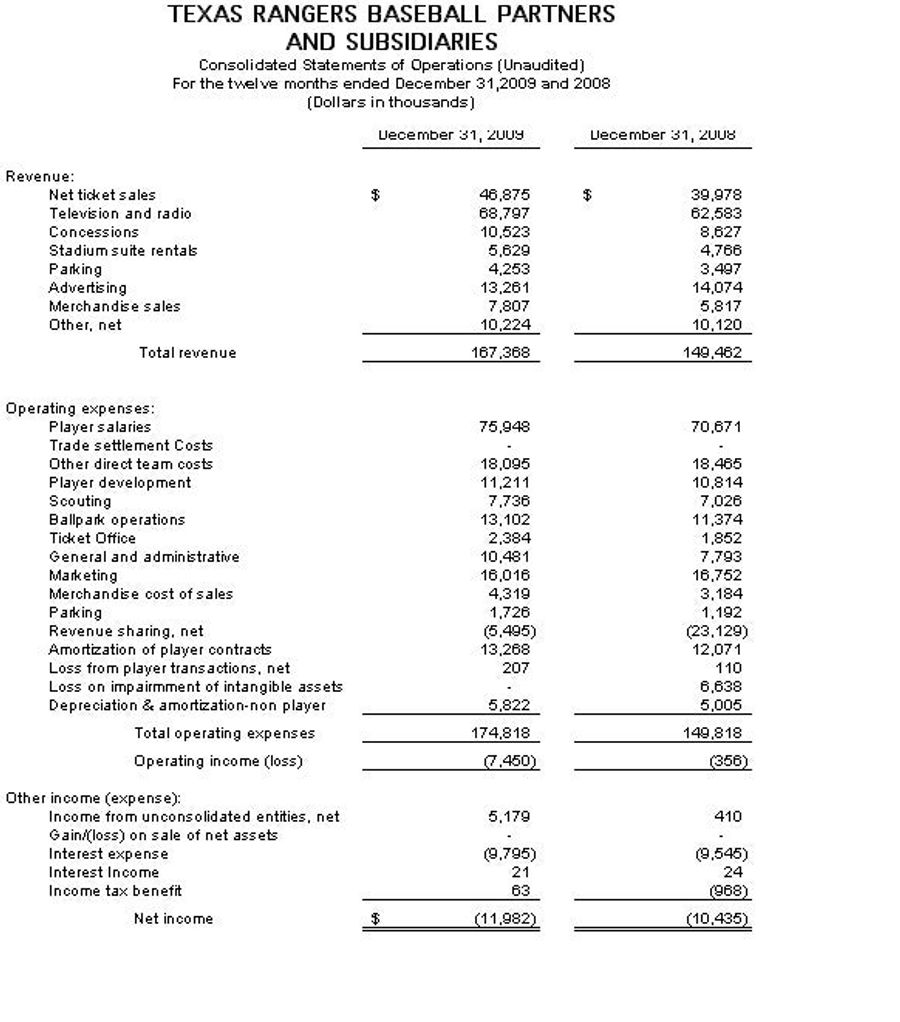
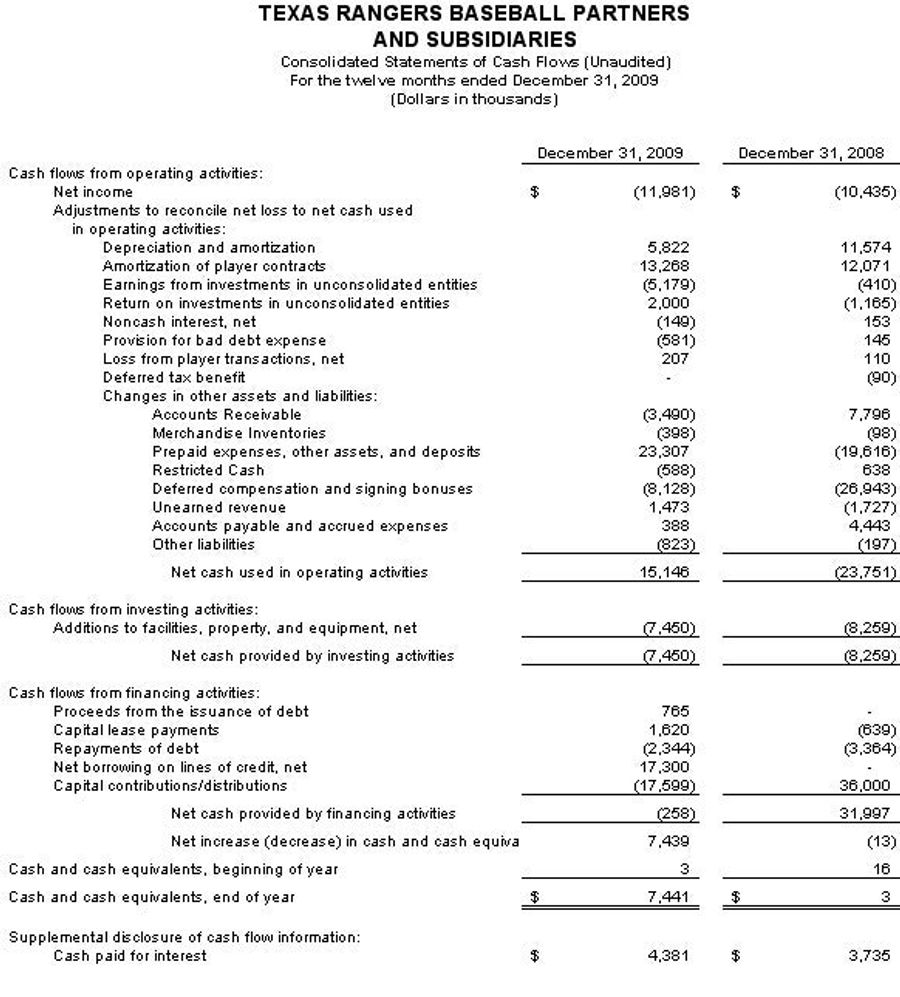
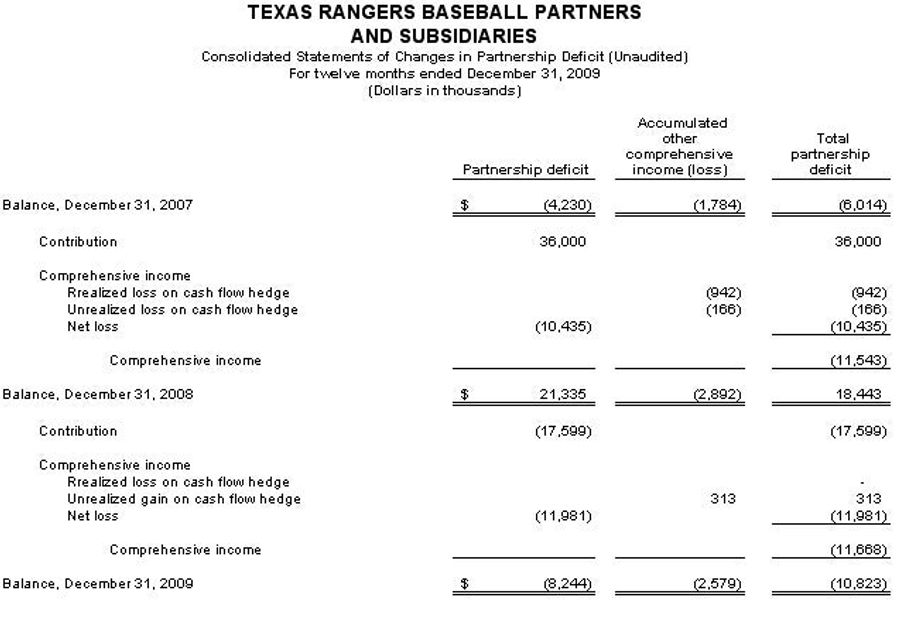
Both the "long-term debt" line item on the first page — $55 million in 2009 — and the $19 million that the partnership had to kick in that year (fourth page) indicate some of the troubles that would edge into public view in recent months.
Also of note: the massive broadcast revenue — outstripping even the Mariners, who have the Pacific Northwest all to themselves — and the net income loss, even though the Rangers netted $23 million and $5 million in revenue sharing in 2008 and 2009 (oddly, revenue sharing shows up in the Rangers' statement as a negative expense). That loss, as University of Michigan sports economist Rodney Fort points out, is largely an accounting fiction that vaporizes when you factor back in the amortization deductions for player contracts. The amortization is an old scheme whereby a baseball team at tax time treats its roster in roughly the same way your office might treat its Xerox machine, i.e. as a depreciating asset, even though a.) player costs are expensed already, and b.) an owner doesn't bear the cost of a player's depreciation; the player does. "It's not a real cost that is borne by the team," Fort says. "They never had to write a check. ... Technically, it's spendable money. You should add it back in."
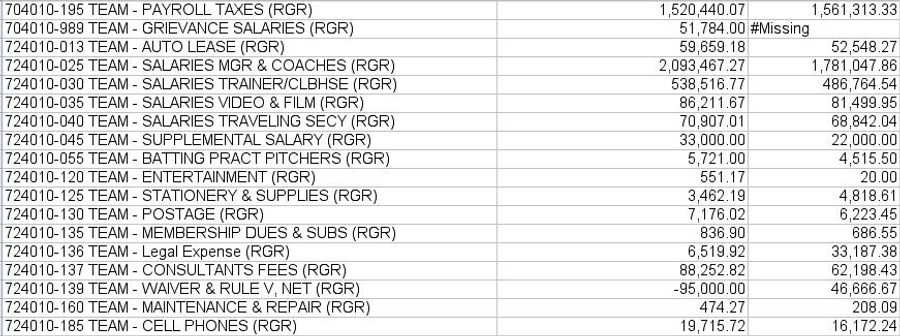
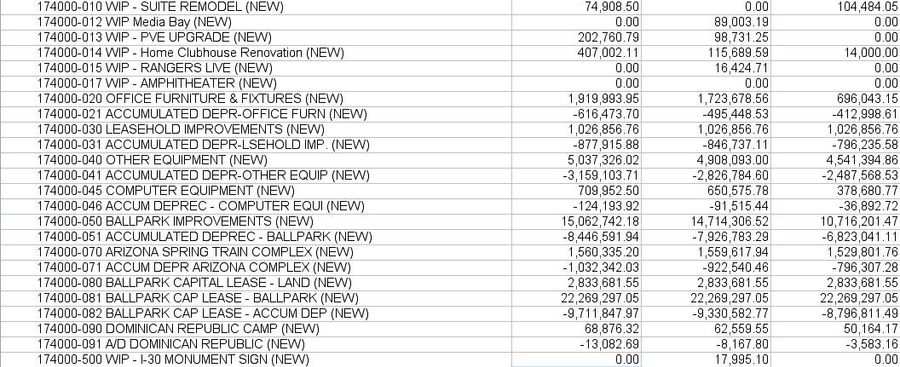
There's a lot more to the Rangers' statement than just that, however. The Excel file contains page after page of hidden cells that, with a small bit of safecracking, reveal in gloriously mundane detail the ins and outs of owning a baseball team. The formatting is a little screwy, and the numbers occasionally fall out of plumb, but you'll find a wealth of information from a number of seasons. For instance:

This suggests that the Rangers are treating not only players but managers, bench coaches, etc., as depreciating assets, further stretching the already-thin logic of the tax allowance. "If it extends to manager contracts, I wouldn't be surprised," Fort says. "Maybe owners' dogs can be thrown into this, too. It's a very, very strange allowance in the first place." It's smart accounting if it's not tax fraud.
From the file, we also get detailed miscellany about running the Rangers ...
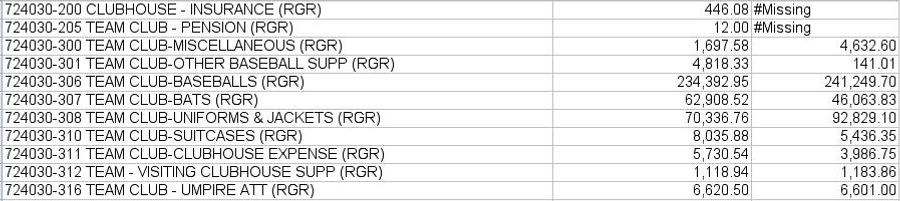
... down to how much the team makes off mascot appearances and (apparently) Jumbotron birthday announcements:

There's much more to unpack. Have a look for yourself. I'll update with any other significant findings.
Rangers financial statement, short version (.xls file) Rangers financial statement, extended version (.xls file)
(UPDATE: Maury Brown thinks the last document is a "scratch workbook," which explains all the errors and inconsistencies. Keep that in mind as you read.)
MLB CONFIDENTIAL: The Financial Documents Baseball Doesn't Want You To See Part 1: Pittsburgh Pirates, Tampa Bay Rays, Florida Marlins, Los Angeles Angels of Aneheim Part 2: Seattle Mariners Part 3: Texas Rangers
Related
Is Any College Football Team Actually Good This Season?


Five Fights the UFC Needs to Make After UFC 333

Cowboys vs. Eagles Prediction: NFL Week 7 Best Bet and Odds




Ole Miss' CFP Hopes Take a Hit After Loss to Texas

- Seahawks vs. Chiefs Betting Pick: SNF Best Bets
- WNBA Finals Game 4 Picks: Back Atlanta Dream, Angel Reese Rebounds
- Rays vs. Brewers Prediction: Why Tampa Bay Can Steal Game 2 on the Road
- UFC 333 Betting Lines Are Tightening Across a Wide-Open Fight Card
- UFC 333 Betting Splits: Where the Sharp Money Is Landing This Weekend
- NBA Best Bets Today: Pacers, Grizzlies and Trail Blazers Picks
- College Football Week 8 Best Betting Picks, Predictions