Oklahoma's Amani Bledsoe Sues NCAA Over Drug Suspension

![Photo Credit: Sue Ogrocki/ [object Object]](https://images.deadspin.com/tr:w-1200,fo-auto/jbnrnzroo14lx5lj6zad.jpg) Photo Credit: Sue Ogrocki/ [object Object]
Photo Credit: Sue Ogrocki/ [object Object] Oklahoma defensive lineman Amani Bledsoe is suing the NCAA over his one-year suspension for performance-enhancing drugs, with a lawsuit claiming that the organization “arbitrarily and capriciously enforced the NCAA bylaws and policies on drug testing and denied Bledsoe’s appeal.”
Bledsoe was suspended last season after a urine sample tested positive for the NCAA-banned substance clomiphene, which is usually used for women to treat infertility issues and is sold as Serophene or Clomid. He tried to appeal the suspension after turning over his protein powders and multivitamins for independent testing and discovering that a protein he’d taken did in fact contain small amounts of clomiphene, even though that was not noted on the label. Bledsoe’s appeal was denied, however, and the year-long suspension caused him to miss the final six games of last season and runs four games into this season.
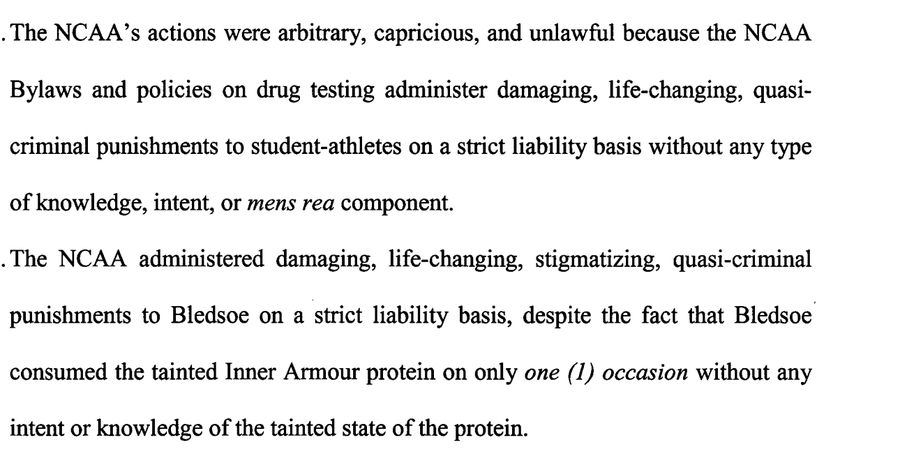
According to the lawsuit he filed in Cleveland County district court, Bledsoe was “shocked” and “confused” to learn that he had tested positive for clomiphene. The only new or different substance he had knowingly put in his body, the lawsuit claims, was protein powder that he had obtained from a teammate, who had offered it to him after he’d asked where to get protein powder as a freshman without a car on campus. The teammate said that he had an unopened can in his dorm room, of a brand called Inner Armour, and gave it to Bledsoe. (The teammate is not named in the suit.) Bledsoe claims he used the powder once before purchasing a can of his own, choosing a different brand called Optimum Nutrition. He was randomly drug tested by the NCAA soon after, and two weeks later, he learned that his urine sample had tested positive for clomiphene.
Bledsoe claimed that he had not intentionally taken clomiphene, assuming that it must have come from his teammate’s protein powder. The lawsuit claims that he had not “have any reason to question that the unopened Inner Armour protein was tainted.” Bledsoe first gave the NCAA consent to test another urine sample, which also tested positive, and then gave notice of his intent to appeal. He provided Oklahoma’s head athletic trainer with both the Inner Armour and Optimum Nutrition protein powders, as well as his multivitamins. None of these listed clomiphene or any other banned substance as an ingredient. The trainer then passed the proteins and vitamins along for independent testing, where it was discovered that Bledsoe’s can of Inner Armour powder did indeed include a small amount of clomiphene, at 81 parts per million. The independent lab obtained a new, freshly sealed can of Inner Armour for further testing and noted that this can did not contain any clomiphene.
After learning the lab’s results, Bledsoe went through with his plan to appeal. The NCAA drug test appeal panel heard Bledsoe and Oklahoma’s evidence and then voted to deny the appeal. The lawsuit claims that this action by the NCAA was unfair:
Bledsoe is suing for his lost year of eligibility to be reinstated, as well as for an attorney’s fee and other associated costs to be reimbursed.
The lawsuit is available in full below:



Why the UFC Released Undefeated Bantamweight Farid Basharat
Why the Milwaukee Brewers Are Built to Win the World Series




The Most Shocking WWE Moments Fans Never Saw Coming
- Cowboys vs. Packers Prediction: Best Bet for Sunday Night Football
- UFC Edmonton Best Bets, Predictions and Fight Picks
- Rays vs. Guardians Game 4 Best Player Props Betting Picks
- College Football Week 8 Best Bets: Ohio State, Alabama and More
- Joaquin Buckley Plummets From -300 Favorite to Underdog at UFC Edmonton
- WNBA Finals Picks: Dream, Valkyries and Gabby Williams Best Bets
- UFC Vegas 122: 5 Underdogs Drawing Sharp Money This Weekend