Saudi Arabia Allows A Token Female Olympian, So Get Off Their Backs Already

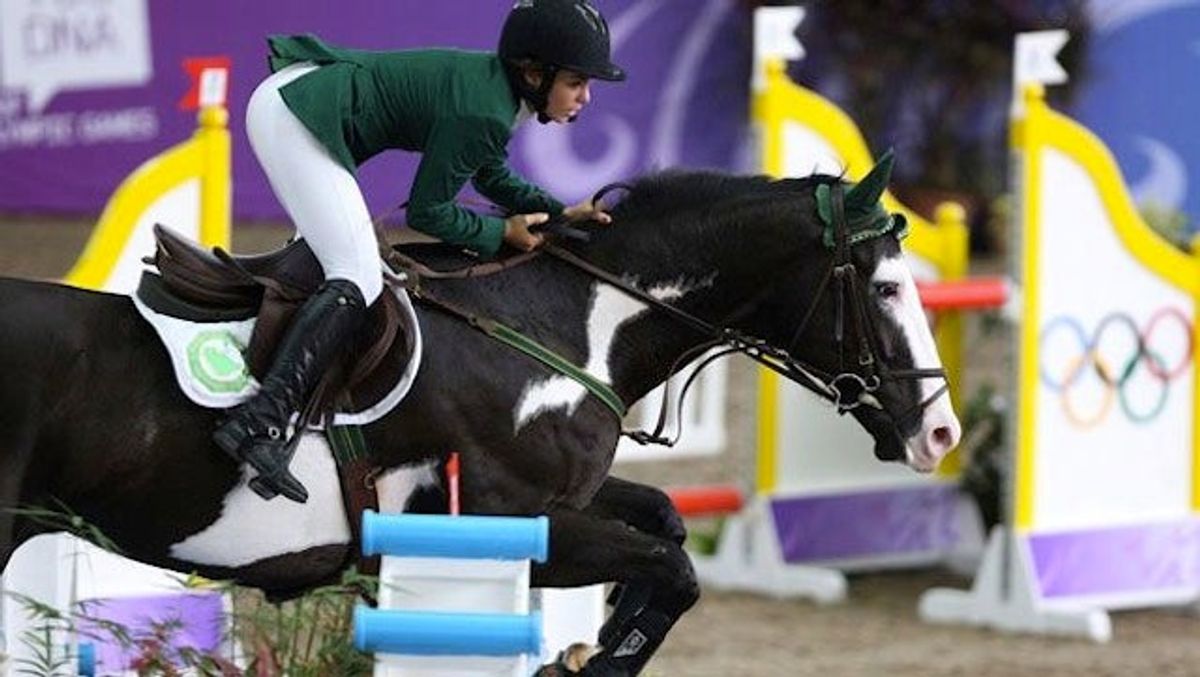
After 40 years of sending teams to the Olympics, Saudi Arabia has finally agreed that women should be allowed to participate. That manifests itself as one single athlete, born in America and raised in Europe, who will represent the Kingdom in equestrian events and thus be covered head to toe. And they're only doing it so they don't get banned from the Olympics. This is progress, but it is not much progress.
"The kingdom of Saudi Arabia is looking forward to full participation," said the country in a statement yesterday. "Full participation" is expected to entail only Dalma Rushdi Malhas, the Ohio-born show-jumper who won bronze in the 2010 Youth Olympics. The move comes amidst growing calls to exclude Saudi Arabia and two other nations who have never sent women to the Games. (The other two, Brunei and Qatar, are both expected to integrate at London, in Qatar's case as a virtual requirement for its bid to host the 2020 Olympics.)
It's an episode that doesn't reflect kindly on Saudi Arabia or the IOC, which has pretty much violated its own charter that calls for full equality in participation. South Africa was banned for nearly 30 years under apartheid, while Saudi Arabia has been practicing medieval gender apartheid with nary a peep. The Saudi Olympic Committee has promised to "oversee participation of female competitors who qualify," but implicit in that wording is a promise that things aren't going to change any more than they have to to avoid a ban. As detailed in a massive report from Human Rights Watch in February, female participation in sports in Saudi Arabia is barely theoretical. There are no state-sponsored athletics for girls in schools, and the small number of private sports clubs are routinely denied licenses and shut down by the religious-minded governing body for sport.
Muhammad al-Munajid, a member of the Council of Senior Scholars, revealed the basic attitude of the religious establishment when he gave a television interview in 2009. "It is best for a Muslim woman to stay at home," he said. "My advice to a man is not to allow his daughter, and a husband not to allow his wife, or to allow his sister to enter such a club."
Sheikh Abdullah al-Maneea, another leading cleric, argued that the excessive "movement and jumping" in many sports might cause girls to tear their hymens and lose their virginity.
In a country where women can't drive and can't vote and can't really do anything without a male "guardian," access to sports is pretty low on the list of priorities. So even if Saudi female athletes still have to compete covered up, and even if the country has been getting away with sending single-sex Olympic teams since the same year Title IX passed in the U.S., should this be a victory for women in sports everywhere? Nah. It's a victory for Dalma Rushdi Malhas, who was wealthy enough to pursue her own training, and lucky enough never to have to live in Saudi Arabia. And it's a victory for tokenism, and doing the bare minimum to satisfy a toothless IOC.


The 5-0 49ers Are Finally Getting the Respect They Deserve
Jorge Masvidal Makes $100K Pick to Beat Islam Makhachev
Dana White's Contender Series Week 10 Predictions and Picks


Guardians vs. Rays Prediction: Picks, Odds for ALCS Game 1

- Three Longshot NFL Futures Worth Betting in Week 5
- Falcons vs. Ravens Odds, Prediction and Best Bet for Sunday Night Football
- White Sox vs. Guardians ALDS Game 5 Betting Pick
- UFC Vegas 122 Betting Odds: The Biggest Line Moves Before Allen vs. Duncan
- UFC Vegas 122 Picks and Predictions: Three Bets for Allen vs. Duncan
- College Football Week 6 Bets: Three Picks for Saturday’s Biggest Games
- UFC Fight Night Underdog Pick: Why Kai Kamaka III Is Worth a Bet