The Art of Storytelling: John Hersey's Writing Seminar

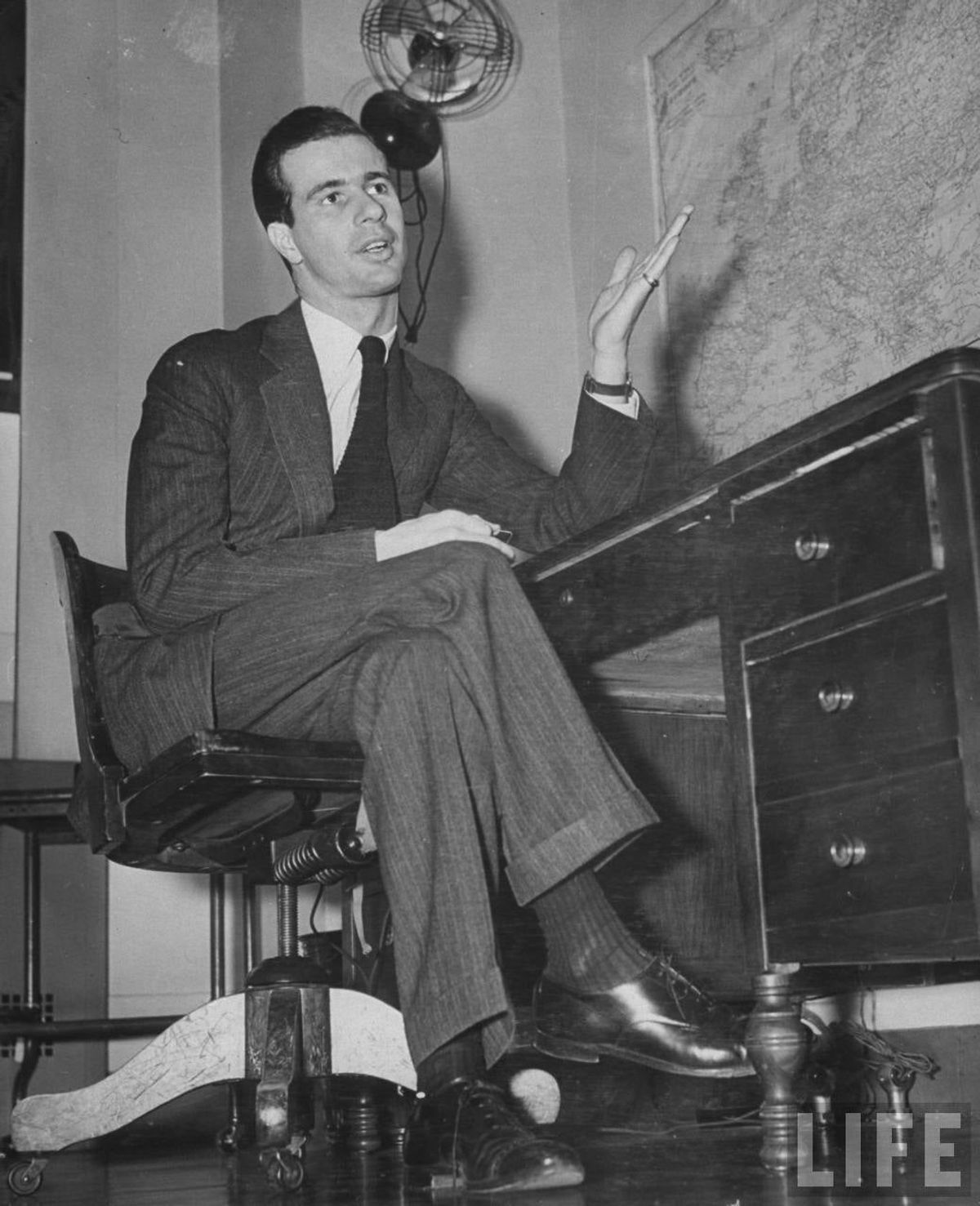
Our man Peter Richmond wrote a wonderful piece over at the Nieman storyboard about John Hersey's senior-year writing seminar at Yale.
He learned a lot, including these thoughts on writing:
1) In good fiction, the reader absorbing a compelling narrative never notices the writer as intermediary. In nonfiction, that translator’s presence is inevitable. Since the former is the ideal relationship with the reader, the more you can bring that non-point of view to nonfiction narrative, the better. In other words, as a writer, no matter what the hell you’re writing, do your best to kill your ego, even if those are mutually exclusive ideals. (i.e.: He could have told the story of the effect of that atomic bomb on an innocent city by telling us what he found when he went over there, and it would have been a good piece. Instead he gave the story over to the six survivors, and it earned a place in immortality.)
2) Let the story, invented fictitiously or real-world, speak for itself. Do it honor and justice by re-presenting it. If you have to writerly-ly enhance it, hammer its meaning home, it is not worth telling.
3) Editors are there for a reason: not because they aren’t good writers, but because they are very good at what they do. It is their craft. Get to know them, and always respect them. (In one of the countless drafts of Hiroshima, Hersey described an atom-bombed bicycle as “lopsided.” One day Wallace Shawn questioned whether the word “lopsided” was the best possible word. Hersey lay awake that night, and then scrolled the word “crumpled” on a piece of paper. The next day, arriving at the magazine’s offices to resume editing, he found the pages from the day before, and found the page in question. The night before, in the margin, Shawn had written, in the margin, “crumpled?”)
4) If what you leave out is essential, then the details you choose to leave in must be essential. (i.e.: The dank, decaying, ominous scent of a jungle is relevant if the man smelling it might be about to die from an unseen bullet, but maybe not if your story is of the prison road gang laying a highway through it).
5) Storytelling is so universal that, for the several centuries when writing disappeared in the Aegean, The Odyssey survived orally until it could be written down. Never veer far from the story.
6) As the possessor of a craft, having now served something of an apprenticeship, we owed it to the world to practice that craft.
Here is the full text to Hersey's classic: "Hiroshima."
Is Any College Football Team Actually Good This Season?


Five Fights the UFC Needs to Make After UFC 333
Cowboys vs. Eagles Prediction: NFL Week 7 Best Bet and Odds

Ole Miss' CFP Hopes Take a Hit After Loss to Texas

- Seahawks vs. Chiefs Betting Pick: SNF Best Bets
- WNBA Finals Game 4 Picks: Back Atlanta Dream, Angel Reese Rebounds
- Rays vs. Brewers Prediction: Why Tampa Bay Can Steal Game 2 on the Road
- UFC 333 Betting Lines Are Tightening Across a Wide-Open Fight Card
- UFC 333 Betting Splits: Where the Sharp Money Is Landing This Weekend
- NBA Best Bets Today: Pacers, Grizzlies and Trail Blazers Picks
- College Football Week 8 Best Betting Picks, Predictions