The Magic Word

The greatest word in baseball is "horseshit." This isn't a matter of opinion, it's a scientific fact. From Kevin Kerrane’s fine book, Dollar Sign on the Muscle:
Any baseball talent, body, body-part, effort, action, player, team, city, or scouting assignment can be horseshit. The term covers everything but the world of words–the world of stories, explanations, and scouting reports–at which point bullshit takes over.
A real sentence spoken by a scout discussing a former colleague: “His written report was all bullshit, and that’s when I knew he was a horseshit guy.”
Bullshit can be a verb; horseshit can’t. (A sentence like “Don’t horseshit me would make no more sense to a scout than to a nonscout.) Novices sometimes elide the word into horshit, but the veterans get that first S down deep in the throat, with the tongue at the back of the palate, lots of air whistling past the lower teeth, and then they follow through for full emphasis. horsse-shit!
The word is popular throughout baseball–with players, managers, umpires, and executives.
In 2005, Allen Barra wrote an interesting piece about language for Baseball Prospectus:
George Carlin used to do a great routine in which he recounted how the term “shell shock” in World War I evolved to “combat fatigue” in World War II, and, finally, by Vietnam, to “post-traumatic stress disorder.” What, Carlin wanted to know, was wrong with shell shock? It was a perfectly legitimate term–colorful, concise, and descriptive. It grabbed you on first hearing and told you exactly what it meant. That was the whole point. By the time we reached Vietnam the reality of shell shock had become obscured by the very term that was supposed to describe it. It had become something that the average person could no longer understand without an interpreter.
…Cal Ripken Jr. for instance. This weekend while watching the Yankees game, I saw a commercial for his baseball videos. One of them is labeled “Defense,” as in, “Learn to play defense the Cal Ripken way.” When Cal Ripken, Jr., broke into the major leagues, “defense” was called “fielding.” It meant not only catching the ball but throwing to the right base, knowing which bases to cover, backing up the play. They called it “fielding” because unlike other sports, only the defense for the team that had the ball was on the field while they were doing it. In other words, it described a situation peculiar to baseball. (And, by the way, when did players like Cal Ripken, Jr. go from playing the middle infield to playing “key defensive positions”?)
When, exactly, did fielding become defense? For that matter, when did hitting and baserunning get lumped together under the leaden term “offense”? Were “batting” and “hitting” and “baserunning” too quaint for an audience that also watched football and basketball? Did we somehow subconsciously decide that because football and basketball had offense and defense that baseball had to have them, too?
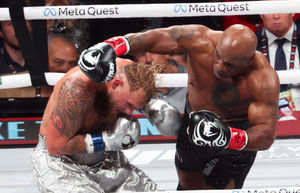
Why Did Netflix Mike Tyson Docuseries Omit His Last Fight?

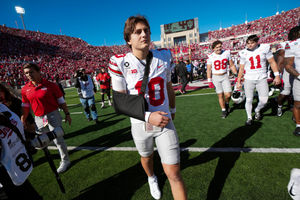
Ohio State’s Season Is in Jeopardy After Julian Sayin Injury

- UFC 333 Betting Splits: Where the Sharp Money Is Landing This Weekend
- NBA Best Bets Today: Pacers, Grizzlies and Trail Blazers Picks
- College Football Week 8 Best Betting Picks, Predictions
- World Series Game 1 Predictions: Rays vs. Brewers Picks and Best Bets
- UFC 333 Predictions: Best Bets for Volkov, Keita and Murzakanov
- UFC 333 Underdog Pick: Why Dominick Reyes Is Worth a Bet
- World Series Predictions: 3 Best Bets for Brewers vs. Rays