Valentina Shevchenko’s UFC Title Exit Exposes a Major Double Standard

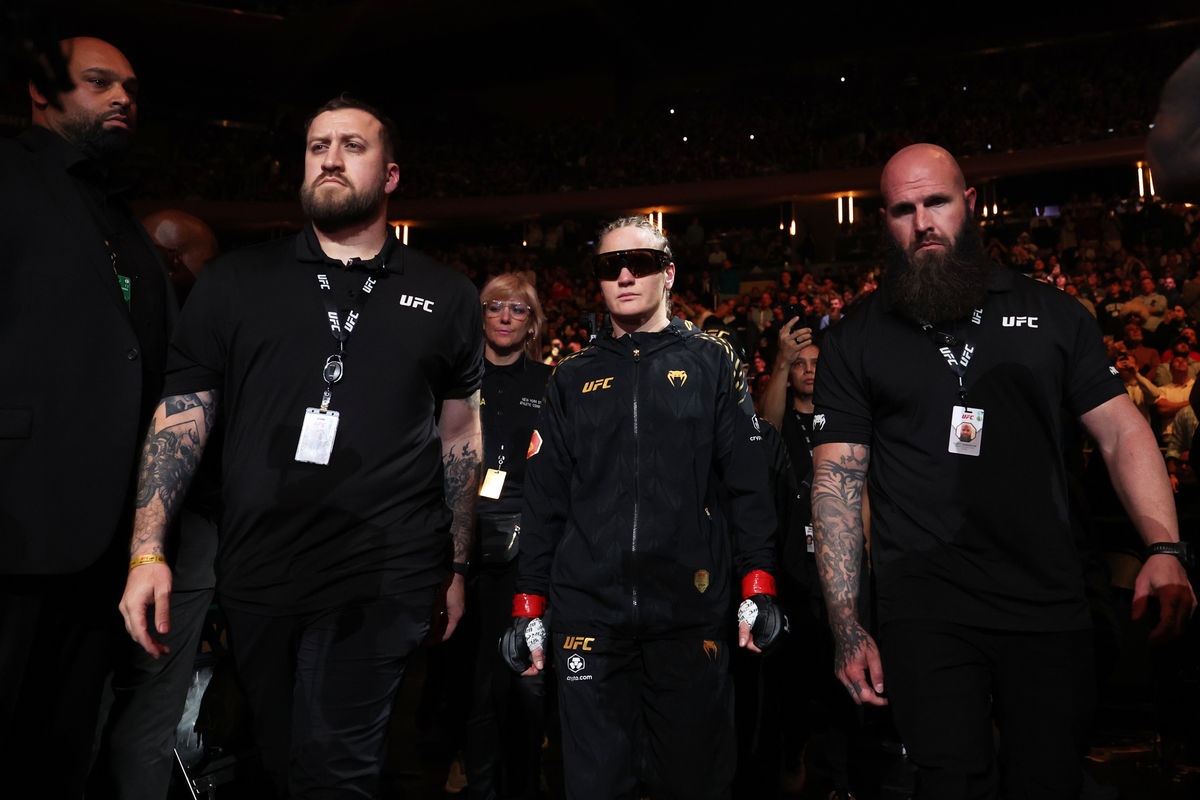 Nov 15, 2025; New York, NY, UNITED STATES; Valentina Shevchenko (red gloves) walks out before the womens flyweight championship bout against Zhang Weili (not pictured) during UFC 322 at Madison Square Garden. Mandatory Credit: Ed Mulholland-Imagn Images
 It’s the news that flipped the script on UFC 332 and left the MMA world scratching its collective head: Valentina Shevchenko is no longer the UFC women’s flyweight champion.
Following an untimely shoulder and back ligament injury that will sideline her for nearly a year, the "Bullet" has relinquished her undisputed championship. In her place, Natalia Silva, who was originally slated to challenge Shevchenko on October 3 in Salt Lake City, will now fight rising Chinese contender Wang Cong for the vacant 125-pound throne.
On the surface, moving the division forward sounds like a noble pursuit. Shevchenko’s long-time coach, Pavel Fedotov, recently stated that the decision to "temporarily vacate" the belt was made so they wouldn't stall the flyweight division during her lengthy rehabilitation. But let’s cut through the PR speak and address the glaring double standard at play here. Since when does the UFC actually care about holding up a division when it involves one of its most established stars?
If we look at the promotion’s recent history, their leniency toward inactive champions is wildly inconsistent. We all remember the heavyweight saga, where Jon Jones was allowed to sit on the undisputed throne for well over a year due to injury, forcing Tom Aspinall to parade around with an interim belt while defending it against top contenders. We've seen the promotion bend over backwards and show similar patience for other stars, like Kayla Harrison and Ilia Topuria, during their own long periods of inactivity. The UFC brass has practically made a tradition out of minting interim titles just to keep a favored champion's undisputed status intact while they recover on their own timeline.
So why is Shevchenko, a pioneer of the sport with nine title defenses across two reigns, suddenly rushed out the door? Why wasn't an interim title created for Silva and Cong to fight over, allowing Shevchenko the respect of unifying the belts upon her return?
Whether she chose to vacate willingly or felt the invisible, heavy hand of the UFC executives pushing her toward the exit, the optics are terrible. You don't ask a legendary champion who just defeated Zhang Weili at Madison Square Garden to hand over her hardware over a one-year layoff. You create an interim title. That’s exactly what the system was designed for.
Instead, whoever gets their hand raised at UFC 332 will have a massive asterisk hovering over their championship reign. Don't get me wrong, the new main event is a phenomenal stylistic matchup. Silva has been tearing through the division with an unstoppable 14-fight win streak, taking out former champions like Rose Namajunas and Jessica Andrade. Meanwhile, Wang Cong has been a revelation, running through the competition in the promotion and quickly establishing herself as a legitimate threat. But let's be honest: Silva was preparing for the ultimate test against the flyweight queen. Now, they are fighting for a belt that was surrendered in a boardroom, not lost in the Octagon.
Shevchenko has been promised an immediate title shot when she returns, but MMA is a fickle sport where promises are often forgotten by the time the ink dries. By forcing a legend to vacate rather than utilizing the interim title mechanism they use so freely for others, the UFC has once again proven that their rulebook changes depending on whose name is on the contract.
Related



Britney’s HCL Saga Shows How Murky High Stakes Poker Is
5 Fights the UFC Should Make After Rosas Jr. vs. Barcelos





WWE Money in the Bank Cash-Ins: The Best and Worst Moments
- Eagles vs. Bears MNF Week 3 Betting Total Picks and Predictions
- Rams vs. Broncos Sunday Night Football Best Betting Pick
- MLB Best Bets: Three Picks for the Final Day of the Regular Season
- UFC Vegas 121 Underdogs: Why Alatengheili Is Worth a Look at +300
- UFC Vegas 121 Predictions: Best Bets for Saturday’s Fight Card
- UFC Vegas 121 Line Movement: Two Betting Favorites Have Completely Flipped
- Indiana vs. Northwestern Prediction: Best Bets To Start Week 4