What's Up With These NFL Next Gen Stats?

 credits: Harry How | source: [object Object]
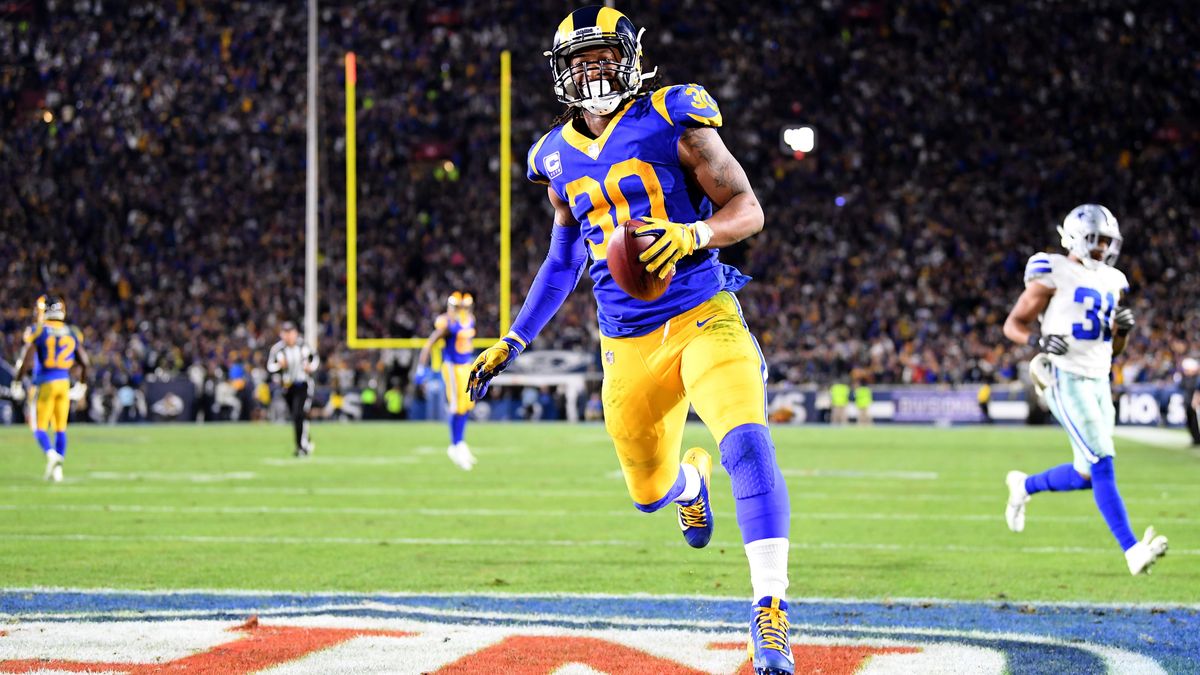
 Dating back a few years, the NFL has put microchips in players’ pads to track their movements in games. Since the beginning of the 2017 season, the company that sends you shit in the mail and provides the architecture for a lot of the internet has slapped its name on the statistics generated by those microchips. Some of these stats are clearly accurate and illuminating. For example, in last week’s Patriots-Chargers game, the Pats ran the ball 82% of the time when Sony Michel was in the game and threw 97% of the time with James White in instead. Cool! Also, no microchip required.
But some of the more extreme bits of data are at least worth interrogating. As a former runner, coach, and track writer, I’m always interested in data around speed. (Two tidbits about the 40-yard dash: about 500 men in the world have run faster than the equivalent of John Ross’s NFL combine record. And the fastest women in college track would be among the very fastest NFL players at any position.) So here are two alleged Next Gen Stats that caught my eye this season:
Here’s my highly scientific rebuttal: the Raiders punter is not faster than Alvin Kamara or Kareem Hunt. This one is less insane than it seems; Townsend ran 4.84 in the 40, while Kamara ran 4.56 and Hunt ran 4.66. But it still seems...not right. Not as off as this one, though:
15 miles an hour is not fast; that’s roughly a 15-second 100 meters, or a hair below Philip Rivers’s top speed. And the fastest dudes in the NFL are hitting that less than three times a game?
If that data were accurate, it would say something pretty interesting about NFL running backs—that their job is almost entirely predicated on shiftiness, elusiveness, and intelligence, not speed. Obviously the proverbial “burst” is more important than full-steam-ahead speed, which is what’s being measured above. It does take a very long time to get to full speed. The best sprinters in history, who get up around 28 miles per hour by the end of the 100 meters, run their first 10 meters in 1.6 seconds or so—just under 14 miles an hour. So maybe what that stat is really telling us is that 15 mph—a speed attainable by just about every player in the NFL who would carry the ball—is only something you can reach on breakaway runs, and those guys just get the most breakaway runs.
The other possibility is that the NFL is a little too confident in the quality of its microchip data, and its two Silicon Valley partners—the chip company and the e-commerce/cloud computing company—are creating overdetermined information from borderline voodoo science. But that doesn’t sound like them.
Related
TV Networks Have Killed College Football




6 New Faces Who Could Shake Up the NBA Playoff Picture

Two MLB Playoff Bets Stand Out on Monday

UFC 332 Was One of the Most Violent Cards in Recent Memory

Yankees vs. Rays Prediction: Best Bets for ALDS Game 2
- Yankees vs. Rays Prediction: Best Bets for ALDS Game 2
- Falcons vs. Saints Prediction: Best Bet for Monday Night Football
- MLB Playoff Picks: Padres vs. Brewers and Braves vs. Dodgers
- Lions vs. Panthers Prediction: Best Bet for Sunday Night Football
- UFC 332 Betting: Best Bets for Silva vs. Wang and More
- MLB Playoff Picks: Rays vs. Yankees, Padres vs. Brewers
- Week 5 College Football Betting: Three Picks That Stand Out