Can’t anybody here hit in this league?

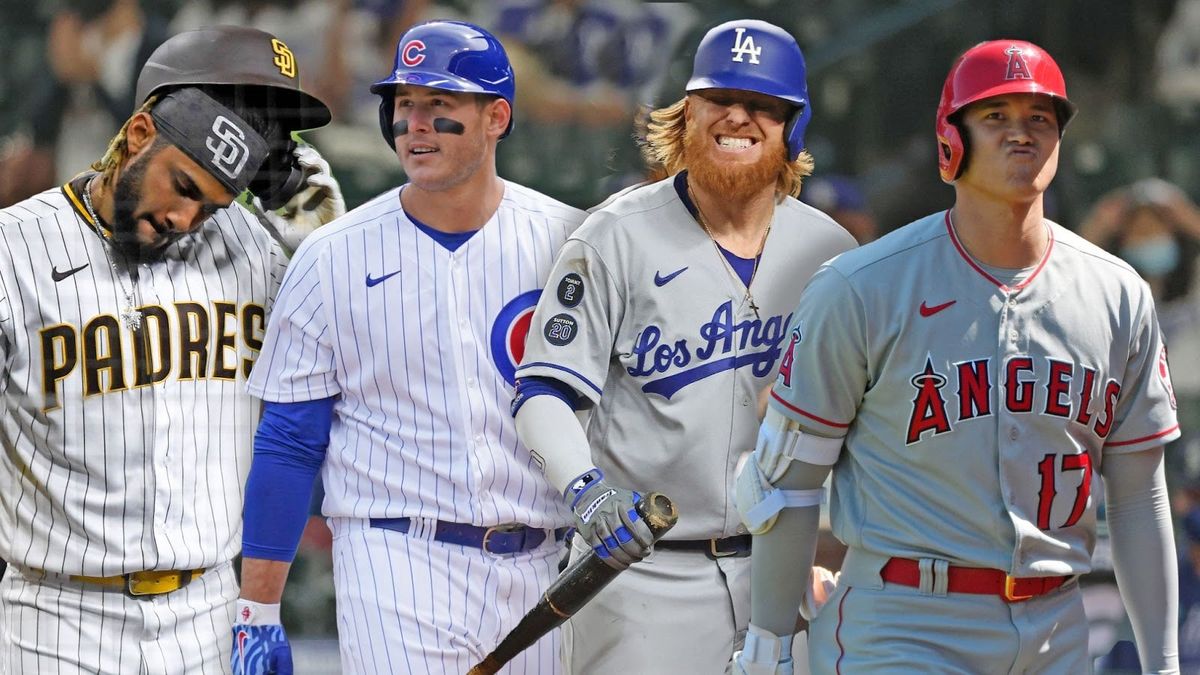 Even some of the best hitters (from. left, Fernando Tatis Jr, Anthony Rizzo, Justin Turner, and Shohei Ohtani, are struggling to make contact this year. credits: Getty Images
 In the ninth inning at Wrigley Field on Thursday night, Kris Bryant led off with a single against Mets closer Edwin Diaz. After looking at a 99 mph fastball outside for ball one, Rizzo fouled off the next three pitches, falling behind in the count, 1-2.
Among 744 major league hitters since 2016 who have had at least 100 plate appearances go to a two-strike count, Rizzo ranks 62nd with a .630 OPS, and 60th with a .217 batting average. He’s an elite two-strike hitter, and SNY announcers Gary Cohen and Ron Darling highlighted the fact that part of the reason for Rizzo’s success when a strike away from punching out is that he chokes up on the bat, the oldest trick in the book to be able to gain more bat control and either keep an at-bat alive or be put the ball in play somewhere. It’s an uncommon move in this era.
After Diaz missed outside again with another 99 mph heater, the right-hander threw two more that Rizzo, choking up, was able to foul off. Finally, on the eighth pitch of the at-bat, Diaz went back to the slider that had gotten him strike two, and Rizzo swung and missed for the K.
It happens. Even for the best of hitters, being at the plate with two strikes is, obviously, a disadvantage. After all, 100 percent of strikeouts come on two-strike pitches. Diaz, because of his ability to throw triple-digit heat and a nasty slider, is a big strikeout pitcher. What Rizzo’s at-bat highlighted is that even when you have someone at the plate who’s doing everything he can to take the right approach, the pitcher still has the advantage.
Right now, though, it doesn’t matter what the situation is. Pitchers are dominating. It’s not just that strikeouts are at their highest level ever — more than one per inning so far this season — but the major league batting average right now stands at .233, four points lower than the average in 1968, better known as The Year of the Pitcher. Because walks are also historically high and homers continue to fly out at turn-of-the-century rates, the majors’ OPS is at .703, which only represents the lowest figure since .700 in 2014. The last time the major league OPS dipped into the 600s was in 1989.
What’s remarkable isn’t this continuation of trends, but that in a game that’s ever more data-driven, hitters aren’t doing more to adjust. Major leaguers hitting .156/.235/.253 on two-strike counts is hardly shocking. Pitchers are supposed to have the edge there. But when there are runners in scoring position, the advantage is supposed to shift to hitters… and in those situations this year, major league batters have a .239/.335/.396 line.
That .732 OPS with RISP is down 42 points from last year’s shortened-season figure, and 56 points from the last full season, 2019. But the big problem, the one that’s been trending for years, is how the outs are being made: strikeouts.
Interestingly, in both 1968 and 1989, major league hitters fanned a little more often with RISP than they did overall. These days, strikeout rates do drop a bit — going back to 2018, each season has seen a drop of around one percentage point between the total number of plate appearances ending with a K and plate appearances with runners in scoring position ending with a whiff.
But as strikeout rates overall skyrocket, a slight drop in ponchados between the total and the RISP split only means that this year, 23.7 percent of RISP batters are striking out, still higher than every previous season’s all-situations K rate. In 1968, meanwhile, batters struck out in 16.1 percent of their RISP opportunities, and the figure was 15.0 percent in 1989.
The pitching, as in Rizzo’s at-bat (where the runner wasn’t in scoring position) on Thursday night, plays a big role, but when there are runners in scoring position, prioritizing contact is extra important. Since home run rates also drop slightly with RISP, the general tradeoff that’s made between contact and power is less valuable in situations where getting the ball into the field of play can extend rallies.
For all the noise that’s made about infield shifts cutting down offense, the biggest factor is the strikeouts, and the adjustments that hitters are not making as they swing for the fences in every situation.
The Biggest Disappointments of the MLB Playoffs So Far
Three Non-Power College Football Playoff Contenders
Why Doesn’t the NFL Have Full-Time Referees?
Milwaukee Brewers vs. San Diego Padres Game 4 Betting Picks
MLB Playoff Picks for Wednesday: HR Props, ML Picks and More
5 Fights the UFC Should Make After UFC 332
Bijan Robinson Keeps Proving He’s Built for Primetime
TV Networks Have Killed College Football
- Milwaukee Brewers vs. San Diego Padres Game 3 Bet Picks and Predictions
- Dana White’s Contender Series Week 9 Predictions: Picks for Every Fight
- Two MLB Playoff Bets Stand Out on Monday
- Yankees vs. Rays Prediction: Best Bets for ALDS Game 2
- Falcons vs. Saints Prediction: Best Bet for Monday Night Football
- MLB Playoff Picks: Padres vs. Brewers and Braves vs. Dodgers
- Lions vs. Panthers Prediction: Best Bet for Sunday Night Football