How The NFL Lied Its Way Out Of Millions In Workers' Comp

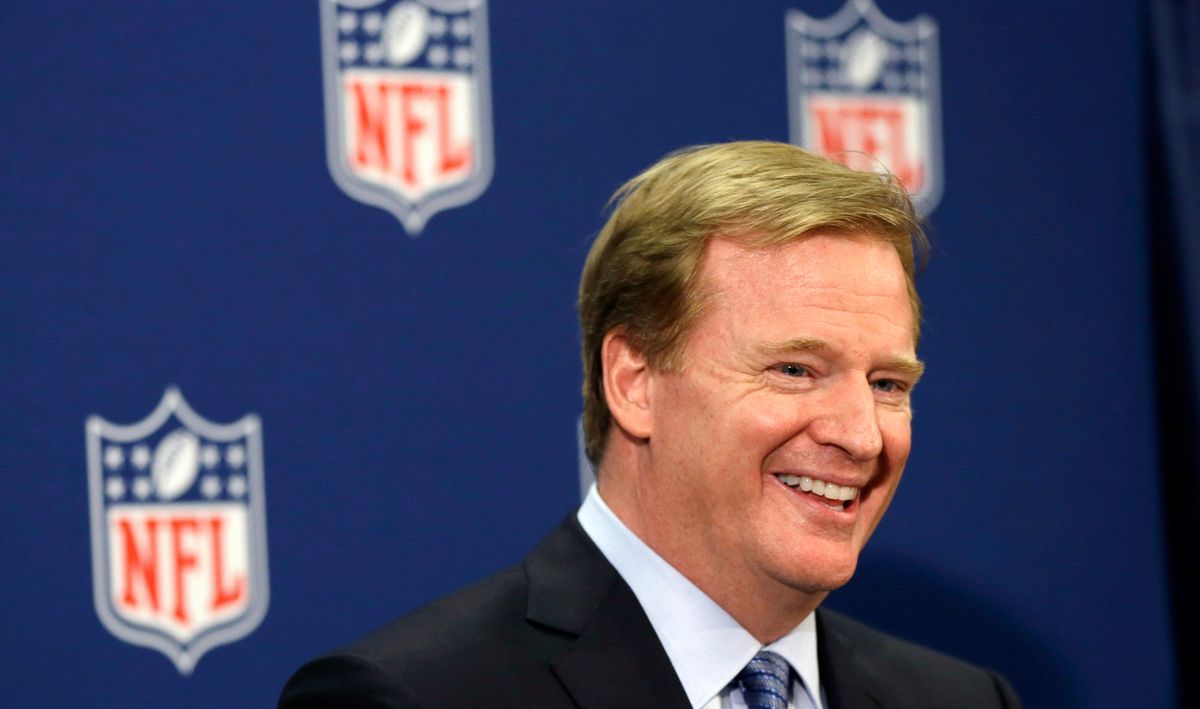
Yesterday California's governor signed into law a bill that blocks athletes from filing future workers' compensation claims for games they play in the state, unless they played for a California team. It was shut down thanks to intense lobbying from the NFL and other pro sports leagues that hinged on the argument that the claims were costing taxpayers money. That's a blatant lie.
The California Labor Code was certainly controversial. Many athletes, the bulk of them comprising thousands of former NFL players, have already filed claims against their employers for injuries suffered on the job. California allowed them to cite "cumulative injuries," the sort of minor head trauma that builds to long-term permanent disability. There's no need to point to a specific injury that caused the damage, which is helpful when there's not one single blow that does it.
(It's interesting to note that some of these players filed injury claims even while publicly dismissing the plaintiffs in the NFL concussion lawsuits.)
The pending claims from former NFL players could be worth up to $1 billion. So when the state legislature was considering a bill to amend the code to limit it to athletes who played for California teams, the sports leagues sent lobbyists to get across the message that former players were only bilking the state and taxpayers out of money. The Los Angeles Times' Michael Hiltzik explained why this is bullshit:
The leagues' bid for sympathy depends on most laypersons having no idea about how workers' compensation works. So here's a primer. To begin with, taxpayers don't pay for workers' comp; employers do, either by buying commercial workers' comp insurance or (if they're big enough) self-insuring. Their premiums are overwhelmingly based on their type of business and their claims record. The premium paid by the employer of file clerks will be very different from that of a skyscraper builder.Therefore, if California workers'-comp judges take a more liberal view of long-term brain injuries for football players (and as yet there's no evidence that they do), that may drive up premiums paid by sports teams, but it won't affect the premium paid by grocery stores.The leagues "are trying to make it look like these are costs that will fall on all employers," Neuhauser says. "But it has nothing to do with current rates. Sports teams' premiums will go up, but not those for construction companies or anyone else."
Since California was one of a small number of states that allow claims for "cumulative injuries"—and the only one to allow players from out-of-state—most football players suffering permanent effects from a career's worth of repeated brain traumas now have no legal recourse to seek compensation. (And that compensation is legally capped at $270 a week for up to 320 weeks.)
California gives a huge payoff to the NFL [L.A. Times]







- World Series Game 1 Predictions: Rays vs. Brewers Picks and Best Bets
- UFC 333 Predictions: Best Bets for Volkov, Keita and Murzakanov
- UFC 333 Underdog Pick: Why Dominick Reyes Is Worth a Bet
- World Series Predictions: 3 Best Bets for Brewers vs. Rays
- Bears vs. Patriots Thursday Night Football Week 7 Betting Picks
- Guardians vs. Rays ALCS Game 6 Best Betting Picks
- Commanders vs. 49ers Picks: Best Bet for Monday Night Football