Lawsuit: Jets More Than Doubled Their Vicodin Usage In Just Two Years

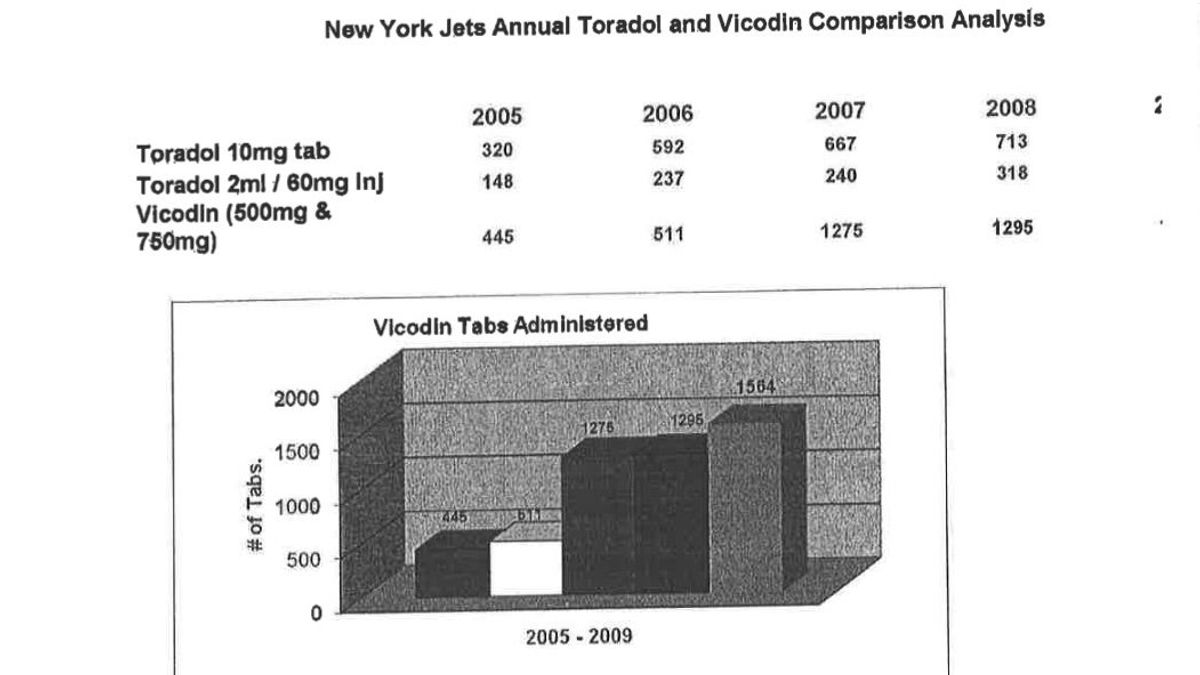
The New York Jets and the Indianapolis Colts distributed huge quantities of Vicodin and the powerful anti-inflammatory drug Toradol to their players, according to court documents unsealed today. The documents are part of an ongoing federal lawsuit filed by several former NFL players who say the teams gave them massive amounts of addictive painkillers and other drugs without warning them about the possibility for addiction and/or long-term health repercussions. The lawsuit discusses all 32 NFL teams, but in certain cases, like the Colts and Jets, also provides documents that go into the specifics of just how many drugs the teams dished out.
One unsealed document was an internal drug audit for the Colts and an evaluation of four years of drug distribution for the Jets. As shown in the chart below, the Jets’ use of Toradol and Vicodin increased every year from 2005 to 2008. The team’s Vicodin usage more than doubled in two years; its Toradol usage nearly tripled in three years. In 2008, the team dispensed 1,031 doses of Toradol and 1,295 doses of Vicodin.
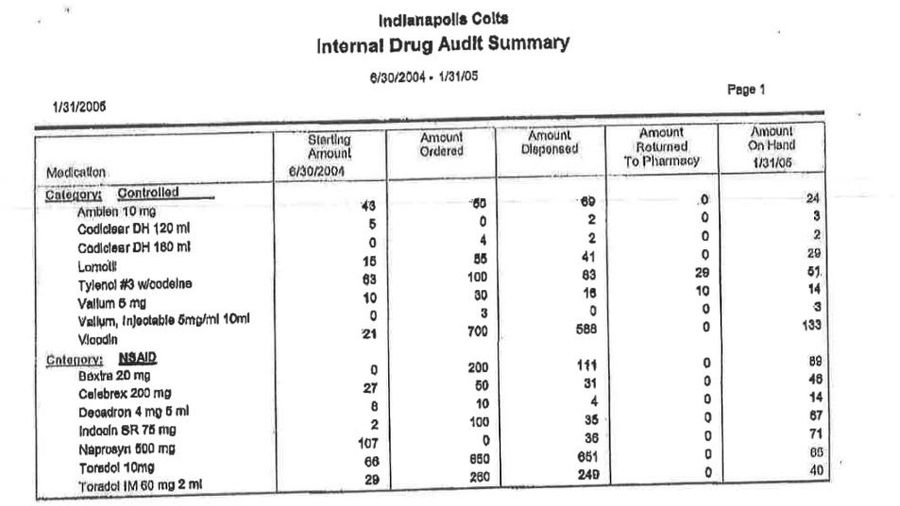
The Colts internal drug audit over a seven-month period in 2004 and 2005 shows that the team administered 900 doses of Toradol and 585 doses of Vicodin.
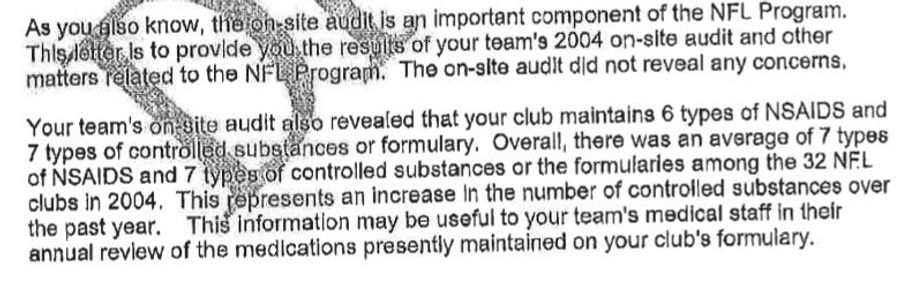
Emails included in the court records show the NFL’s Dr. Lawrence Brown sending a letter to the Colts about their “Prescription Drug Annual Report.” The letter itself has draft stamped on it, and the emails don’t say why. In the letter, Brown noted an uptick in controlled substances over the past year, but said that the audit “did not reveal any concerns.”
The documents released today were previously filed back in February as part of an amended complaint by the former players, which had several exhibits placed under seal. The plaintiffs asked to keep them under seal, and the judge granted a request to give all parties until Monday to file any agreements or disagreements for keeping the documents under seal. Nobody else filed anything in regards to keeping the documents under seal, according to the court docket, on Monday the judge ordered the entire complaint and its exhibits be made public. They were filed as such today.
NFL spokesman Brian McCarthy denied the allegations in a statement to Deadspin, saying that “controlled substances are not stored at any NFL club facility.” He also said that the NFL will “continue to put the health and safety of our players first.” The NFL player’s union also issued a statement, saying it was “alarmed by the revelations in the lawsuit.” The full statement is below:
The NFLPA is alarmed by the revelations in the lawsuit filed by former NFL players on the abuse of prescription drugs. While we are not a party to the case, the reporting by the Washington Post and Deadspin are cause for our continued concern and vigilance for holding the League accountable to its obligations. We will monitor this case closely and take all steps necessary to ensure the health and safety of our players.

Marvin Harrison Jr. Trade Mystery Makes Very Little Sense


White Sox vs. Guardians ALDS Game 5 Betting Pick






- College Football Week 6 Bets: Three Picks for Saturday’s Biggest Games
- UFC Fight Night Underdog Pick: Why Kai Kamaka III Is Worth a Bet
- WNBA Playoff Picks: Best Bets for Liberty-Dream and Aces-Valkyries
- Friday College Football Best Bets: Iowa-Washington and BYU-Iowa State
- UFC Vegas 122 Betting Splits: Where the Sharp Money Is Landing This Weekend
- Guardians vs. White Sox Game 4 Bet Picks, Prop Bets
- Buccaneers vs. Cowboys Odds, Prediction and Best Bet for TNF