Michael Page’s UFC Exit Proves Winning Isn’t Always Enough

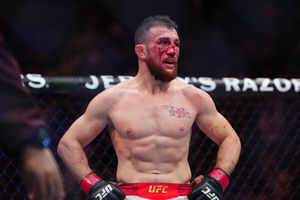
 Sep 5, 2026; Paris, FRANCE; Michael Venom Page (red gloves) fights Nursulton Ruziboev (blue gloves) during UFC Fight Night at Accor Arena. Mandatory Credit: Per Haljestam-Imagn Images
 Michael “Venom” Page did something that should be pretty difficult to do in professional sports.
He won too much to be called a failure, but not enough people wanted to watch him win.
That might be the strangest way to describe the end of a UFC career, but it is exactly where Page finds himself.
After four consecutive victories, the UFC has decided it has seen enough. Dana White confirmed Tuesday that Page will not be re-signed following his unanimous decision victory over Nursulton Ruziboev at UFC Paris. Page leaves the promotion with a 5-1 record and four straight wins.
On paper, that is a successful UFC run.
In reality, it wasn't nearly as simple.
Winning Wasn't the Problem
Page's biggest problem wasn't losing.
It was winning without creating enough of a reason to care.
The 39-year-old entered the UFC with one of the most recognizable styles in MMA. The long arms, the karate stance, the dancing, the hands-down defense and the ridiculous knockout highlights from his Bellator career made Page feel like someone designed in a video game.
He was different. In today’s combat sports landscape different sells,right? But, the UFC version of Page became increasingly conservative.
His wins over Shara Magomedov and Jared Cannonier were impressive on paper. His victory over Sam Patterson extended his winning streak. He even moved between welterweight and middleweight searching for the right path.
But none of those fights ended with the kind of moment that made Page famous.
Then came Paris.
Page promised to remind everyone what “MVP” was supposed to look like. Instead, he won another decision.
The judges gave him the victory over Ruziboev, but the fight was met with criticism and boos. Page himself acknowledged that something was missing from his UFC run: the “wow factor” that had defined him before arriving in the promotion.
That is the uncomfortable part: He just kept winning.
It just wasn't entertaining enough.
The UFC Doesn't Just Sell Fighters Anymore
This is where Page's release becomes bigger than Page.
The UFC sells the best fighters in the world. But it also sells moments.
Knockouts. Rivalries. Personalities. Stars.
Page arrived with almost everything a promoter could want. He was already recognizable. He had a viral fighting style. He had a nickname people remembered. He had spent years building a brand around being one of the strangest and most entertaining strikers in combat sports.
But once he entered the UFC, the brand and the results stopped matching.
There is a difference between being difficult to beat and being must-see television.
Page became the former.
The UFC apparently wanted the latter
And that raises a bigger question: Should winning ever stop being enough?
For a championship fighter, obviously not.But Page wasn't fighting for a title. He was fighting for his next contract.
And at 39 years old, the UFC apparently decided that a four-fight winning streak without a finish wasn't enough to justify another one.
That's the brutal reality of being a professional fighter.
Somebody Else Is Going to See the Opportunity
 Jake Paul arrives at the El Paso County Coliseum before the Stephanie Han vs. Holly Holm 2 boxing event on Saturday, May 30, 2026, in El Paso, Texas.
 The funny thing is, Page's UFC exit could be a much bigger opportunity for another promotion.
Jake Paul has already publicly expressed interest in bringing Page into the Most Valuable Promotions ecosystem.
And that is where this story gets really interesting.
The UFC looked at Page and saw a fighter who wasn't producing enough excitement.
A promotion built around spectacle could look at the exact same fighter and see a star.
That doesn't mean Page suddenly becomes a knockout machine. It means another promoter may be willing to build around what makes him different rather than trying to make him fit a certain mold.
MVP has the personality. He has the look. He has the highlight reel.
And he has already proven that people know who Michael “Venom” Page is.
The question is whether somebody can figure out how to make people care about what happens next.
BKFC Could Bring Back the Violence
Then there's BKFC.
Page already knows the promotion. He fought Mike Perry at BKFC 27 in one of the most violent fights of his career.
That experience matters.
Bare-knuckle boxing doesn't exactly allow fighters to hide behind low-output performances. The entire appeal is built around damage, aggression and spectacle.
BKFC president Dave Feldman has previously expressed interest in bringing Page back, and the promotion has a history of taking recognizable MMA names and giving them a completely different platform.
Page doesn't necessarily need to become a different fighter.
Maybe he just needs rules that reward the version of himself fans originally fell in love with.
And Then There's Karate Combat
If we're talking about style, this might be the most fascinating option.
Page's striking background is built around movement, distance, timing and unconventional attacks. Those traits made him a perfect fit for highlight reels, but they don't always translate into the kind of sustained action UFC fans demand.
Karate Combat could give him a different environment.
It is a promotion built around striking and spectacle, and the sport has increasingly positioned itself as an alternative destination for recognizable combat-sports names.
Suddenly, Page isn't the boring guy who couldn't finish opponents.
He's the weird, unpredictable striker you bought the ticket to see.
That's a completely different sales pitch.
The Rise of the Fighter as the Promotion
And this is where Page's story connects to the bigger evolution of combat sports.
For decades, the UFC was the destination.
If you were a great MMA fighter, you wanted to get to the UFC. If you were a former UFC fighter, leaving usually meant taking a step down.
That isn't necessarily true anymore.
There are more promotions competing for recognizable fighters, and many are willing to build around personality and spectacle in ways that look very different from the traditional UFC model.
Jake Paul is perhaps the clearest example.
He entered combat sports as an influencer, became a professional boxer and then helped build a promotional company around the idea that the fighter can be the product.
That philosophy has spread throughout the sport.
And Page is exactly the type of fighter who can benefit from it.
Anderson Silva didn't need the UFC forever to remain Anderson Silva.
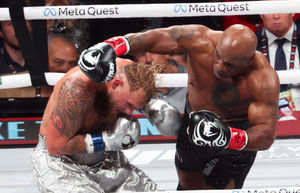
Neither did Mike Tyson.
Neither did Conor McGregor.
The modern combat-sports economy increasingly gives recognizable fighters the ability to become their own brands.
Page already is one.
Maybe the UFC Didn't Get the Best Out of MVP
There is a fair argument on the other side.
The UFC gave Page plenty of opportunities.
He fought legitimate opponents. He was featured on major cards. He received ranked opponents. He won four straight fights.
At some point, the fighter has to deliver. And Page didn't.
The UFC can't manufacture a finish that isn't there.
Page's counter-striking style has always depended on patience and precision. Sometimes that produces a highlight-reel knockout. Sometimes it produces 15 minutes of a fighter waiting for the perfect opportunity.
In Paris, the perfect opportunity arrived.
Ruziboev was hurt. Page landed a perfectly placed oblique kick. And instead of swarming for the finish, the fight continued.
Related

Why Did Netflix Mike Tyson Docuseries Omit His Last Fight?
Ohio State’s Season Is in Jeopardy After Julian Sayin Injury
- UFC 333 Betting Splits: Where the Sharp Money Is Landing This Weekend
- NBA Best Bets Today: Pacers, Grizzlies and Trail Blazers Picks
- College Football Week 8 Best Betting Picks, Predictions
- World Series Game 1 Predictions: Rays vs. Brewers Picks and Best Bets
- UFC 333 Predictions: Best Bets for Volkov, Keita and Murzakanov
- UFC 333 Underdog Pick: Why Dominick Reyes Is Worth a Bet
- World Series Predictions: 3 Best Bets for Brewers vs. Rays