Texas Tech's Opponents Should Refuse to Play Brendan Sorsby

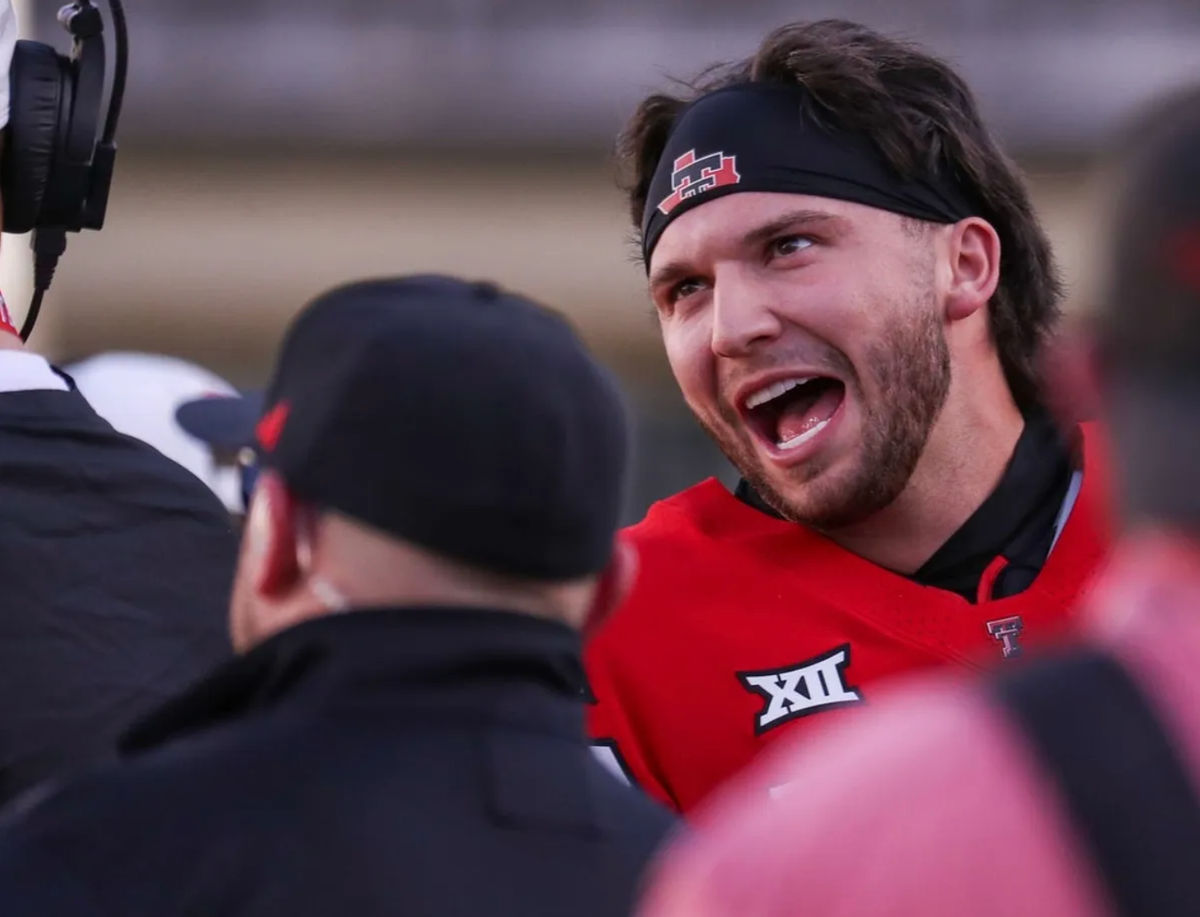 Texas Tech's Brendan Sorsby talks to coaches during the spring football game, Friday, April 17, 2026, at Jones AT&T Stadium.
 A temporary injunction grants Cincinnati transfer quarterback Brendan Sorsby eligibility to play at Texas Tech in 2026 — but only if the Red Raiders have opponents willing to take the field.
With visiting District Court Judge Ken Curry’s June 8 ruling, on the grounds that Sorsby successfully demonstrated an NCAA ban for gambling will cause the quarterback to “suffer a probable, imminent, and irreparable injury,” college football stands at a Rubicon.
Courtrooms have turned college football upside over the last five years, as judges nationwide have ruled against one bedrock piece of the NCAA’s identity after another. The governing body is effectively impotent on a range of eligibility matters, many of which exist in various shades of gray.
Sorsby’s missteps in not just betting, but betting on games in which he was involved, is not a shade of gray. Sorsby committed was had always been considered, at every level of sports, a black-and-white infraction.
The NCAA may not be in position to enact on what has long been precedent for athletes betting on their games — which, from the 1919 Chicago Black Sox to Pete Rose to, in more recent times, Tucupita Marcano and Jontay Porter has meant banishment.
The onus instead falls on the teams on Texas Tech’s schedule to take a stand, and it’s a simple one: If Sorsby plays, we don’t.
Sorsby should not be without some sympathy, as his case is indicative of a much larger and very uncomfortable conversation society needed to have years ago. The Diagnostic and Statistical Manual of Mental Disorders categorized problem gambling as an addictive disorder in 1980 — two years before a car bomb was detonated under Lefty Rosenthal’s pink cadillac and generations before anyone could have dreamed of placing wagers on their phones from almost anywhere in the country.
The proliferation of legalized sports betting since 2018, expanding from exclusive legality in Nevada to now existing in 38 states, has coincided with a staggering ease of accessibility. Coinciding with the lightning-quick expansion of the industry has come a deluge of advertising promoting sports betting.
The National Council on Problem Gambling, which has its help line attached to the seemingly nonstop stream of promos for the multitude of gaming apps, published findings that roughly 2.5 million people meet the clinical definition of gambling addiction. The Journal of Gambling Studies, a scholarly study, found severe gambling addiction to be especially pervasive among college students at six percent of the total population.
And those findings were published in late 2017, long before the present-day bonanza of gaming availability and promotion.
That is all to say the assertion Sorsby suffers from a legitimate addiction is certainly valid and seemingly true. Those who fall on the side of viewing Sorsby as a victim may view banishment as excessively harsh.
Furthermore, if Sorsby battles an addiction, a rigorous support structure and rehabilitative process are musts — and part of the conditions laid out in Judge Curry’s injunction.
However, these conditions — that Sorsby meet with credential counselors, work through support groups and adhere to a strict compliance schedule — can all be accomplished with Sorsby on the team but not in the lineup.
A two-game suspension, barring Sorsby from penciled-in wins over FCS opponent Abilene Christian and an Oregon State program undergoing a major rebuild, feels like empty lip service even more than if Texas Tech started the quarterback from Week 1.
The reigning Big 12 Conference champion and presumptive 2026 league favorite is slated to bring back its QB1 for the conference opener against a Houston team likely to contend. Even in this especially cynical era of college football, this timing is particularly eyebrow-raising.
What’s more, it begs the question for programs with players who heeded those warnings that have appeared all over NCAA marketing materials for years; those advertisements and PSAs urging “Don’t Bet on It” that aired long before anyone could drop $5 through an app predicting if the next snap would be a rush or pass.
For those teams and athletes who didn’t violate one of the most longstanding and universally agreed-upon unbreakable rules, why should they have to play an opponent with a different set of rules? The short answer is they shouldn’t.
Related


Seattle Seahawks vs. Denver Broncos TNF Betting Pick
Los Angeles Chargers Shouldn’t Resist Justin Herbert Trade
- Guardians vs. Rays Game 2 Prediction: Picks, Odds and Best Bets
- Bills vs. Rams Odds, Prediction and Best Bet for MNF
- Three Longshot NFL Futures Worth Betting in Week 5
- Falcons vs. Ravens Odds, Prediction and Best Bet for Sunday Night Football
- White Sox vs. Guardians ALDS Game 5 Betting Pick
- UFC Vegas 122 Betting Odds: The Biggest Line Moves Before Allen vs. Duncan
- UFC Vegas 122 Picks and Predictions: Three Bets for Allen vs. Duncan