The NFL Is Doing Its Best To Protect Its Free Minor League

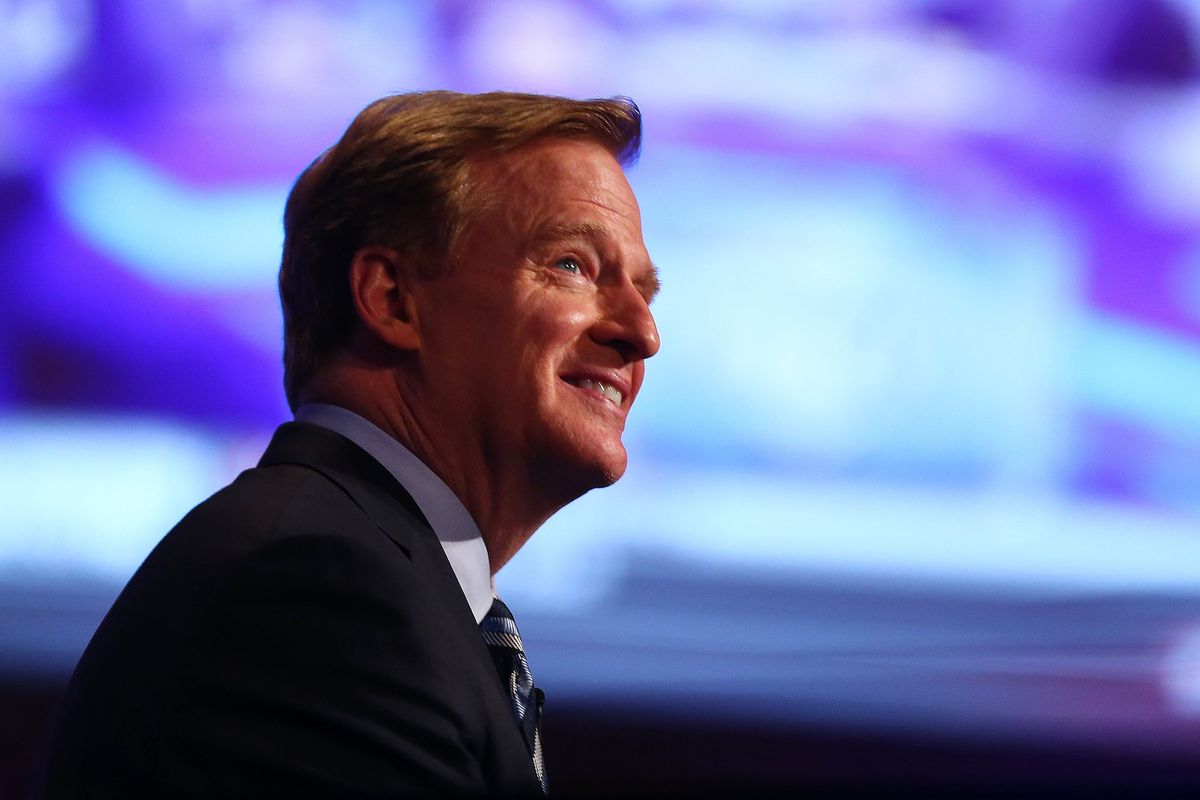
The NFL has confirmed that it will drastically change its system for giving feedback to potential draft prospects, in an effort to limit the number of underclassmen entering the draft. It's being framed as in the kids' best interest, but it seems to me the schools and the NFL are the ones coming out ahead.
The number of underclassmen declaring for the draft is on the rise: from 53 in 2010 to 98 in 2014. Traditionally, early entrants could ask for draft projections from the NFL Draft Advisory Board, which would assign them one of five grades: first round, second round, third round, fourth through seventh round, and undraftable.
Now, according to the NFL, only three different evaluations will be given out: first round, second round, no grade.
Additionally, the rules now state that only five underclassmen per school will receive grades (though exceptions will be made at the biggest programs).
So, fewer potential early entrants will be able to learn if it makes financial sense for them to declare for the draft, and the ones who do will receive less specific and thus less helpful feedback. What's the rationale for withholding information from young men facing one of the biggest decisions of their lives?
According to NFL scouting consultant Chris Landry, it's about saving undraftable kids from themselves:
"What we are trying to do is discourage a third round graded player or lower from coming out and instead opting to further develop his skills into a possible top two round pick the next year, or at the very least give him the most development time as he can while furthering his college education and curtailing the overpopulation of kids that are ending their football prematurely.
"By giving a player a first or second round grade or go back to school grade, the hope is to encourage more players to go back to school if they are not top two round worthy."
This is rational protection for the eventual washouts, but it serves to punish those with potential. And not just the borderline-top prospects, who now won't be given any clues as to where they stand. Nick Saban, who is strongly in favor of the new scouting feedback rules, points out that players want to go pro not just because of the paycheck, but because it pushes up the —the potentially huge one. Since rookies now receive four-year contracts with slotted salaries, the big money doesn't come until year five—if they make it, which has little to do with there they were drafted.
That's the tricky part of making catch-all rules like these. It's hard to decide how to serve the greatest good, because the pool of those affected is so balanced. Last year, 32 early entrants went in the first two rounds, 30 in the next five, and 36 were undrafted.
The tiebreaker, of course, is that any rule which keeps more players in school longer serves both the schools and the NFL. The league currently requires players to be three full seasons removed from high school before declaring for the draft. It's an arbitrary number (the existence of any age requirement is arbitrary), but the result is that NFL teams get better-seasoned players, and the schools get more free labor from the best and brightest. There's a reason that age limits, while nominally established by pro leagues after collective bargaining with their unions, are eagerly and shamelessly advocated for by the amateur bodies.
Whether you agree or disagree that athletes should have financial autonomy, and whether you have a problem with this particular draft-feedback change, it's hard to argue that the rules, arbitrary or byzantine, don't tend toward the self-preserving. Take the case of Texas A&M OT Cedric Ogbuehi, who agreed to return for his senior season only after the school offered to pay nearly $60,000 in insurance premiums for a policy on his future earnings. That's an option more players should have, but it goes to show that football's minor-league system is capable of remarkable flexibility when it has its own interests in mind.
Update: Here's a stunning quote from NFL Executive VP Troy Vincent on the changes, which, remember, give prospects less information before making their decision. Vincent: "We want the kid to make an informed decision."
Related

- World Series Game 1 Predictions: Rays vs. Brewers Picks and Best Bets
- UFC 333 Predictions: Best Bets for Volkov, Keita and Murzakanov
- UFC 333 Underdog Pick: Why Dominick Reyes Is Worth a Bet
- World Series Predictions: 3 Best Bets for Brewers vs. Rays
- Bears vs. Patriots Thursday Night Football Week 7 Betting Picks
- Guardians vs. Rays ALCS Game 6 Best Betting Picks
- Commanders vs. 49ers Picks: Best Bet for Monday Night Football